

There is something romantic about the idea of setting off with a rucksack, finding a quiet spot in the forest, setting up a tarp or laying your sleeping bag directly under the stars. Birds twittering in the morning, the crackling of branches in the distance, the smell of damp earth. Pure freedom. But then the question that hovers over everything: Is that even allowed?
Anyone who wants to go wild camping in Germany quickly encounters a mixture of myths, half-knowledge and paragraphs. Some claim that it is generally forbidden. Others say that one night is okay as long as you don't light a fire. Still others point to gray areas and exceptions. So it's time to bring some order to the confusion.
Why wild camping is so appealing
Before we put on the legal magnifying glass, it's worth taking a quick look at the core issue: why do so many people want to sleep outside in the first place?
- Simple freedom: No campsite, no noise from neighbors, no crowds. Just you and nature.
- Training for crises: For preppers, it's more than just leisure time. Being able to cope outdoors strengthens independence and self-confidence.
- A sense of adventure: Even a piece of forest in Brandenburg or the heath in Lower Saxony can suddenly feel like Canada when you spend the night there.
So wild camping is not just a romantic dream. It is also a kind of exercise - for independence, adaptation and reduction to the essentials.
The legal framework - a patchwork quilt
Germany loves rules. And this is clearly evident when it comes to wild camping. The basic rule is: Spending the night in a tent or motorhome outside of designated areas is prohibited in Germany. This results from nature conservation laws, forest laws and property rights.
But - and this is where it gets interesting - this does not mean that you have no options at all.
Differences by federal state
Each federal state has its own regulations, especially in forest law. In Bavaria, for example, you are allowed to enter forests, but not to camp in them. In Schleswig-Holstein, bivouacking (i.e. without a tent, only with a sleeping bag or tarp) is tolerated under certain conditions. In Mecklenburg-Western Pomerania, there are even special „trekking sites“ where it is legal to spend the night in the forest.
Property right
A forest belongs to someone - a private individual, a municipality or the state. Setting up a tent without the owner's permission is always a problem.
Nature reserves
Here the matter is clear: camping is prohibited. Even a sleeping bag can be interpreted as „camping“.
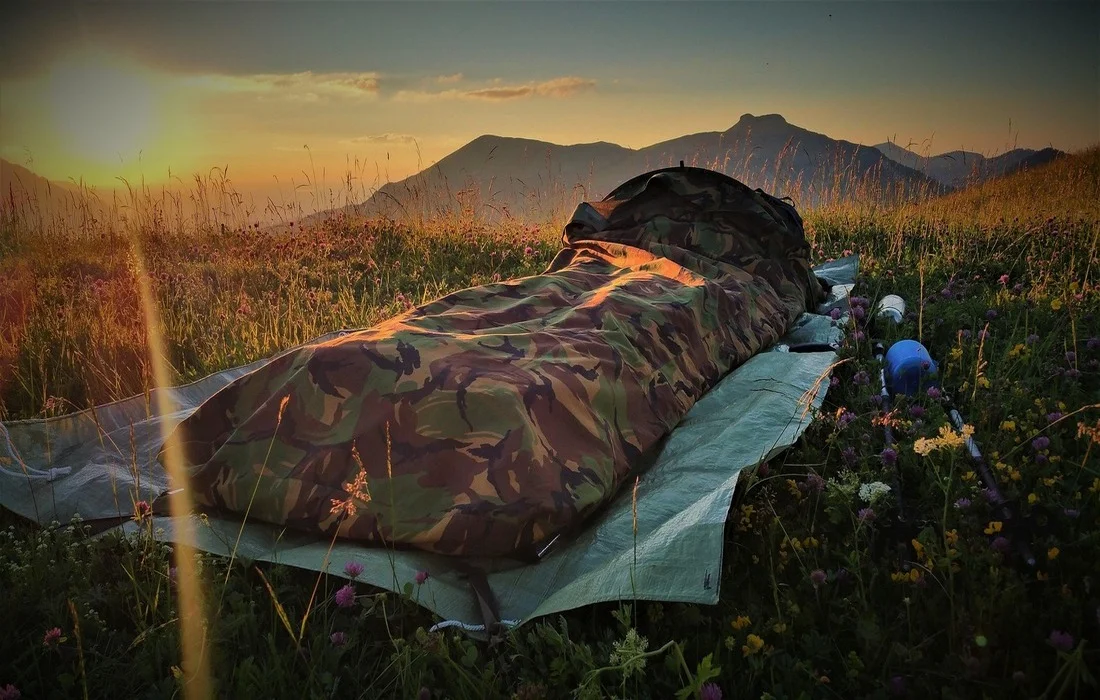

Bivouac vs. camping - a small but crucial difference
Many people talk about „wild camping“, but they mean very different things. Setting up a tent has a completely different weight than lying down in a corner with a sleeping mat and sleeping bag.
- Camping Officially not permitted, except in designated areas.
- Bivouacking Tolerated in some federal states if it is an emergency overnight stay.
Some foresters turn a blind eye if someone spends a night quietly in a sleeping bag and leaves no tracks in the morning. Others see it just as strictly as a tent. So it remains a gray area - and a question of attitude.
Legal alternatives
Fortunately, there are models that mediate between freedom and prohibition:
- Trekking sites: Small, simple pitches in the middle of nature, without comfort, often only a fireplace and space for a few tents. Most common in Rhineland-Palatinate, Saxony-Anhalt, Brandenburg and Mecklenburg-Western Pomerania.
- „Everyman's right light Schleswig-Holstein and Brandenburg have rules that permit bivouacking, at least in part.
- Private permission: If you ask the forest owner and get a „yes“, you are on the safe side.
Table: Overview of some federal states
| federal state | Camping in the forest | Bivouac / Tarp | Special features |
| Bavaria | forbidden | emergency overnight stay only | strict interpretation |
| NRW | forbidden | not expressly regulated | High population density, little tolerance |
| Schleswig-Holstein | forbidden | partially permitted | Natural campsites as an alternative |
| Mecklenburg-Vorp. | forbidden | Trekking pitches available | Model region |
| Rhineland-Palatinate | forbidden | Trekking pitches available | Well-developed network |
| Brandenburg | forbidden | restricted permitted | designated individual areas |
Practical tips for wild campers
Even if the legal situation seems strict - with the right attitude and a little preparation, you can still sleep outside without risking trouble.
inconspicuousness
- Set up late, dismantle early.
- No loud music, no fire, no garbage.
- No large groups - the quieter, the better.
2. „Leave no trace“
Leave the place as if you had never been there. Take waste with you, take care of the ground, respect the plants.
3. flexibility
Sometimes it's enough to change the plan. Instead of in the middle of the forest, perhaps at the edge of the forest, instead of in a tent only with a bivouac sack.
4. preparation
- Check the weather forecast.
- Use maps or apps to avoid nature reserves.
- Have a backup plan if the desired location is unsuitable.
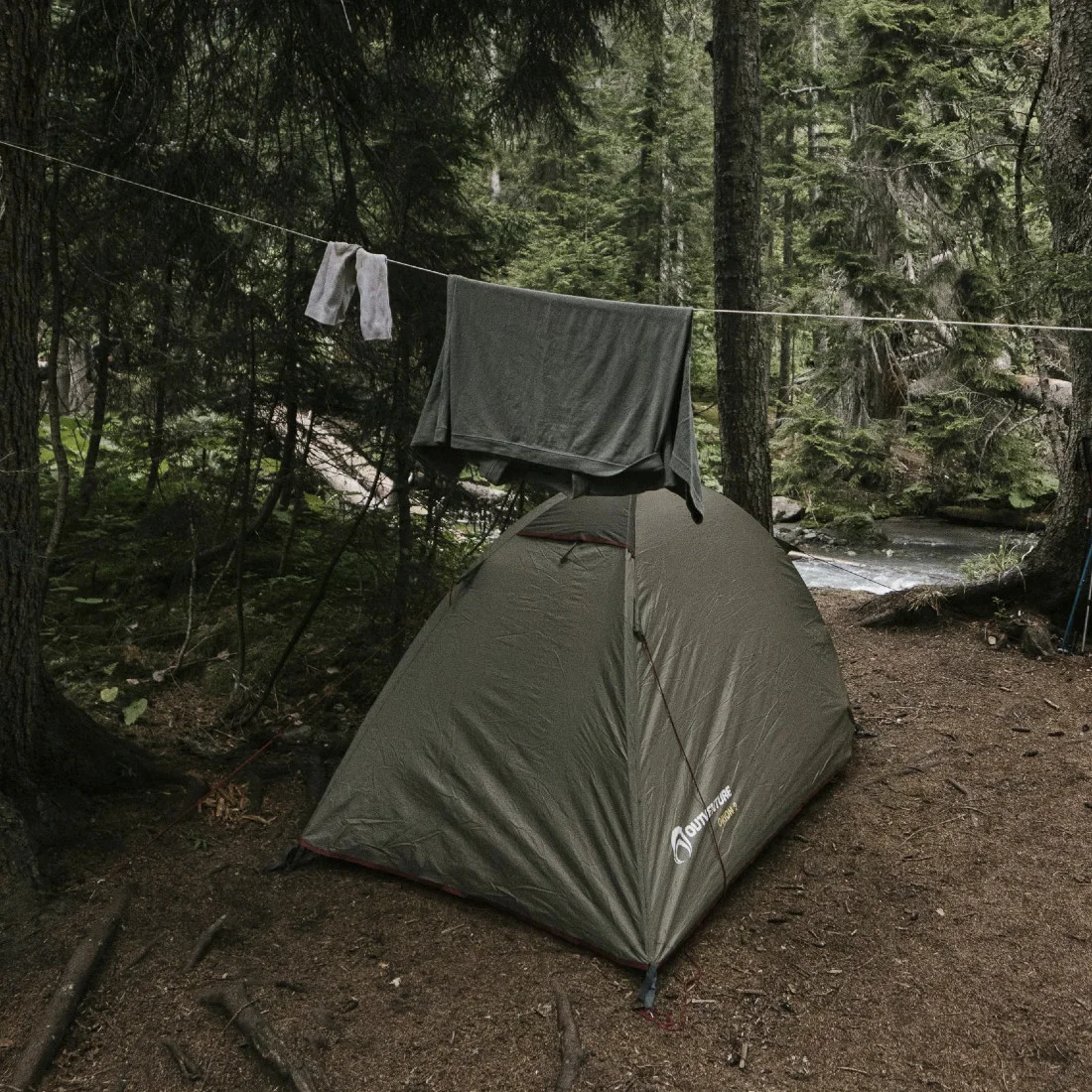
Wild camping as training for crisis situations
For preppers, the question of legality is only one side of the coin. The other is: Can I do it if I have to?
In the event of a crisis - such as an evacuation or a large-scale power cut - you may have to spend the night outside, whether you want to or not. Anyone who has ever slept outside knows how it works: choose the right place, stay warm, improvise.
So wild camping is more than just a leisure activity. It is an exercise, a test of your own abilities, a small piece of self-empowerment.
Realistic scenes
For example, a friend of mine really wanted to spend the night in the Harz Mountains. He had a tarp, a sleeping bag and the ambition to do it „like the pros“. It rained during the night and there was a fresh wind. In the morning, he was clammy and tired - but one experience richer. Later he said: „It wasn't fun, but I now know how important a sheltered spot is.“
That is exactly the core. Not every night is idyllic, but every night brings knowledge.
Emotional side: the fascination remains
Despite all the regulations, despite the risk of a warning - the longing for a night out never goes away. Perhaps it lies deep within us, from a time when people still slept outdoors as a matter of course.
The rustling of the leaves, the view of the starry sky, the gentle drip of dew in the morning - these are experiences that no hotel night can replace.
Conclusion: Wild camping in Germany - possible, but with caution
You are not completely free in Germany. If you ignore the rules, you risk trouble or fines. But there are ways to combine a longing for nature with respect for the law and the environment: via trekking sites, bivouacking in gray areas, private permits.
In the end, it's not so much the question „Can I?“ that counts, but rather „How do I do it without leaving any damage behind?“ - and how can I learn from every night out.
Wild camping in Germany is like dancing on a tightrope. Those who master it experience freedom, adventure and a bit of independence - and do so legally or at least in such a way that nobody suffers.
 Deutsch
 English