

Imagine this: A storm moves across the country, power lines snap, mobile phone masts fail. You automatically reach for your cell phone, but the display remains blank. No reception, no internet, no messages. The feeling is strange - almost as if your connection to the world has suddenly been cut. No more quick updates, no way to reach friends or family immediately.
And this is where the crucial question begins: How do you stay in touch when modern communication breaks down?
Why communication is so important in crises
Without information, people feel lost. It's not just about writing to someone to say you've arrived safely. Communication means security. It enables agreements to be made, it prevents misunderstandings, it provides orientation.
In an emergency, a functioning connection can save lives. If you know where your loved ones are, you can plan better. Those who receive up-to-date situation reports can make decisions. If you don't hear anything, you remain in the dark - and that's not just unpleasant, it's dangerous.
How dependent are we really?
Hand on heart: How many times have you picked up your smartphone today? Ten times? Twenty times? Probably more than that. And each time, you tacitly assume that the network, Wi-Fi and power are working smoothly.
A communication breakdown therefore has a double impact. It not only deprives us of the tool, but also the matter-of-factness behind it. Suddenly we realize that our everyday lives are hanging on invisible wires that are thinner than we think.
Alternative Communication
First options: Simple, but effective
Before we get to radios and technology, it's worth taking a look at some very simple options. Because not every crisis requires an antenna on the roof.
Possible basics for the beginning:
- Arrange meeting locationsSounds banal, but it's effective. If family or friends know where to meet in an emergency, it saves a hectic search.
- Notes and messagesIn smaller communities, a note on the bulletin board or on the front door is often enough. Old-fashioned, but practical.
- Acoustic signalsA whistle or an agreed-upon knocking signal can be enough to get the neighbors' attention.
These methods are simple, but they also work without electricity and technology.

Radio - the next level
But at some point, a piece of paper is no longer enough. If you want to communicate over longer distances, you need something else. This is where radio comes into play. It operates independently of cell phone networks, connects devices directly to one another, and is therefore one of the most popular alternatives in crisis preparedness.

What types of radio are there?
To make it easier to see the big picture, here is a small table:
| Radio type | Range (typical) | Advantages | Disadvantages |
| PMR radio | 1-5 km | Simple, license-free, affordable devices | Limited range, many users |
| CB radio | 3–19 miles | Well-established, many channels, some of which are mobile | Large antennas required, fluctuating |
| Amateur radio | Hundreds to thousands of km | Extremely powerful, available worldwide | License required; expensive equipment |
| Leisure radio (FRS/LPD) | up to 1 km | Very simple, often in walkie-talkies | Very short range |
PMR radio—the entry-level solution
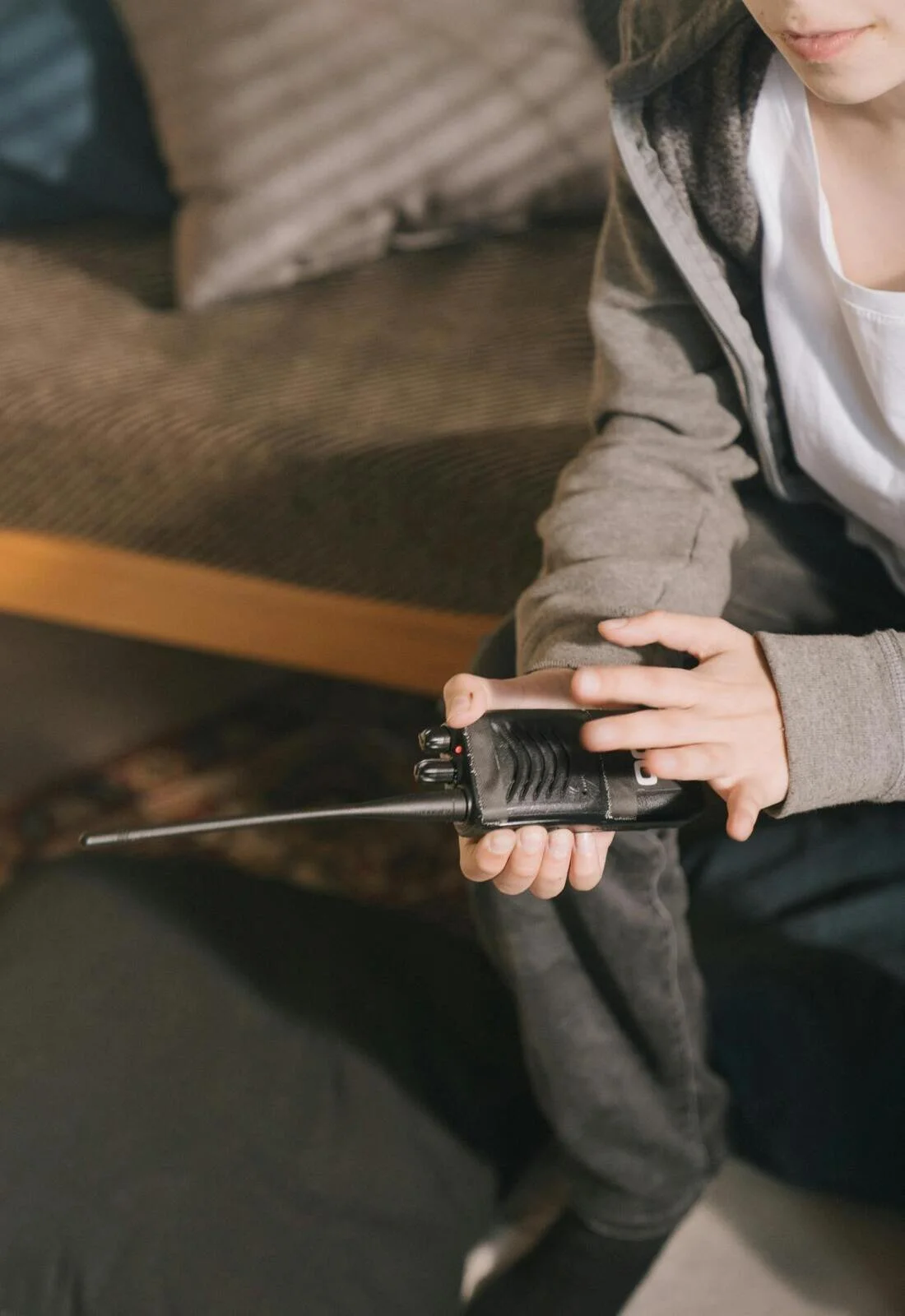
PMR radios, which are often sold as inexpensive walkie-talkies in electronics stores, are the ideal way to get started. They are small, easy to use, and do not require a license.
Practical example: Two children are playing outside, each carrying a PMR device. The parents know immediately where they are. Applied to a crisis situation, this means that you can communicate with neighbors who live just a few streets away, even without a network.
CB radio - more range, more possibilities
Those who are a little more ambitious can use CB radio. With a decent antenna, ranges of several dozen kilometers can be achieved. This can make all the difference, especially in rural areas.
The community behind it is also interesting: Many CB radio operators are experienced enthusiasts who spring into action immediately when problems arise. In an emergency, you can not only send messages through it, but also receive valuable information.
Amateur radio - the premier class
Here, you're already in a different league. Amateur radio requires a license, which you receive after passing a test. But this opens up a world of possibilities: from local contacts across vast countries to connections around the globe—amateur radio can do it all.
It is no exaggeration to say that those who have mastered amateur radio hold the key to information in a disaster when everything else is at a standstill. Of course, the barrier to entry is higher. But that is precisely why it is considered a valuable tool among those interested in prepping.
Do not forget the power supply
Whether PMR or amateur radio - without power, even the best device remains silent. That's why it's worth thinking about energy right from the planning stage. Spare batteries, power banks or small solar panels can make all the difference.
A little tip: Some devices can also be operated with normal AA batteries. This sounds unspectacular, but is worth its weight in gold if you can no longer charge special rechargeable batteries.
Practical Steps to Get Started
So that it doesn't remain just dry theory, here is a suggestion on how to approach the topic of communication step by step:
- Create a basisBuy two simple PMR radios and try them out with family or neighbors.
- ExpandConsider a CB radio and a decent antenna. Carry out initial tests in everyday life.
- DeepenIf the enthusiasm continues - consider taking the amateur radio exam. This opens up completely new possibilities.
- Secure energyPlan spare batteries, rechargeable batteries and charging options.
- PracticeTest regularly, don't just leave it in the drawer.
More than technology: communication in the mind
Communication is not just about technology, but also about attitude. An example: Suppose the network goes down and you are sitting with your neighbors. If you keep calm, pass on clear information and make arrangements, you are already creating a kind of „communication network“.
Sometimes a quiet word is just as important as a working radio.
A little thought experiment
Imagine the power goes out for several days. No phone, no internet. You have a radio, but have only tried it out once so far. Would you know which channel to use at that moment? Would you have agreed in advance with your contacts when you would get in touch?
This is precisely why preparation is crucial. Technique alone is not enough—you also need agreements, routines, and exercises.
Community as the key
A communication network isn't created by one person alone. It thrives on the people who participate in it. Neighborhoods, groups of friends, and families can form small networks that are more stable in an emergency than any individual action.
A simple walkie-talkie suddenly becomes a tool for community and security.
Conclusion: When Silence Becomes Dangerous
A communication breakdown is more than just a minor annoyance. In an emergency, it can lead to disorientation and panic. But with the right alternatives—from a note on the door to a radio—this gap can be bridged.
Communication is the bridge that connects us even in chaos. It provides stability, it enables planning, it creates closeness. And that's exactly why it's worth starting now. Not tomorrow, not „someday“, but today.
Because when the day comes that your smartphone goes silent, it's not about how many apps you had, but whether you can still send a voice into the darkness—and whether someone answers.
 Deutsch
 English