

Let's imagine a simple but oppressive situation: You're out and about, somewhere away from civilization. Maybe a mountain, maybe a dense forest, maybe a coastline. Your cell phone shows no network, the battery is almost empty anyway. You fall, injure yourself and suddenly realize how quiet it is around you. Nobody knows where you are.
At times like these, communication becomes a lifeline. But how do you „speak“ when there are no longer any familiar channels?
Communication - more than words
We talk almost constantly in everyday life. Speech, chat messages, phone calls - our world is a network of voices. In an emergency, this network often breaks down. This is precisely when it becomes clear how fundamental signaling is. It replaces words when words are no longer possible. It makes us visible, audible, findable.
Sometimes a short, clear sign is enough: a whistle, a beam of light, a hand signal. It's not about telling whole stories, but about being understood. The aim is to attract attention, convey information, request help or keep a group together.
Basic principles of signaling
Before we get to the methods, it is worth looking at the basic rules.
- A signal must stand out. It must stand out clearly from its surroundings - visually, acoustically or through movement.
- A signal must be unambiguous. Confusion or misunderstandings can be dangerous.
- Repetition is crucial. A single sign is quickly lost. Regularity reinforces perception.
- Use standardized codes. Many signals are internationally known - such as SOS. Those who know them are understood more quickly.
These four points are the common thread, whether we are talking about mirror flashes, flares or stone patterns in the snow.
The classic methods
The possibilities are many and varied. Different techniques are used depending on the equipment and situation.
Optical signals
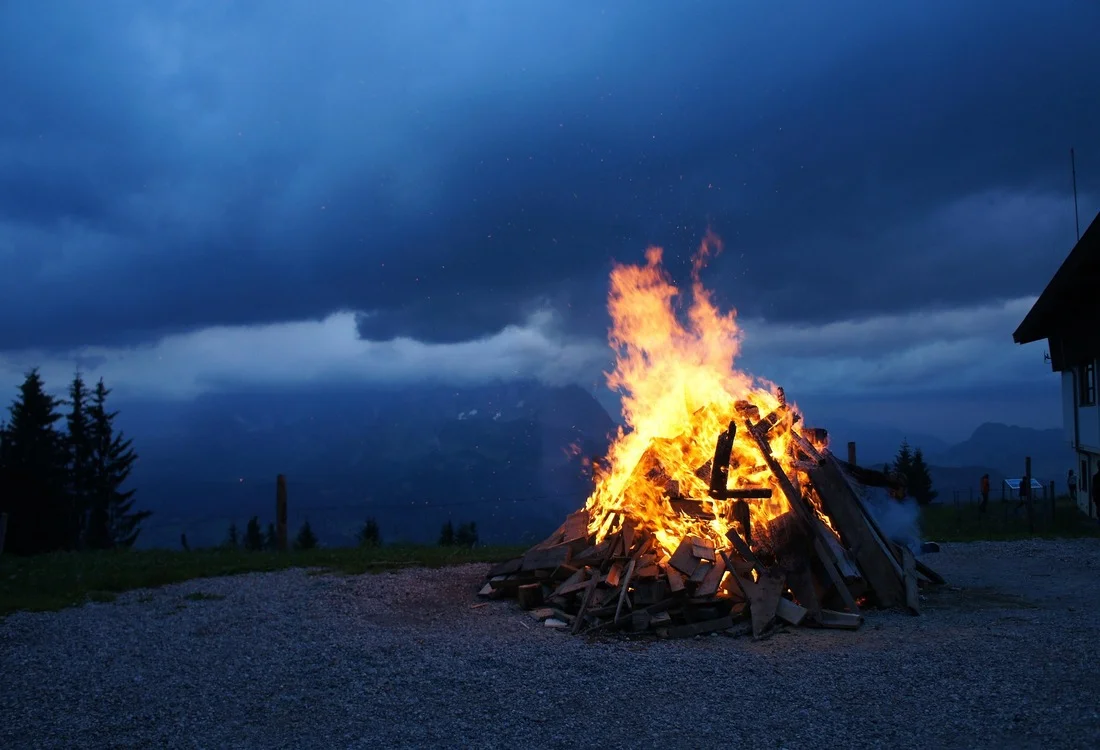
- Fire: An old but still reliable signal. Three fires in a line or a triangle are internationally recognized as a distress signal.
- Mirrors and reflective surfaces: Even a small pocket mirror or the display of a broken cell phone can be visible for miles.
- Signal flags or improvised fabrics: A cloth in an eye-catching color, waved or laid out, has a stronger effect than you might think.
- Light sign: Flashlights, headlamps or glow sticks are valuable helpers. The classic is the Morse SOS: three short, three long, three short flashes.

Acoustic signals
- Pipes: A whistle is light, indestructible and penetrating. Three short tones are also the classic distress signal here.
- Shots or blows: In some regions, shooting three times is understood as a call for help. Rhythmic hammering on metal or wood can also attract attention.
- Calls: Less effective, as the voice tires quickly - but sometimes the last option.
Visual floor signs
When rescue teams are searching from the air, signs on the ground can be crucial. To do this, stones, wood or clothing are placed in such a way that clear letters are created.
| Sign | Meaning |
| V | „Need help“ |
| X | „Need immediate help“ |
| → | „I went in this direction“ |
| SOS | International emergency call |
Modern means - when technology still works
Of course, there are also technical aids that should not be missing in this day and age:
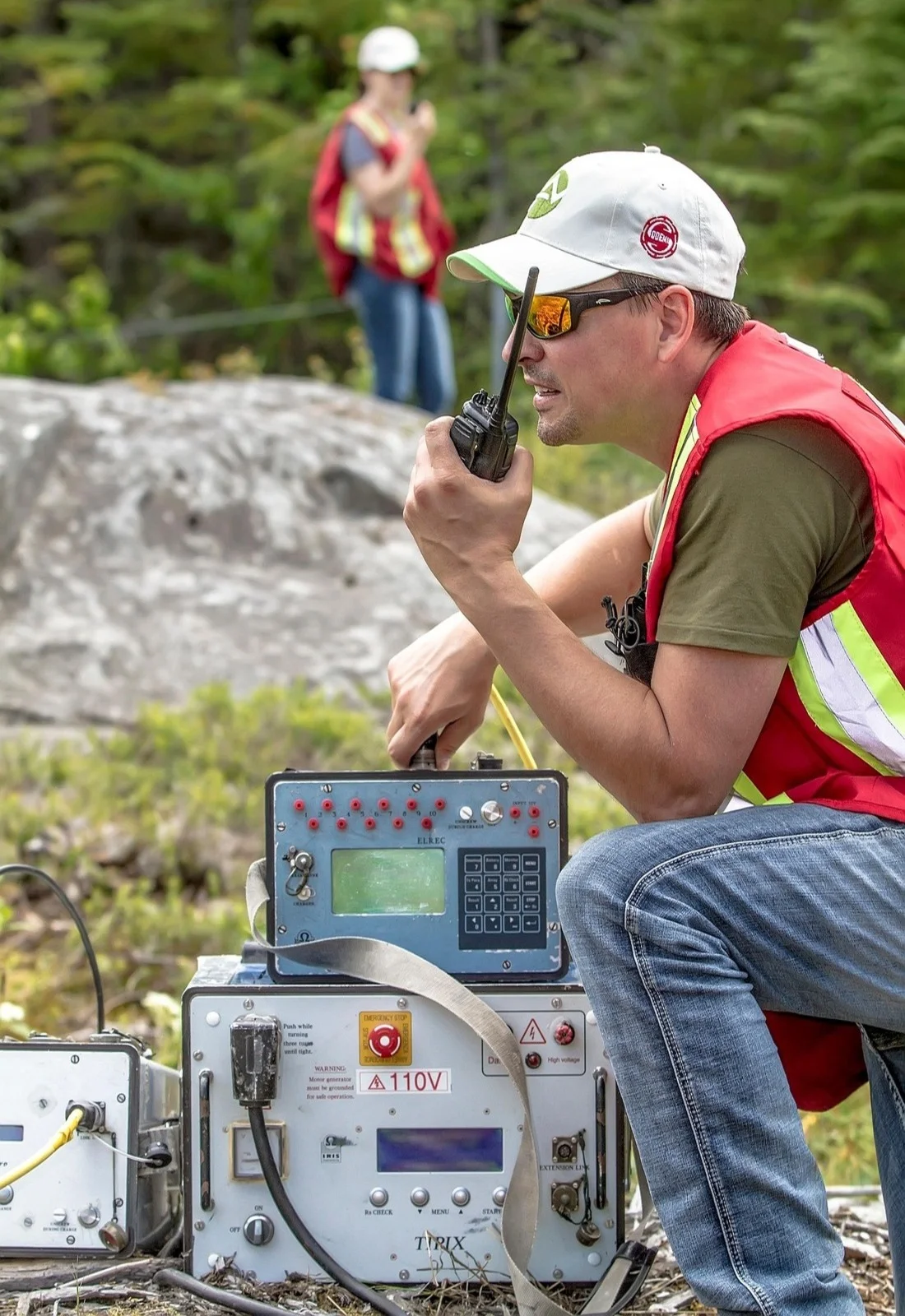
- Handheld radios: Simple, robust, with a limited range, but invaluable for groups.
- Satellite Messenger: Devices such as Garmin InReach or SPOT send emergency calls via satellite, even far away from mobile phone networks.
- Signal pistols: Common in the maritime sector, but also useful in the mountains.
But technology has its limits: Batteries run down, devices can be damaged. That's why you should always master the „primitive“ methods.
Communication in the group
Not every emergency means that you are alone. In groups, it is often important to communicate quietly, clearly and quickly - especially when you are scattered, chasing or avoiding dangerous situations.
Some simple hand signals have become established:
- Raise your hand, clench your fist:
- Pointing with the finger:
- Circle with your arms: Everything is in order.
- Arms crossed:
These silent signs are inconspicuous, but can be crucial if you don't want to shout or scream.
Three scenarios - and what works
To make the theory more tangible, here are three realistic scenarios:
1. lost in the mountains
You're traveling alone, fog is rolling in. Cell phone without network. You build a small signal fire and place additional stones in the shape of an „X“ in a clearing. Using a mirror, you try to send lightning towards the valley in the sunshine. A hiker sees the sparkle - your chance.
2nd boat capsized, coast in sight
The water is cold, but you reach the shore. Your rucksack is gone, just a whistle hanging from your collar. You blow it three times, wait, repeat. After minutes, a whistle answers. Communication established - without a single word.
3. power failure in the city
No power for three days, no telephone. You and your neighbors use simple notes and agreed-upon signs in the window: candle = power outage, red cloth = urgent help needed. Primitive means, but they create structure and connection.
Practical tips for your preparation
A small overview that you should remember or put in your emergency kit:
- Always have it with you: Whistle, small lamp, mirror or reflective piece of metal.
- Learn standard characters: SOS, three fires, three whistles, floor sign.
- Practicing improvisation: Use clothing as a signal, reinforce the fire with wet wood for smoke, place stones as signs.
- Group training: Discuss and test hand signals before they are used.
- Use technology wisely: Charge radios, pack spare batteries, protect devices.
The psychological component
Signaling is not just technology, but also psychology. Those who actively send signals feel less at the mercy of others. It gives hope. Every gesture, every fire, every whistle means: „I'm alive. I want to be found.“
This attitude can make the difference between resignation and perseverance.
I remember an incident from a training camp: a comrade had the task of becoming visible without any aids. He placed clothing in contrasting colors in the shape of a large arrow. From above, from an observation post, the sign was so clearly recognizable that no one doubted it. He himself later said: „The moment I laid the sign, I had the feeling that I was no longer invisible.“
Conclusion: Communication as an art of survival
Signaling in emergency situations is not a minor matter. It makes the difference between being noticed or being overlooked, between being rescued or being lost. It's not just about technology, but about creativity, knowledge and the courage to make a statement.
Perhaps it is like a lighthouse: the light itself is inconspicuous, a lamp behind glass. But at the right moment, in the dark of night, it becomes a saving sign. This is exactly how our signs can work - small but decisive.
And the best thing is that most of these skills hardly cost anything. A mirror, a whistle, a piece of cloth - that's all it often takes to send an invisible voice out into the world.
 Deutsch
 English