

Just imagine: A sudden bang outside, then silence. Seconds later, the lights go out. The screen goes out, the humming of the fridge stops, the apartment is plunged into an unexpected darkness. For a moment, it's almost spooky. You fumble for your cell phone, hoping there's still enough battery left, and stumble over the coffee table in the semi-darkness. This is how a power cut begins - sometimes brief and harmless, sometimes lasting for hours or days.
The question is: are we prepared? Do we have something to hand in every room to provide us with light, orientation and a minimum level of safety? This is exactly what a power failure kit for every room is all about. It is not a luxury, but a kind of life insurance for exceptional situations large and small.
Why a power failure kit makes sense
A power cut often seems harmless - after all, it rarely happens in our part of the world. But when it does happen, it can turn a lot of things upside down. Light switches become mute plastic buttons, fridges defrost, heaters go silent and in winter it can quickly become uncomfortably cold. Even a brief outage can be enough to shake your sense of security.
A kit in every room ensures that you don't have to wander through a dark apartment looking for a flashlight in the cellar. It creates a network of small safety islands. Every room is immediately ready for action.
Principles for the perfect power failure kit
Before we look at what belongs in a kit, it is important to note a few basic ideas.
- Accessibility
Even the best equipment is useless if it is lying in a box in the attic. It needs to be accessible quickly and without a long search. - Simple and robust
Complex technology is tempting, but often impractical in an emergency. Simple, durable items are better. - Redundancy
One kit in every room doesn't mean buying everything twice and three times over. But some things - such as light sources - are so essential that a certain amount of overlap makes sense.
The basic equipment for every room
A power failure kit doesn't have to be big. A small box, a bag or even a drawer will do. What is more important is that the contents are well thought out.
Basic content that makes sense in every room:
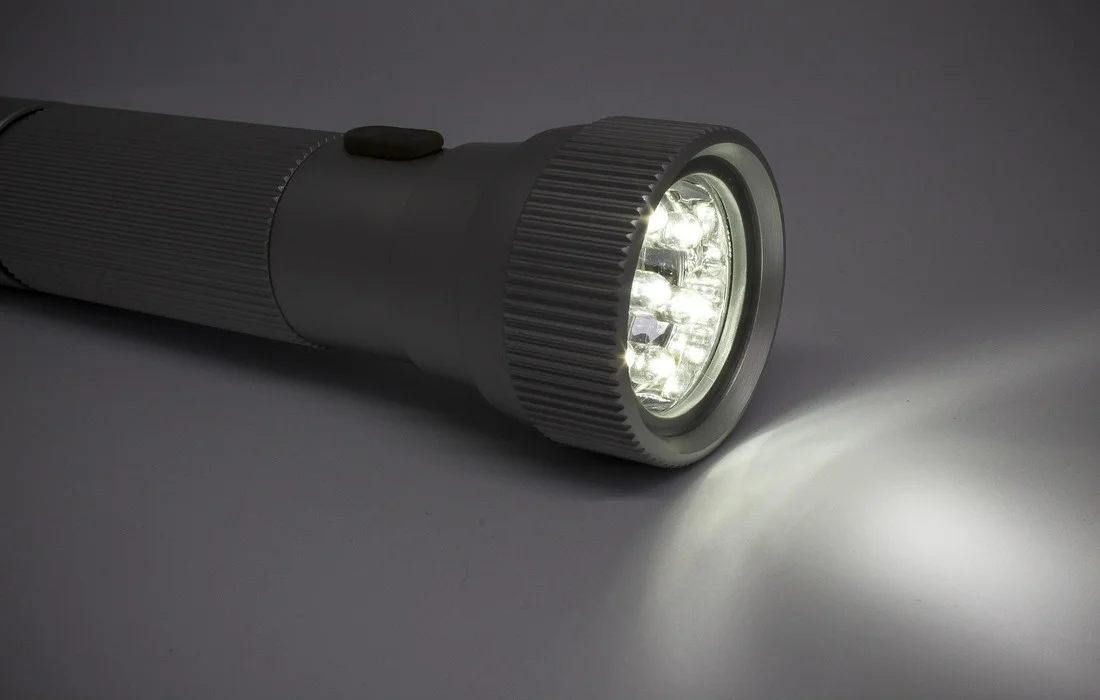
- Light sourceFlashlight, headlamp or LED lantern
- Spare batteries or power bank
- Lighter or matches fireproof packaging
- Notepad with pen - Underestimated, but practical when digital devices fail
- Whistle or small signaling device - in case you need help around the house or in the neighborhood
Room by room - the individual kit
Of course, the furnishings in the living room are different from those in the bedroom. Each room has its own needs.

Living room
The living room is often the central place. It's where you spend time when you're waiting.
- LED lamp or battery-powered lantern for pleasant room lighting
- Blankets or sleeping bag in case it gets cold
- Card game or book - against boredom
Kitchen
The kitchen is the heart of the supply.
- Manual can opener
- Water bottles (at least a small reserve)
- Camping stove or gas stove (with cartridges), safely stored
- Matches/lighter
Bedroom
Safety in the dark is particularly important here.
- Headlamp or small flashlight on the bedside table
- Spare batteries on hand
- Warm clothing or emergency blanket
- Cell phone power bank to keep you reachable in bed
Bathroom
An often overlooked room - but important in an emergency.
- Candles or small lamp
- Canister with some water for hygiene purposes
- Wet wipes or disinfectant
Cellar or storage room
It can be a little more extensive here.
- Larger flashlights or LED construction spotlights
- Basic tool set
- Extension cables and multiple sockets
- Supplies of batteries, candles, matches
Tabular Overview
To make it clearer, here is a simple overview:
| Room | Most important equipment | Additional benefits |
| Living room | Lantern, blankets, games/books | Warmth, employment |
| Kitchen | Can opener, water, gas stove | Provision of food and drink |
| Bedroom | Headlamp, power bank, emergency blanket | Safety in the dark, peace and quiet |
| Bathroom | Candles, water canisters, hygiene products | Basic hygiene even without electricity |
| Cellar | Tools, LED spotlights, supplies | Repairs and replenishment of materials |
Small scenarios - big impact
Let's take a winter example: a storm is raging outside, the power line breaks and the power goes out in the middle of the night. There is a head torch in the bedroom that provides orientation in seconds. A small supply of water and a camping stove are waiting in the kitchen so that coffee can be made the next morning. In the living room, an LED lantern lights up, bringing the family together in an atmosphere almost reminiscent of a campfire evening.
Or in summer: a power cut paralyzes the cooling system. Tools and cool boxes can be found in the cellar, while a lantern provides light in the living room. The kit transforms a potentially threatening situation into a manageable one.
Practical tips for implementation
For a power failure kit to really work in an emergency, there are a few points that are easy to overlook:
- Check regularly - Batteries run out, gas cartridges have an expiration date. A six-monthly check is enough
- Label everything - particularly important in larger households so that everyone knows immediately where something is located
- Practice - It sounds trivial, but testing in the dark to see if you can find the lamp can be worth a lot
- Seat selection - the kit should always be in the same place, visible and accessible
More than just emergency equipment
A power failure kit is not just a collection of things. It is a piece of inner peace. If you are prepared, you lose your fear of the unpredictable. You transform helplessness into the ability to act.
A kit like this is also a reminder of how accustomed we have become to the luxury of the everyday. We take electricity so much for granted that we hardly plan for its absence. But that is precisely what makes the preparation so valuable.
A personal thought
I remember a summer evening a few years ago. Suddenly everything was quiet - no fridge, no street lights, no buzzing of electronics. Just the chirping of crickets outside and an unusually clear starry sky. For a few hours, the house was transported to another time. We lit candles, played cards and laughed a lot. It was almost romantic - until the first food in the fridge became critical. That's when I decided: Next time, I'll be better prepared.
Conclusion
A power failure kit for every room does not mean turning the house into a fortress. It means creating small, well thought-out safety anchors that take immediate effect in an emergency. Light in the dark, warmth in the cold, supplies in chaos - it all starts with one box or bag per room.
The idea may sound banal: a few lamps, a can opener, some water. But these little things can make all the difference at the crucial moment.
And perhaps we will experience the next power cut not only as a disruption, but also as an opportunity - for peace, for closeness, for a bit of serenity in the midst of darkness.
 Deutsch
 English