

Anyone who walks through a supermarket and looks carefully at the prices quickly realizes that stocking up can be expensive. Especially if you want to make provisions not just for a few days, but for weeks or even months. But does crisis preparedness always have to tear a hole in your wallet? Not at all. With the right strategy, you can build up a stable supply without running out of money at the end of the month.
The crucial question is: How can you create as much security as possible - with as little money as possible?
Why it pays to pay attention to the price
Of course, stockpiling is first and foremost about security. But especially in times when the cost of living is rising anyway, it makes sense to think economically. A stockpile that is twice as expensive as necessary is more difficult to maintain in the long term. What's more, it's not about buying expensive special products or survival gimmicks that may end up going to waste.
More important is a mixture of food suitable for everyday use, that you consume anyway, and inexpensive basic products, that have a long shelf life. This avoids waste, saves money and also builds up a real reserve.
Basic principles for low-cost stocks
Before we get into the details, here are a few basic rules that make all the difference:
- Buy what you eat in everyday life.
Supplies that nobody likes end up in the bin - and that is the most expensive form of storage. - Rely on basic products.
Rice, pasta, lentils or oatmeal are unbeatably cheap and nutritious at the same time. - Take advantage of discounts and special offers.
A kilo of pasta for 49 cents? Then buy ten. - Think in large quantities.
Family packs and bulk packs are almost always cheaper than small portions. - Store cleverly.
Consuming food early, before it spoils, saves money.
List: The cheapest basic foods to stock up on
- Rice (white, long grain) - Inexpensive, long-lasting, versatile.
- Noodles - the everyday product par excellence, popular in almost every kitchen.
- Oat flakes - filling, energy-rich and inexpensive.
- Lentils & beans (dried or canned) - nutritious and often underestimated.
- Mashed potato flakes - space-saving, quick to prepare, inexpensive.
- Oil (rapeseed or sunflower) - high calorie content, inexpensive, long shelf life.
- Sugar & salt - Basic ingredients, everlasting, inexpensive.
- Flour - versatile, especially in combination with yeast or baking powder.
- Canned tomato paste - Inexpensive, long shelf life, provides flavor.
Table: Cost-benefit comparison
| Food | Price per kilo* | Calories per 100 g | Durability | Remark |
| Rice (white) | approx. 1,50 € | 350 kcal | 20-30 years (dry) | Ideal for large quantities |
| Noodles | approx. 1,20 € | 350 kcal | 5-10 years | Simple preparation |
| Oat flakes | approx. 1,50 € | 370 kcal | 1-2 years | Breakfast, Baking, Soups |
| Lentils (dried) | approx. 2,00 € | 310 kcal | 10-20 years | Source of protein, versatile |
| Potato flakes | approx. 3,00 € | 340 kcal | 10-15 years | Quick meals |
| Oil (rapeseed) | approx. 2,50 €/L | 900 kcal | 1-2 years | Calorie booster, Cooking, Baking |
* Prices roughly estimated (supermarket standard), vary depending on supply.

Saving tips when shopping
- Take advantage of seasonal offers.
Potatoes and pumpkins are often extremely cheap in the fall. Stored or cooked, you can enjoy them for a long time. - Discounters instead of branded products.
Usually no difference in quality, but significant price differences. - Watch out for weekly promotions.
Many supermarkets have 20-30 % on certain product groups. Perfect for stock purchases. - Buy bulk packs and share.
Maybe you know someone with whom you share a 10-kilo bag of rice. - Prefer own brands.
Almost identical to branded goods - only cheaper.
List: Things you shouldn't spend a lot of money on
- Special „emergency packages“ on the Internet. Mostly overpriced, sometimes inferior.
- Exotic superfoods. Chia seeds are nice, but no better than oatmeal.
- Ready meals in stylish packaging. Better to combine them yourself - cheaper and healthier.
- Expensive protein bars. Simple lenses deliver the same for a fraction of the price.
Do it yourself instead of buying expensive
Many products can be produced or preserved inexpensively.
- Boil down soups and stews. Saves money and you know what's inside.
- Ferment vegetables. An old method that is cheap and effective.
- Mix your own bread mixes. Flour + salt + dry yeast = almost the same.
Example: €50 for a basic supply
You can build a solid foundation with just €50:
- 10 kg rice → approx. 15 €
- 10 kg pasta → approx. 12 €
- 5 kg rolled oats → approx. 8 €.
- 3 l oil → approx. 7,50 €
- 5 kg lentils → approx. 10 €
This adds up to about 100,000 calories - enough to feed an adult for several weeks.
The psychology of saving
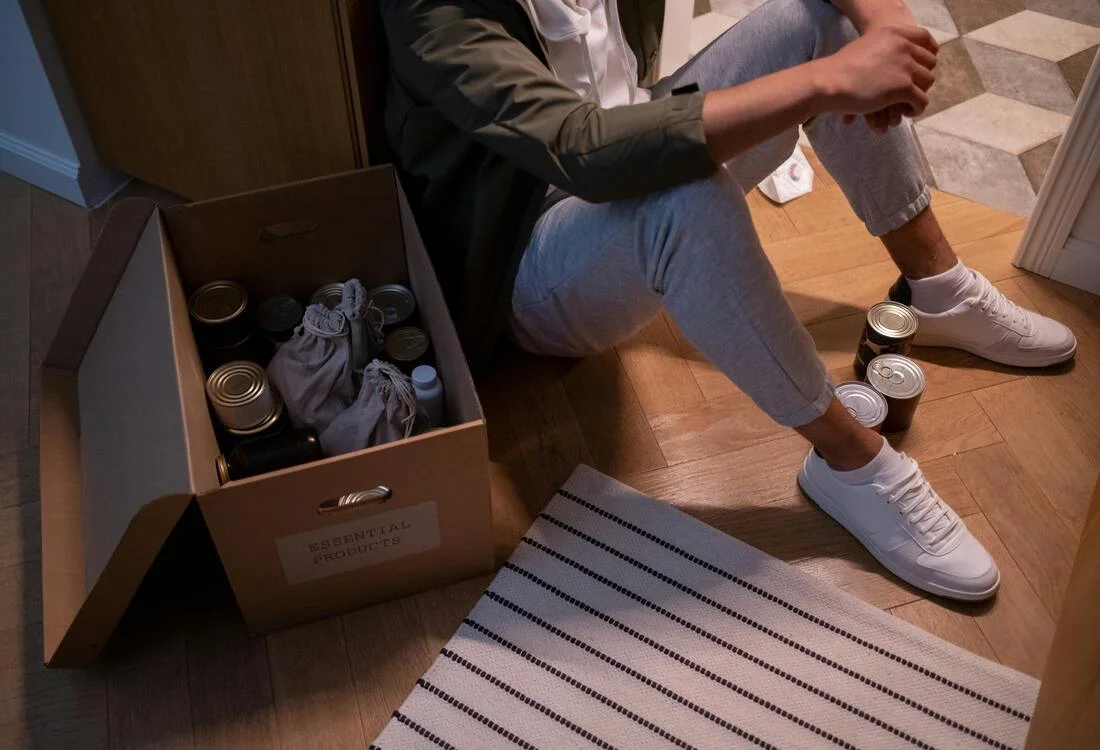
A stock means security. But also motivation. Many people shy away from the costs and postpone the issue. But every small step counts. Even if you only invest 2-3 euros in a stockpile product every week, a buffer will gradually grow.
I once started using exactly this method myself - an extra kilo of pasta or a kilo of rice every week. After a year, my pantry was well stocked and I had hardly noticed it in my wallet.
Mistakes that cost money
- Spontaneous purchases without a plan. In the end, things pile up that nobody eats.
- Focus on luxury items. Stocks are not a gourmet project, but a safeguard.
- Store food poorly. Mold or pest infestation destroy cash.
- Buy everything at once. It is better to build up continuously and take advantage of offers.
Checklist - How to keep it cheap
- Check weekly special offers
- Build up stock slowly instead of all at once
- Keeping the focus on basic products
- Use bulk packs, divide if necessary
- Keep an eye on shelf life - use the rotation system
- Avoid exotic and expensive products
Conclusion: security doesn't have to be expensive
Building a stock is like building a house: You need a stable foundation before you worry about the beautiful details. Inexpensive, energy-rich and versatile foods form this foundation. Smart shopping not only saves money, but also gives you the good feeling of being better prepared for crises.

Perhaps that is precisely the most important message: Pension provision is not a luxury. It means foresight - and that is priceless.
 Deutsch
 English