

There are two types of prepping: one paints bleak pictures of total collapse - the other is aimed at the small and medium-sized crises that we actually encounter. And you are somewhere in between. With the question: Should I prepare for the end of the world or for the problems that could come knocking on my door tomorrow?
The truth is: both have their place. But the weight is rarely where many people initially assume it to be.
The fascination of the doomsday scenario
When you hear „prepper“, many people immediately see bunkers, stacks of tin cans and people in masks preparing for nuclear war or the collapse of society. It is an image that has been shaped by Hollywood and news reports. And admittedly: These extreme scenarios have a certain fascination. They are spectacular, dramatic, almost cinematic.
But ask yourself: How likely is it that an asteroid will hit tomorrow or that a global blackout will cause the lights to go out for years? The probability is not zero, but it is vanishingly small.
Everyday crises are a completely different matter: A violent storm, a regional power outage, flooding or an interruption in the supermarket supply chain. These things happen all the time. And it doesn't affect people somewhere far away, but here, in our towns and villages.
Prepping for everyday life - the underestimated strength
An emergency stock is not only a lifesaver in the event of the end of the world. It also helps if the supermarket is simply closed or if you can't go shopping due to illness. A battery-operated radio is not only useful in the event of war, but also during a storm when the power supply fails.
The art lies in this, Not to play everyday life and extreme scenarios off against each other, but to connect them intelligently. Because if you are prepared for small crises, you automatically build a foundation that can also withstand larger scenarios.
What is more realistic?
Imagine you have no electricity for two weeks. No heating, no light, no fridge. This is not a movie plot, but something that has already happened in various regions of Europe. Now imagine the global collapse of all state structures in comparison. Both are conceivable - but which scenario is more likely?
The answer is clear. And here comes the first important insight:
👉 Focus first on the crises that are most likely to occur.
Two perspectives - and how you can combine them
You could say there are two prepper paths:
- The pragmatic way - Preparation for power outages, natural disasters, illnesses, supply bottlenecks.
- The apocalyptic path - Preparation for total collapse, civil war, global catastrophes.
Both paths have their justification. But the first is like the foundation of a house. If you build the roof without a foundation, you will soon realize that it won't hold.

Lists that make the difference clear
Typical everyday crises that you can prepare for:
- Power outage for a few days
- Heavy rain, flooding, storm damage
- Interruptions in the food supply
- Illness, quarantine, restricted mobility
- Heat or cold waves
Typical doomsday scenarios that occur less frequently:
- Collapse of the global economy
- Nuclear catastrophe
- Asteroid impact
- Total failure of all infrastructures for months or years
You can tell just by reading it: The first is something we encounter almost every year somewhere in Europe. The second is the stuff of headlines - but not the stuff that will probably hit you next weekend.
Table: Everyday life vs. doomsday - benefits of your preparation
| Range | Everyday scenario (highly probable) | Doomsday scenario (low probability) |
| Water | Secure supplies for 10 days | Well construction, filter systems for years |
| Food | Stocks and rotation in the household | Building self-sufficient agriculture |
| Energy | Emergency power, candles, power banks | Off-grid solar, generator, large tanks |
| Security | Door locks, neighborhood assistance | Secluded retreats, self-defense |
| Communication | Emergency radio, spare cell phones | Long-range radio, isolated networks |
The left-hand column is your base. The one on the right is optional if you are already well advanced.
Set realistic priorities
You may be inclined to think of the extreme. „If it's possible, then it's possible.“ But that's a fallacy. Because prepping thrives on feasibility.
- Start small. A larder with water and food for 10 days is not rocket science.
- Practice everyday scenarios. Switch off the power at home for 24 hours on a trial basis. How are you coping?
- Think in layers. Only when your basic needs are covered for a few days can you think about months or years.
The psychological factor
It's not just about equipment and supplies. It's about your head.
If you only deal with apocalyptic scenarios, you risk falling into a spiral of fear and paralysis. People who have spent years preparing for „the big bang“ were sometimes overwhelmed when a trivial power cut occurred - because their thoughts were elsewhere.
On the other hand, those who have small crises under control gain self-confidence. This self-confidence is the basis for tackling larger scenarios at some point.
Personal touch
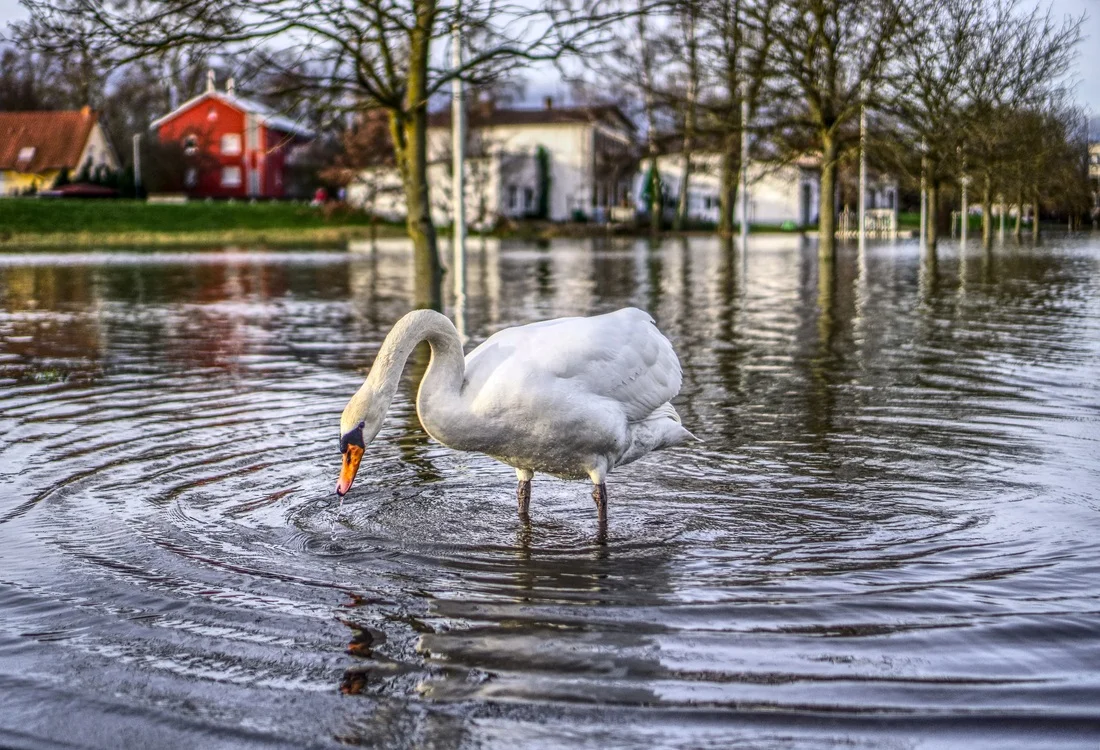
I still remember the floods of 2021 very well: entire streets were suddenly under water, electricity and gas were cut off. Many people had nothing in their homes - no water, no batteries, no way to heat food. Nobody was thinking about the end of the world at that moment - everyone was thinking about how they were going to get through the next day.

That was a key moment for me. Since then, I have sharpened my focus: first everyday life, then the big picture.
A dialog as it could happen
„But if society collapses, your small stash won't do you any good,“ says an acquaintance.
„Maybe,“ I reply. „But what good is a bunker in the Alps if you can't even survive a week of power cuts?“
That is precisely the point. It's not about either-or. It's about order.
The smart middle way
It would be wrong to dismiss doomsday prepping as a mere pipe dream. In a world full of geopolitical tensions and ecological risks, no one can guarantee that major crises will never occur. But the key lies in this, Finding a balance:
- Covering everyday crises - Water, food, energy, hygiene, communication.
- Build skills - Cooking without electricity, first aid, orientation.
- Think long-term - when the basis is in place, expand to self-sufficiency, community networks, greater security.
Conclusion - what you should really focus on
The temptation to lose yourself in end-time fantasies is great. But prepping is not a movie, it's life. And life doesn't bring you the end of the world straight away - but first the next power cut, the next storm, perhaps a supply crisis.
You should focus on this. You will become more resilient with every step you take. And what if the really big scenario does come one day? Then at least you'll have a foundation to build on.
 Deutsch
 English