

When dealing with crisis prevention, sooner or later you come across two terms that sound almost like opposites: Bug-In and Bug-Out. Two strategies, two worlds, two images in your head. In one, you see yourself within your own four walls, the windows sealed with blankets, supplies in the pantry, the radio on emergency power. In the other, you have a rucksack on your back, sturdy boots on your feet, and the path leads out - into the unknown, but prepared.
But which is better? Which strategy suits whom? And above all: Which gear, which equipment, is crucial for the respective situation?
Bug-In - stay where you are
Bug-in means staying in your own home instead of fleeing. It is the quieter, sometimes underestimated strategy.
When bug-in makes sense
- When the home is safer than the surroundings.
- If you have access to supplies, water and shelter.
- In the event of natural phenomena such as winter storms, where there is even greater danger outside.
Bug-In takes advantage of the fact that your own four walls already offer protection. You don't have to pitch a tent or look for shelter first. Warmth, a roof over your head, familiar structures - that's an invaluable advantage.
Bug-out - break up and leave
Bugging out means leaving home and fleeing to a safer place. Often with a clear destination, sometimes only with the hope of being able to survive better somewhere else.
When bug-out becomes necessary
- For fires, floods, chemical accidents.
- When the home is no longer safe or supplyable.
- In the event of political or social instability that makes your own neighborhood dangerous.
Bug-out is the more active, riskier option. It requires physical fitness, decisiveness and equipment that is light but comprehensive.
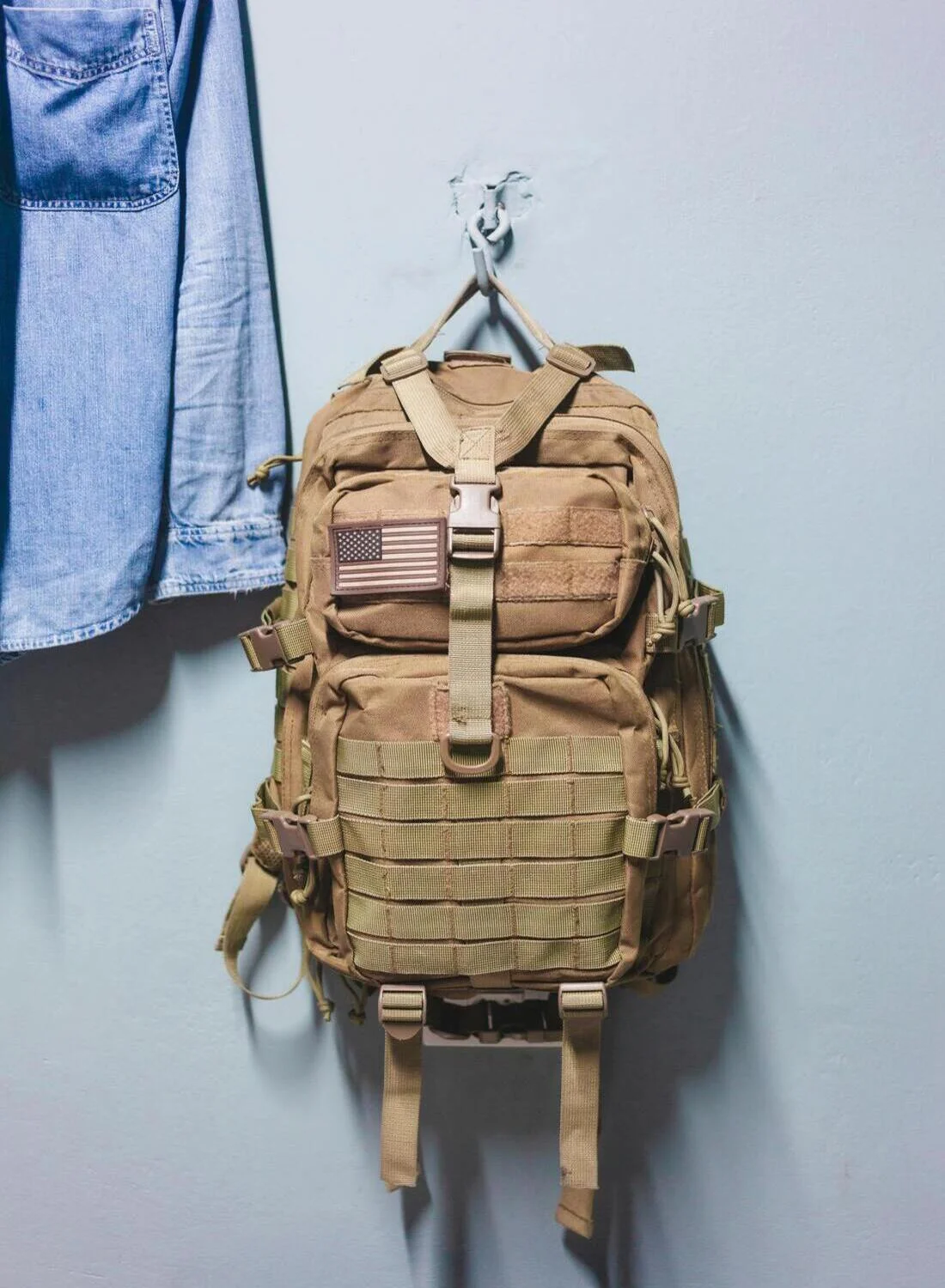
Bug-in vs. bug-out - the core differences
The two strategies can be seen as two sides of the same coin. Both can save lives in an emergency - depending on the situation.
| Aspect | Bug-In | Bug-Out |
| Location | At home, familiar surroundings | On the road, in nature or at your destination |
| Advantage | Protection, supplies, warmth | Mobility, safety if the house is at risk |
| Disadvantage | Trapped if the situation escalates | Danger on the road, limited resources |
| Gear focus | Supplies, energy sources, shelters | Lightweight backpack, survival equipment |
The right equipment for Bug-In
Anyone planning Bug-In is thinking about self-sufficiency in their own home. It's about bridging gaps in supply and protecting yourself at the same time.

Indispensable for bug-in:
- WaterCanisters, filters, tablets. Without water, all supplies are worthless.
- FoodLong-life products - rice, pasta, canned food.
- EnergyGas stoves, power banks, solar cells, candles.
- HeatBlankets, sleeping bags, maybe a small stove.
- SecurityFirst aid kit, communication equipment such as crank radio.
There is also an element that is often underestimated: Occupation. Books, games, notebooks. Anyone who stays indoors for days on end quickly realizes that boredom and tension can be just as dangerous as the cold.
The right equipment for Bug-Out
Bug-out is the supreme discipline of mobility. Every gram counts here. The rucksack becomes a lifeline.
Core components of a bug-out bag:
- Backpackstable, ergonomic, with good load distribution.
- Water: Bottle, filter, tablets.
- FoodEnergy bars, freeze-dried meals.
- SleepLight tent or tarp, sleeping bag, sleeping mat.
- FireFire steel, matches, storm lighter.
- ToolMultitool, knife, small axe.
- Clothingweatherproof, breathable, layering principle.
- SecurityFirst aid kit, flashlight, whistle.
Everything else is optional, not compulsory. Every additional load needs to be carried.
Realistic scenarios - a question of choice
Let's imagine two scenarios:
- Winter storm in the city
The roads are icy, power lines break, supermarkets remain closed. Bug-In makes sense here. If you have blankets, candles, supplies and water, you can sit it out. - Chemical spill on the outskirts of the city
A toxic cloud is spreading. Staying at home is not an option. Bugging out is mandatory here - shoulder your rucksack, get out, as quickly as possible.
The trick is not to choose one of the two strategies, but to be prepared for both.
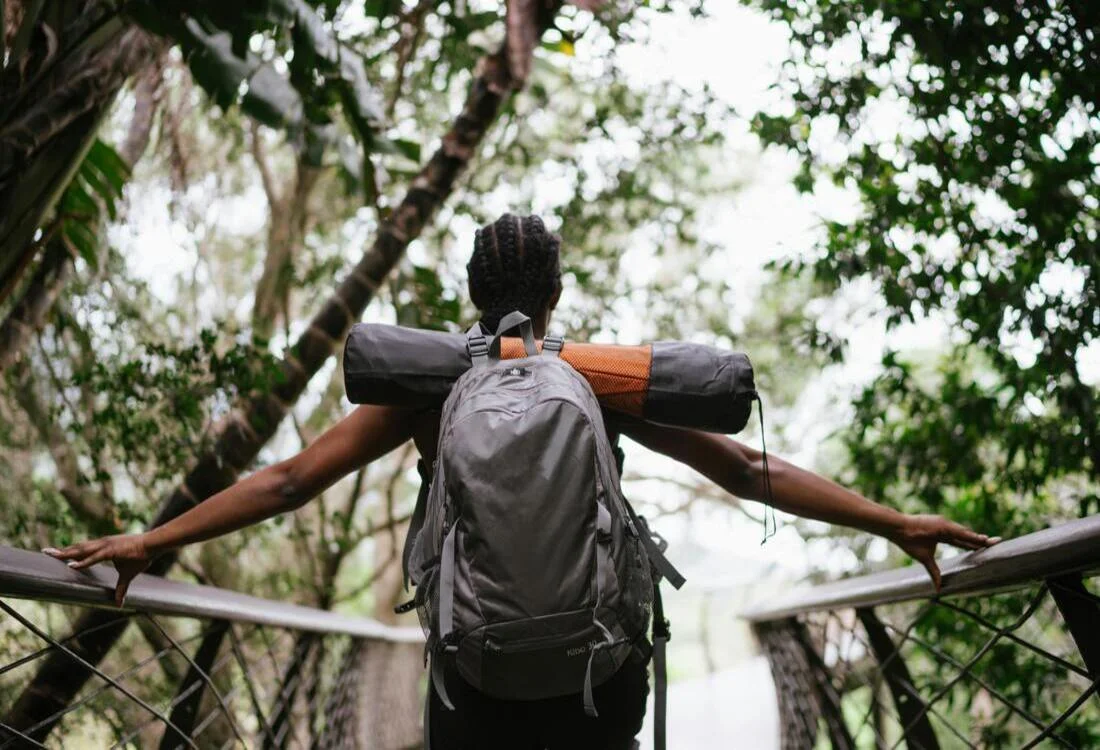
Psychology: Stay or go?
It's often not the equipment that decides, but the psyche. Staying at home feels safe - but it can be deceptive. Conversely, setting off is a huge hurdle. The moment when you close the door behind you and know that you might not come back weighs heavily.
That's why it's so important to have gone through both options internally. A trial run can work wonders. Spending a day outside with your rucksack packed and a night without electricity in your own home - that turns theory into experience.
List: How to find your strategy
- Analyze your living environment: city, country, risk areas.
- Check your resources: how many supplies, how much space?
- Know your weak points: health, physical, logistical.
- Plan both: bug-in as the first option, bug-out as an emergency.
- Pack twice: a home storage bag and a bug-out bag for on the go.
The intersection - gear that is suitable for both strategies
There is equipment that is worth its weight in gold in both cases. Examples:

- Flashlight (better: headlamp).
- Multitool.
- First aid kit.
- Water filter.
- Fire steel or lighter.
These items are small enough to take with you, yet valuable enough to be of great service at home.
A personal thought
I remember an exercise I did once: 24 hours without electricity. I stayed at home, so bug-in. It seemed easy at first. But after a few hours by candlelight, I realized how quickly it became quiet. No music, no fridge humming, no phone. You suddenly hear every crack of the house. Everything seems more intense in the dark. The next day I went out with my bug-out bag. Just one night outside, with a tarp and sleeping bag. It was cold, uncomfortable, but I felt a different kind of freedom. Both experiences were valuable - and both showed me that preparation is more than just equipment: it is also inner training.
Conclusion
Bug-in and bug-out are not opponents, but two answers to different questions. One is: Can I turn my home into a fortress? The other is: Am I prepared to leave it behind in an emergency?
Anyone preparing should know both ways. Because nobody knows what situation awaits them. Sometimes the house is the safest place, sometimes it becomes a trap. Having the right equipment for both scenarios is not a contradiction, but a smart addition.
And in the end, it's perhaps like having two tools in the workshop: You don't always need both of them, but when the day comes that you need one of them, you're glad to have it.
 Deutsch
 English