

Sometimes all it takes is a single incident to realize how fragile our usual normality is. A power cut in winter, a strike that suddenly paralyzes supply chains or a natural disaster that makes roads impassable. At such moments, it becomes clear that those who are prepared remain calmer, more capable of acting and more independent.
For many, prepping sounds extreme - like bunkers, arsenals or apocalyptic scenarios. But at its core, it's much simpler: it's about preparedness. About self-protection. And the good feeling of not being helpless even if the usual fails.
The basics - what is prepping really about?
Prepping does not mean preparing for every conceivable disaster. No one can be prepared for every eventuality. Rather, it is about cushioning the most likely disruptions.
The questions are:
- How long can I manage without a supermarket or electricity?
- What resources do I need every day?
- What am I missing immediately if it is not available?
The basic principles can be summarized as follows:
- Securing basic needs (water, food, warmth, hygiene).
- Ability to remain independent - at least for a manageable period of time.
- Flexibility and customization - Not everything goes according to plan, but a basis helps to stay calm.
The stock - your insurance for everyday life
When many people think of „stockpiling“, they imagine a cellar full of meter-high cans of food. But it's much simpler than that. The aim is to get by without a supermarket for 7 to 14 days.
Orientation: 14 days per person
- Water: 2 liters per day to drink, plus a reserve for cooking.
- Food: 2,000 to 2,500 kcal per day, long-lasting and easy to prepare.
- Energy & Light: Candles, flashlights, batteries, power bank.
- Cooking: Camping stove or barbecue with fuel.
- Hygiene: Toilet paper, soap, toothpaste, bin liners.
- Medicine: First aid kit and personal medication.
Foods that have proven themselves
- Pasta, rice, couscous, oatmeal
- Canned food (vegetables, pulses, fish, meat)
- Dried fruit, nuts, honey
- Long-life milk, milk powder
- Instant coffee or tea - small things that also provide comfort
Important: Only store what you really eat. Stocks need to be rotated - i.e. consumed and replaced regularly.
The Bug-Out-Bag (BOB) - your backpack for emergencies
Sometimes a supply at home is not enough. Natural disasters, fires or evacuations can mean that you have to leave the house. This is exactly what the Bug-Out-Bag is for - a backpack designed for 72 hours of survival.
Basic equipment of a BOB
- Documents and money
- Copies of ID cards, insurances, contacts
- Some cash in small bills
- Water and food
- Drinking bottles or drinking system
- Water treatment (tablets, filters)
- Energy bars, dry meals
- Clothing
- Weatherproof jacket
- Sturdy shoes
- Spare underwear, socks
- Equipment
- Flashlight, headlamp
- Knife or multitool
- Lighter, matches, fire steel
- Rope or paracord
- Medicine and hygiene
- First aid kit
- Personal medication
- Hygiene articles (toothbrush, soap, wet wipes)
- Other
- Notebook, pen
- Small radio (battery or crank-operated)
- Rescue blanket
Table: Stock vs. BOB
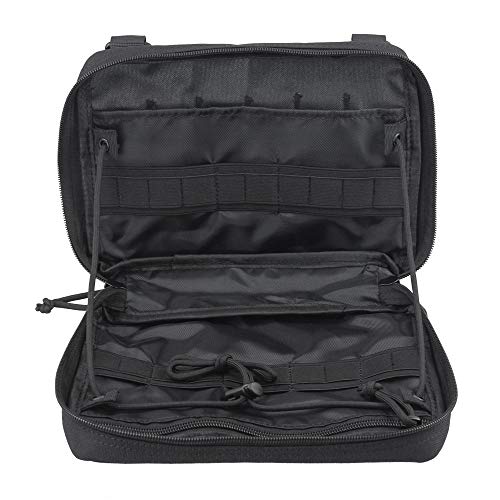
| Stock at home | Bug-Out-Bag |
| Long-term supply | Short-term care (72 hours) |
| Comfort possible (cooking, sleeping area) | Minimalist, mobile |
| Water in canisters, food in large quantities | Lightweight, only the essentials |
| Fixed location | Flexibility and escape route |
Typical mistakes made by beginners
Many people who start out make similar mistakes - and that's normal. The important thing is to recognize them.
Common tripping hazards
- Buy everything at once. This results in excessive demands and high costs. Better: build up step by step.
- Exotic supplies. Food that is never eaten in everyday life remains unused.
- Forgotten rotation. Shelf-stable food does not last forever.
- Faith in technology. Gadgets are worthless without practice. Anyone who has never used the water filter will be at a loss in an emergency.
- Isolation. Prepping does not mean isolating yourself. Community strengthens more than any equipment.
First steps - this is how you really get started
It is easier to get started if you see it as a routine rather than a project.
Concrete plan for the first few weeks:
- Take inventory. Look at what you already have. The basic stock is often bigger than you think.
- Set a small target. 7 days' supply per person - that's manageable.
- Expand regularly. Buy 1-2 more items every week.
- Start BOB. A rucksack that you fill piece by piece.
- Practice. Small „blackout evenings“ without electricity show what is missing.
A metaphor: prepping like a toolbox
Think of prepping like a toolbox. No one expects you to have every special tool. But a few basic things should be there - hammer, screwdriver, pliers. They'll help you solve problems big and small. It's exactly the same with supplies and BOBs: they are tools to enable you to act in a crisis.
Personal touch
I remember how I started out myself: an extra bag of rice, a few tins of food, a flashlight. Nothing spectacular. But with every step I took, the feeling of not being completely at the mercy of others grew stronger. Today, prepping is not a state of emergency for me, but a quiet routine - as natural as a first aid kit in the car.
Conclusion - safety through preparation
Prepping is not a sign of fear, but of foresight. It does not mean saying goodbye to everyday life, but rather safeguarding it.
- Basics: Water, food, warmth, hygiene.
- Stock: for 7-14 days, adapted to your habits.
- BOB: a rucksack for 72 hours on the road.
- Avoid mistakes: Build up slowly, remain realistic, cultivate community.
- First steps: Start small, expand regularly, gain experience.
Step by step, this creates a safety net that supports you - not only in disasters, but also in the small disruptions of everyday life.

Because in the end, prepping is not about panic, but about calmness.
 Deutsch
 English