

There are moments when our everyday life, with all its reliability, is shaken. A sudden power cut, a snowstorm, an accident on a remote country road. We are used to help being available at all times, but sometimes it takes hours or even days for assistance to arrive. In such situations, a small, inconspicuous package often decides whether you wait helplessly - or remain capable of acting: the survival kit.
A survival kit is not a luxurious gimmick for adventurers, but a compact collection of vital tools and aids. It fits in a rucksack, glove compartment or even a jacket pocket - and yet in an emergency it can mean as much as an insurance policy that you always carry with you. But what does it contain, what is it used for and how do you put together your own kit?
Why a survival kit is more than just a „gimmick“
Some people think survival kits are overkill. „I don't need one of those, after all I live in a city, nothing will happen to me.“ But is that really true?
Disasters rarely stick to zip codes. A power outage affects the big city just as much as the village. Roads can be blocked, cell phone networks overloaded or emergency services overwhelmed. In such situations, it is surprisingly reassuring to have a small package to hand that can provide light, clean water or stop bleeding.
A survival kit provides security. Not only practically, but also psychologically. It's like a silent promise: „I'm prepared.“ This feeling alone can keep you calm in a crisis situation - and calm is often half the battle.
The basic idea: small, light, functional
A good survival kit should be no bigger than a small book and fit in any pocket. The idea: In an emergency, you don't have much time or space. Nobody wants to lug around a kilo of heavy equipment just to find a bandage on the way. Instead, what counts is the essence: things that are essential for survival and can be used in a variety of ways.
Some are guided by the „triangle principle“:
- Protection - from cold, wetness, injuries.
- Water & Food - ensure that the body remains supplied.
- Orientation & communication - find their way or call for help.
Typical contents of a survival kit
Of course, the contents vary depending on your personal environment. Someone who hikes a lot will need different things than someone who mainly travels by car. But certain basic elements have proven their worth.
Classics that are almost always included:
- Multifunctional toolWhether knife, pliers or can opener - one tool that covers many tasks.
- Fire steel or storm matchesFire means warmth, protection and signal.
- Water treatment tabletsSmall tablets that turn even questionable water into drinkable water.
- Compact flashlight (ideal with crank or solar).
- First aid kitPlasters, gauze bandages, disinfection.
- Signal whistleIs often underestimated - but a shrill whistle carries further than a call for help.
- Emergency blanketSilver-gold foil that reflects heat and protects against wind.
- ParacordThin, light, tear-resistant - it can be used to build tents, lay tracks or tie improvised stretchers.
A look at the priorities
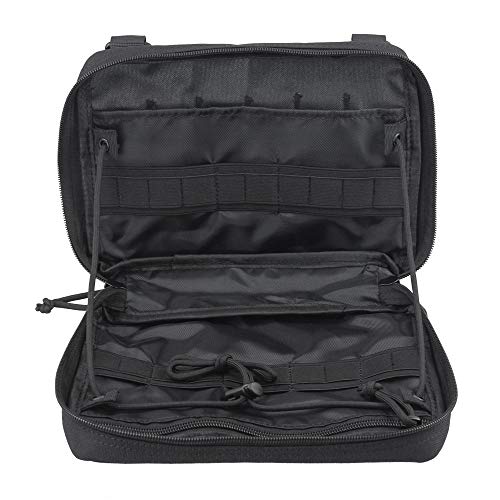
To make the dimensions clear, it is worth looking at a small overview in table form. It shows how long people can survive on average without certain resources - and why some things in a kit are more important than others.
| Resource | Average survival time | Meaning in the kit |
| Air | 3 minutes | Respiratory protection, secure open airways |
| Heat/protection | 3 hours | Clothing, emergency blanket, fire source |
| Water | 3 days | Water treatment, bottle |
| Food | 3 weeks | Snacks, energy bars optional |
This „rule of 3“ is not a rigid law, but a helpful guide. It shows that a sleeping mat can sometimes be more important than a chocolate bar.
Step by step: putting together your own survival kit
So how do you go about building one yourself? There are countless prefabricated sets on the market, but they often contain unnecessary ballast or things of inferior quality. It makes more sense to choose your own.
- Clarify framework conditions
- Do I need the kit for the car, for hiking or for emergencies at home?
- What is the maximum space and weight allowed?
- Set priorities
- Protection, water, orientation. Only then extras.
- Quality before quantity
- Better one reliable flashlight than three cheap ones.
- Testing
- Try out the equipment in everyday life. Does the firesteel work? Does the lamp also light up in the cold?
- Check regularly
- Batteries, tablets and plasters have an expiration date. A kit that lies unused in a cupboard for years can be worthless in an emergency.
Small details with a big impact
Interestingly, it is often the inconspicuous things that make the difference in practice. A piece of chalk to write clues on a stone. A set of safety pins to repair clothing or fix improvised bandages. A tiny mirror that not only serves as a guide, but also as a signaling device.
Such details remind us that survival is not just about technique, but also about improvisation. Anyone who has ever tried to start a fire in the rain knows that it is almost impossible without practice. That's why a survival kit is only as useful as the person who knows how to use it.
Personal touch
I remember a winter hike in the Black Forest where we got lost. Nothing dramatic, but it was already dusk, the paths were icy and my cell phone battery was almost flat. At that moment, I was glad I had a small headlamp in my rucksack - more out of habit than anything else. This little light led us back safely. Not a heroic story, just a reminder of how valuable small preparations can be.
Different scenarios, different kits

There is no such thing as the perfect survival kit. Rather, it makes sense to create different variants.
Examples:
- Everyday Carry Kit (EDC)Small multi-tool, plaster, flashlight, lighter.
- Car kitAdditional blanket, safety vest, jumper cables, water bottle, muesli bar.
- Outdoor kitFire steel, water filter, compass, fishing line, first aid kit.
This means you are prepared for any situation without having to lug around unnecessary baggage.
The psychological aspect
If you are prepared, you can help in an emergency instead of becoming the person in need of help yourself. This strengthens self-confidence and community at the same time.
Perhaps it can be compared to a parachute: Nobody jumps around with it all the time for fun, but if you need it once, you're glad to have it.
Conclusion: Small packages, big impact
A survival kit is like an inconspicuous bunch of keys that you hopefully never have to use - but if you do, it can open doors that would otherwise remain closed. It is not an expression of fear, but of prudence. A tool that shows: I have taken responsibility, I have made provisions.
In the end, it's quite simple: a kit hardly takes up any space, doesn't cost the earth, but gives you something priceless - the certainty of being prepared. And perhaps also a bit of serenity if life turns out differently than planned.
 Deutsch
 English