

Imagine you had to leave your home at a moment's notice. No time to think long and hard, just take the essentials with you. What would you grab? Many preppers would say without hesitation: a knife.
Not because it sounds martial or calls for adventure, but because a knife has been one of man's most basic tools for thousands of years. Whether for cutting rope, preparing food, building shelter or defending yourself in an emergency, a knife is like the Swiss Army pocket version of self-reliance.
But which knife is the right one? And what makes a „prepper knife“ anyway?
Knives - more than just a blade
functionality Practicality to.
- A kitchen knife may be sharp - but it's useless out in the rain, in the forest or when breaking up wood.
- A huge survival sword makes an impression - but who wants to carry 1.5 kilos of steel around?
- The ideal prepper knife is robust, versatile and easy to handle.
Important criteria for prepper knives
1st blade type
- Fixed blade: Stable, reliable, no mechanics that can break. Ideal for hard work.
- Folding knife Compact, easy to carry, discreet. But more susceptible to extreme loads.
2. steel quality
Carbon steel is sharper and easier to resharpen, but rusts more quickly. Stainless steel is more resistant to rust, lasts longer, but is more difficult to resharpen.
3rd handle
Non-slip, ergonomic, can also be used with wet hands. A knife that is not safe to hold is dangerous - for yourself.
4. size
A knife for preppers should practical Between 8 and 15 centimeters blade length is a good range.
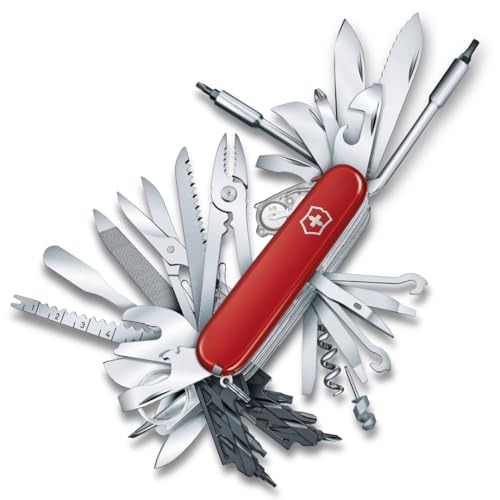
5. versatility
A good knife can carve, cut, chop and, if necessary, dig. It is not a specialist, but an all-rounder.
List: Typical tasks for a prepper knife
- Splitting wood (batoning)
- Prepare tinder and make a fire
- Cutting food
- Cutting ropes and belts
- Build a shelter (cut branches to size)
- In extreme cases: self-defense
This list alone shows that a knife is not a „nice to have,“ but a central component of any equipment.
The three main categories
- The fixed outdoor/survival knife
Robust, durable, reliable. No mechanism that jams. A sturdy companion on your belt or in your rucksack. - The folding knife (EDC - Everyday Carry)
Compact, quickly to hand, ideal for everyday tasks. Ideal as a supplement, not necessarily as the only knife. - The multitool
Not the best knife, but unbeatable in versatility. Turning screws, opening cans, cutting - all in one. Indispensable as a second solution.
Table: Comparison of knife types
| Type | Advantage | Disadvantage | Scope of application |
| Fixed blade | Stable, versatile, resilient | larger, less discreet | Outdoor, Survival |
| Folding knife | compact, lightweight, unobtrusive | more susceptible, less robust | Everyday life, supplement |
| Multitool | Versatile, feature-rich | Knives often not optimal | Everyday life, repairs |
Specific examples - tried and tested knives for preppers
Of course, everyone has their favorites, but there are some models that have established themselves in the pre.
- Morakniv Companion (Sweden): Inexpensive, light, extremely sharp. A classic for beginners and professionals.
- ESEE 4: Robust survival knife, thick blade, unbreakable.
- Victorinox Huntsman: The classic Swiss Army Knife - countless functions, inconspicuous, reliable.
- Leatherman Wave Multitool: An all-rounder that no bug-out bag should be without.
- Benchmade Griptilian (folding knife): High quality, easy to wear, ideal for everyday use.
Personal touch
I still remember my first attempt at splitting firewood with a cheap folding knife. After three strokes, the locking mechanism was broken. Fortunately, it was only a test in the forest, not a real case. Since then I have understood: The wrong knife is not only useless, it is dangerous.
Knife care - because even steel needs care
A good knife is an investment - and it needs to be looked after.
- Clean regularly, especially after contact with moisture or acidic foods.
- Do not delay sharpening - a blunt blade is more dangerous than a sharp one.
- Oil or preserve it if it is to remain unused for a longer period of time.
A knife is like a small toolbox. But only if it remains ready for use.
List: Mistakes that many make
- Buy knives based on appearance only - instead of function.
- Choose too large or too heavy.
- Own only one knife (loss = no alternative).
- Neglecting care.
- No practice: a knife wants to be used, not just admired.
Legal aspects
A brief but important point: In Germany, certain regulations apply to carrying knives.
- Fixed blades over 12 cm are prohibited in public.
- One-handed folding knives with a locking mechanism may not be carried without a „legitimate interest.“.
For everyday use, this means that a multitool or a small folding knife are unproblematic. The large survival blades belong in your rucksack, not in your trouser pocket.
Metaphor at the end
You could say: A knife is like a silent companion. It doesn't talk, it doesn't boast - but when you need it, it's there. It's a small insurance policy against the unpredictable, a piece of control in an uncertain world.
Conclusion - the right knife for preppers
There is no such thing as the best knife. There is only the knife that suits you, your environment and your needs. The smartest thing is a combination:
- a robust fixed blade for hard work,
- an everyday carry folding knife,
- a multitool for versatility.
So you are prepared - whether you need to open a can, cut a rope or prepare wood for a fire.
And perhaps that's the heart of the matter: It's not the spiciness or the price that counts, but the certainty of knowing - I am not unarmed, I am capable of acting.
 Deutsch
 English