

Imagine you're out and about for several days. Perhaps voluntarily, perhaps forced. You've been lucky and found berries, picked mushrooms or even shot an animal. But then the question immediately arises: How do I store it all without it spoiling?
This is where one of the oldest chapters of human survival begins - the preservation of food in nature. Long before there were refrigerators or tins, people knew how to preserve meat, fish, fruit and herbs. And this knowledge is not just romantic historical knowledge, but can be vital in an emergency.
Why conservation in the wild is so crucial
Fresh food is perishable. Meat can go bad within a few hours, berries start to ferment, even freshly caught fish spoils faster than you think. Without the ability to preserve supplies, you live from meal to meal - a risky game.
- Planning security: With preserved supplies, you have reserves for bad days.
- Save energy: Instead of having to hunt or collect anew every day, you can fall back on stocks.
- Transportability: Dried or smoked food is lighter and easier to take with you.
- Security: If you have supplies, you are less likely to panic if nature doesn't give you anything.
Principles of preservation
Regardless of which method is used, all preservation techniques ultimately have one goal: to make the habitat as unattractive as possible for bacteria, fungi and other spoilage organisms.
The main methods are:
- Drying: Withdrawal of water.
- Smoking: Combination of drying and disinfecting effect of the smoke.
- Salting: Bacteria are deprived of water.
- Ferment: „Good“ microorganisms displace the harmful ones.
- Cooling or storage: Use of temperature or environment.
Drying - the simplest method
Drying is probably the oldest form of preservation. Sun, wind, maybe a little smoke - that's all it often takes.
- For berries and fruit: Cut open and lay out on a clean stone or cloth. Sun and air will do the rest.
- For meat and fish: Cut into thin strips, hang up, dry lightly over smoke if necessary.
Tips
- Protect from insects - a thin cloth or pins will help.
- Do not dry directly over a blazing fire, otherwise it will become hard and bitter.
- Patience: The more even the drying, the longer the result will last.
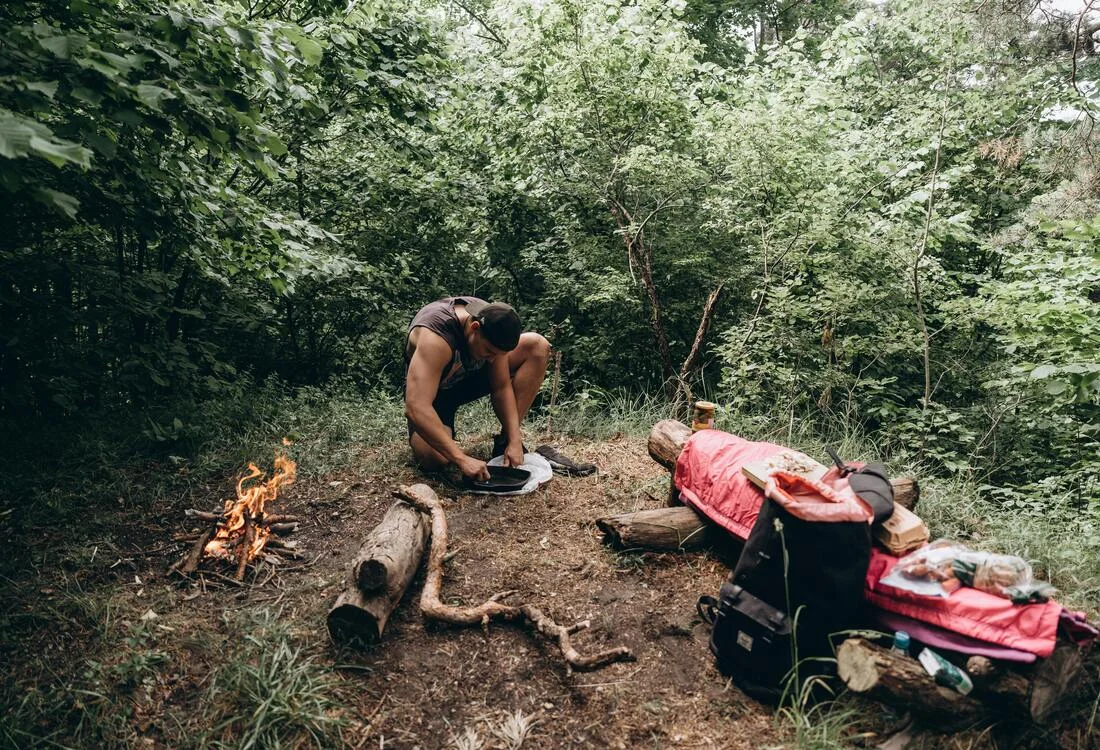
Smoking - taste and shelf life
Smoking is basically drying with an extra: smoke. It removes water and at the same time creates a kind of protective film of aromatic substances on the food.

- Construction of a smokehouse: It could hardly be simpler: a hole in the ground, a rack of branches above it, the meat on top. A small fire underneath, lots of smoke, little flame.
- Suitable for: Meat, fish, cheese (if available), even mushrooms.
The smoke not only has a preservative effect, it also adds flavor. Smoked meat will keep for several weeks in a cool environment.
Salting - if you have salt
Salt is not always easy to find in nature, but it is unbeatable when it is available.
- Rub the pieces of meat with salt.
- Sprinkle the fish with salt in layers.
- Then dry or smoke.
Salt draws water out of the tissue and makes it difficult for microorganisms to multiply.
Fermentation - the power of microorganisms
Fermentation sounds complicated, but it's not. Even our ancestors used this technique, often without understanding the biochemical processes.
- Take sauerkraut, for example: Cut the cabbage into strips, press into a container and cover with liquid. Lactic acid bacteria do the work.
- Wild herbs: Nettles and dandelions can also be fermented using lactic acid.
- Fish: In some cultures, small fish are fermented and thus preserved for months.
The advantage: no heat is required and the food is not only more durable but also easier to digest.
Cooling and storage
Sometimes the simplest solution is the best. Cold earth, cool water or even snow can serve as natural cooling chambers.
- Earth pits: Dig a hole, put food in it, cover with leaves or grass.
- Streams: Place the meat or berries in watertight containers in cold water.
- Snow or ice: The classic in wintry regions.
Table: Comparison of methods
| Method | Suitable for | Shelf life (approximate) | Expenditure |
| Drying | Fruit, meat, fish | Days to weeks | low |
| Smoking | Meat, fish, mushrooms | Weeks to months | medium |
| Salting | Meat, fish | Weeks | high (salt required) |
| Ferment | Vegetables, herbs, fish | Weeks to months | medium |
| Cooling | all | Days to weeks | low |
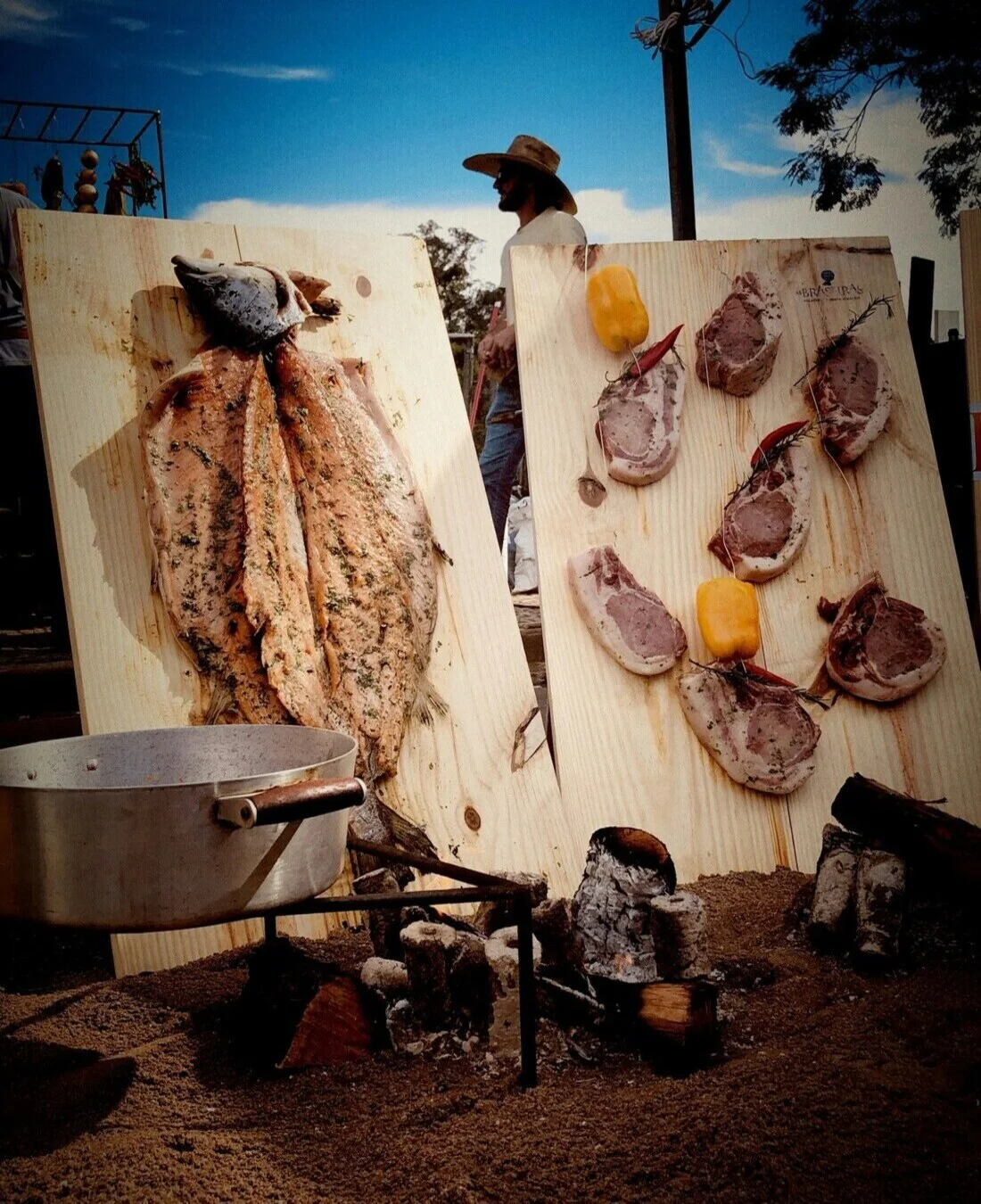
Practical examples
Berries for the winter
In Scandinavia, people traditionally dried lingonberries and blueberries on hot stones. This gave them vitamins even in winter.
„Jerky“ from the wilderness
Native North Americans cut buffalo meat into thin strips, dried it in the sun and kept it for weeks. This principle can be transferred to deer or wild boar.
Fish in smoke
In coastal regions, people smoked fish not only for the taste, but also because it was a way of securing supplies for the whole family.

Mistakes to avoid
Many fail not because of the technology, but because of patience or the details.
- Pieces that are too thick: Meat dries on the outside, remains raw on the inside and spoils.
- Too little smoke: Half-hearted smoking does not lead to shelf life.
- Humidity: Even slight moisture during storage can promote mold.
- Unhygienic work: Dirty hands or tools accelerate spoilage.
List: Little helpers from nature
- Nettle fibers: As nets or bags for hanging.
- Pine resin: Resin can act like a protective film on flesh.
- Large leaves: For wrapping or covering.
- Ash: Light layer over food keeps insects away.
The mental aspect
Preserving food doesn't just mean securing supplies. It also creates peace of mind. If you know that you have something „for later“, you can go into the next day more relaxed. In a crisis situation, this serenity is almost as valuable as the food itself.
Personal touch
I remember a little exercise in the summer. We had fetched fish from a stream and decided to preserve it in smoke. It was amazing how strong the smell was after a short time, how the fish changed. The next day, when we tasted it, it was spicy, firm - and still good. This experience showed me that preservation is not just technology, it is a kind of bridge between the present and the future.
Conclusion: Stock is freedom
Preserving food in nature means gaining a bit of independence. It makes you less dependent on chance, the luck of the hunt or a find by the wayside.
Whether you're drying fruit, smoking meat or fermenting herbs, each method is a tool in the survival toolbox. And every dried piece of apple or smoked fish fillet is not just food, but proof that you are acting with foresight.
Because in the end, conservation is nothing more than a message to your future self: „Don't worry. I've made provisions.“
 Deutsch
 English