

Imagine being cut off from the outside world for several days. No supermarket, no delivery service, not even the possibility of using supplies from the cellar. What you have with you then determines your ability to act - sometimes even your stamina.
This is exactly where the idea of Emergency ration into play. A compact, nutritious food that is as durable as possible, takes up little space and still provides you with a reliable supply of energy. Many people immediately think of military rations or the famous Bundeswehr packs. But what if you could make your own emergency rations - adapted to your preferences, cheaper and without additives?
Why it makes sense to have your own emergency rations
Industrially produced emergency packs are practical, no question about it. They are often vacuum-packed, standardized and easy to store. However, they rarely taste really good, are expensive and often contain more sugar and flavor enhancers than you actually want.
Homemade emergency rations, on the other hand, have clear advantages:
- Control over the ingredientsYou decide what goes in it - whether meat, nuts or dried fruit.
- Cost savingsMany basic ingredients can be bought cheaply.
- Individual customizationAllergies, preferences or diets - everything can be taken into account.
- Traditional knowledgeYou are using ancient methods that people have been using for centuries.
Classic emergency ration: Pemmican
When people talk about emergency rations, one word almost always comes up: Pemmican. This power pack originally comes from North America. The indigenous people invented it to preserve meat and provide sufficient energy on long journeys or in winter.
The basic idea is simple and ingenious:
- Lean, dried meat is finely ground.
- Mixed with melted fat.
- Optionally supplemented with dried fruit.
The result is a compact, extremely energy-rich food that keeps for months - even years in cool conditions. No wonder pemmican was popular with trappers, polar explorers and soldiers alike.

Basic recipe for pemmican
Here is a classic recipe that you can vary as required:
Drying meat
- Use beef or game. Important: as fat-free as possible.
- Cut into thin strips and dry at a low temperature (approx. 50-60 °C) in the oven, dehydrator or over a fire.
- The meat must break „crunchy“ and no longer be pliable.
Chop meat
- Grind the dried meat to a powder in a mortar or blender.
Prepare fat
- Slowly drain the beef tallow or lard.
- Strain off the liquid, clear fat.
Mixing
- Mix the meat powder with the fat. Ratio about 1:1.
- If you like, add dried berries (e.g. cranberries) for vitamins and flavor.
Filling
- Pour into small molds or tins and leave to cool.
- Airtight packaging.
Nutrient comparison of different emergency rations
| Ration | Calories (approx. per 100 g) | Durability | Special features |
| Pemmican | 500-600 kcal | Months to years | Very high in fat, traditional |
| Muesli bar | 350-450 kcal | 6-12 months | Sweet, readily available |
| Hardtack (ship's biscuit) | 300-350 kcal | years | Extremely durable, but dry |
| Nut mixture | 550-650 kcal | 6-12 months | Lots of energy, susceptible to rancidity |
More ideas for homemade emergency rations
In addition to pemmican, there are a number of other options. Some date back to ancient times, others are modern variants:

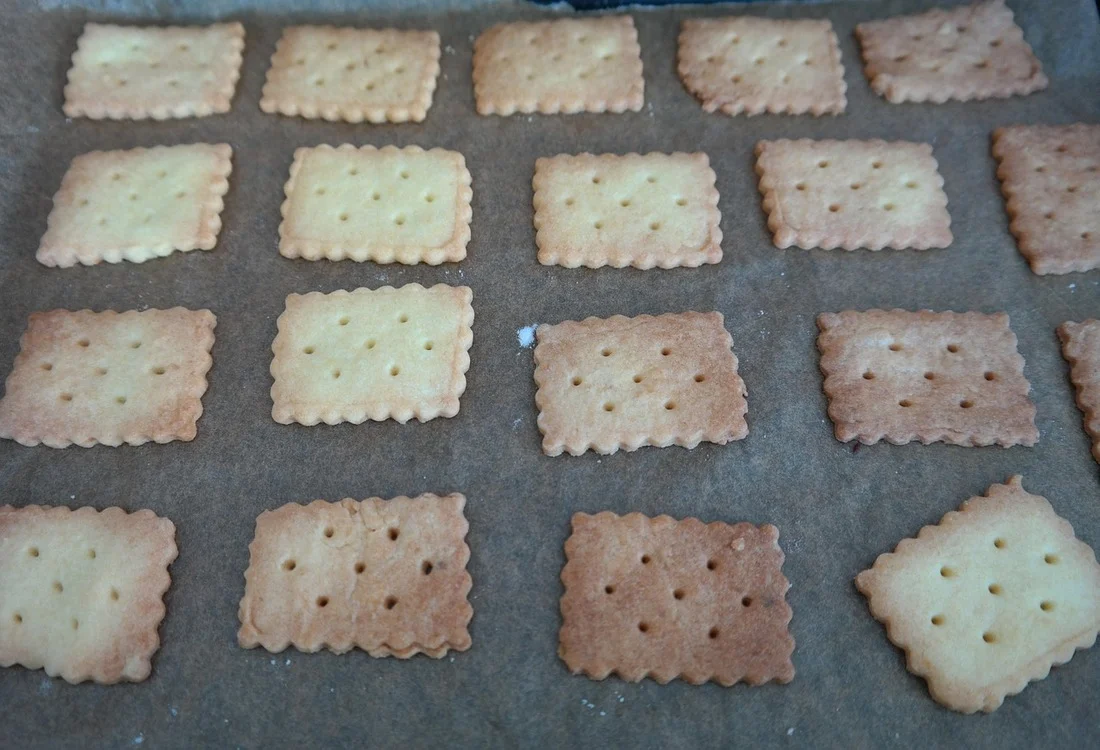
1. hardtack (ship's biscuit)
An extremely hard cookie made from flour, water and salt. So dry that it lasts practically forever. Formerly used on ships, still popular with survivalists today.
2. homemade energy bars
Oat flakes, nuts, honey, dried fruit - pressed and baked into bars. Practical, nutritious and customizable.
3. dried fruit & nuts
Combined, they make an amazingly long-lasting and high-calorie mixture. Important: store in an airtight container in a dark place.
4. soup concentrates
Mix dried vegetables and spices with salt and fat to form a compact mixture. In an emergency, add hot water.
List: What makes a good emergency ration?
- High calorie density - Energy in a small space.
- Long shelf life - at least months, preferably years.
- Simple preparation - If possible, „eat and go“.
- Transportable - Compact, lightweight, unbreakable.
- Wholesome - Not too sweet, not too heavy, tolerable even under stress.
Shelf life and storage
No matter which emergency ration you make - the right storage is crucial.
- Cool and darkCellar or pantry are ideal.
- AirtightOxygen accelerates spoilage.
- PortioningBetter several small packages than one large one.
A practical tip: Vacuum packing. If you have a vacuum sealer, you can improve shelf life and transportability enormously.
A little personal anecdote
I melted my first pemmican in a cast-iron pan. The smell of warm beef tallow was... let's just say it took some getting used to. But when the meat powder went in and the mixture became a compact block, I suddenly understood why this recipe has survived for centuries. Cut off a piece, tasted it - nutritious, intense, unfamiliar. But that's exactly the point: it works.
Practical application scenarios
When does homemade emergency rations really make sense?
- On longer hikesPemmican or Hardtack are easy to take with you.
- In the event of a power failureNo cooling required.
- In crisis preventionA small supply can bridge the time until other resources take effect.
- As a supplementEmergency rations are no substitute for a varied diet, but they are an important building block.
List: Mistakes to avoid
- Use too much sugar - makes the ration unstable and sticky.
- Do not use fat without heating it sufficiently - it can become rancid.
- Make too large quantities at once - better to start small.
- Neglect packaging - air, light and moisture are enemies.
A picture to take away
Imagine a winter evening. The storm is raging outside, the power is out, the fridge is dead. You reach into your pantry shelf, open a small packet and hold a block of Pemmican in your hand. Compact, simple, inconspicuous - and yet a piece of security. This is exactly what makes emergency rations so valuable.

Conclusion
Making your own emergency rations is not rocket science. With just a few ingredients and a little patience, you can create food that will sustain you for days or weeks. Pemmican, hardtack or homemade bars - each variant has its advantages and disadvantages. The important thing is to experiment, find out what suits you and stock up in a way that suits your life.
Because in the end, it's not just about calories. It's about the good feeling of being prepared - with a piece of tradition that strengthens you in an emergency.
 Deutsch
 English