

There are moments when we realize how much our everyday life hangs by a thread. A power cut, a natural disaster or simply a faulty fuse box - and suddenly you're left with food in the cellar but no way of preparing it. This is exactly where a well thought-out outdoor kitchen without electricity comes in handy.
The question is: how do you plan something like this sensibly without immediately investing in a high-tech camping set-up? And how do you create a kitchen that is not only practical, but also safe and versatile?
Why an outdoor kitchen is so important in a crisis
Preparing food is more than just eating. It is warmth, normality, a piece of culture. In a crisis, a warm meal can lift the mood and strengthen the body. But without electricity, the stove, oven, microwave and often the kettle are suddenly no longer available.
An outdoor kitchen means independence. It gives you the opportunity to cook even when everything is at a standstill indoors. Fire replaces electricity, simple appliances replace high-tech. And sometimes you realize: less is more.
Basic principles of a kitchen without electricity
Before going into detail, three principles will help:
- Safety first - Fire, gas and embers have their place outside, not in the living room. Good ventilation and a stable location are essential.
- Flexibility - The more methods you master (fire pit, gas stove, rocket stove), the better prepared you are.
- Easy handling - When the crisis hits, there is often no time for complicated set-ups. An outdoor kitchen must be ready for use quickly.
Cooking options without electricity
Here is an overview of the most important variants.
| Method | Advantages | Disadvantages | Suitable for |
| Fireplace | Flexible, no equipment required | Lots of smoke, depending on the weather | Cooking, grilling, boiling water |
| Gas stove | clean, fast, controllable | Gas supply limited | Coffee, soups, simple dishes |
| Rocket stove | efficient, requires little wood | Acquisition/construction necessary | Energy-saving cooking, bundling heat |
| Dutch Oven | versatile, baking & braising | difficult, needs some practice | Bread, stews, roasts |
| Solar stove | free of charge, no fuel | weather-dependent, slow | Rice, vegetables, gentle cooking |
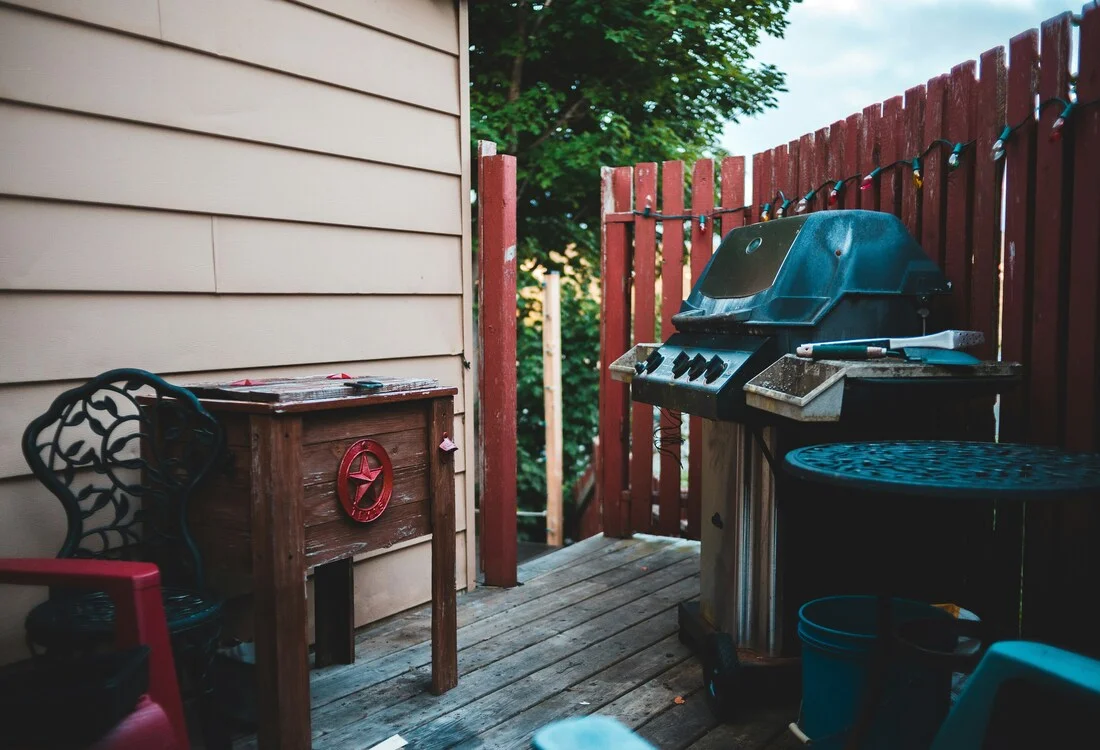
Step by step: planning your outdoor kitchen
1. select location
An outdoor kitchen needs a safe place. A covered but open area is ideal - e.g. a carport, a terrace with a roof or a weatherproof shelter. This way you are protected from the rain, but also have enough air circulation.
2. combine cooking methods
Don't put all your eggs in one basket. A gas stove for boiling water quickly, a rocket stove for efficient meals, and a simple fireplace as a backup. This gives you flexibility if one method fails.

3. work surfaces and order
A few simple wooden boards or folding tables are enough. The important thing is to set up your kitchen so that you can a clear work surface, a cooking area and a place for clean water have. It sounds banal, but structure helps enormously in stressful situations.
4. plan fuel supplies
- Wood (dried, stored, split)
- Gas (cartridges or bottles)
- Coal or briquettes
- Emergency solution: dry twigs, cones, paper
Practical equipment for the kitchen without electricity
An outdoor kitchen without electricity depends on the right equipment. You don't have to spend a fortune - you can find a lot of things second-hand or improvise.
Basic equipment:
- Gas stove or spirit stove
- Rocket stove or small wood stove
- Dutch oven and/or cast iron pan
- Water canister with tap
- Cutting board and sharp knife
- Potholders, gloves, lighter/matches
Additional extras:
- Thermos flask (saves fuel as hot water stays warm for longer)
- Barbecue grate or tripod for the fireplace
- Pots and lids in various sizes
- Enamel tableware (shatterproof, heat-resistant)
- Bucket or tub for washing up
List: Recipes that work well outdoors
Outdoor cooking calls for dishes that are simple, nutritious and easy to prepare.
- Stews of all kinds - Potatoes, beans, vegetables, all in a pot, simmer for a long time.
- Pan-fried dishes - Vegetable stir-fry, scrambled eggs, fried potatoes.
- Bread in the Dutch Oven - crispy, filling, long shelf life.
- Semolina porridge or oatmeal porridge - filling, quick to make, refined with dried fruit.
- Soups - simple, variable and energy-saving.
What you should consider: Hygiene and water
An outdoor kitchen without electricity sounds romantic, but can quickly become unhygienic. Leftovers attract animals, washing-up water builds up and germs suddenly appear. Therefore:
- Use two bucketsOne for rinsing water, one for rinsing.
- Hold Soap, vinegar and a few cloths
- Plan a place for waste (preferably locked).
- Always store drinking water separately from service water.

Personal experience
I remember one summer when the power was out for days on end. No light, no fridge, no stove. We improvised: an old camping stove, an improvised table made from pallets, and suddenly there was a little „campfire feeling“ in our own garden. It wasn't comfortable - but it worked. And in the end, we were even a little proud of how much we could do with so little effort.
List: Typical mistakes with outdoor kitchens
- Put everything on one cooking method - if the gas is empty or it's just raining, you're screwed.
- Store too little fuel - A bag of wood won't last long. Better plan generously.
- No protective clothing - Burns happen quickly. Gloves are mandatory.
- Underestimating water - No cooking, no washing up without water.
- Disorder - If you have to search for the knife for a long time in a crisis situation, you risk stress and mistakes.
Outdoor kitchen as an opportunity
Perhaps that's exactly what an outdoor kitchen is all about: it's more than just an emergency plan. It is a place where community is created. Sitting outside, listening to the crackling of the fire, the smell of bread in the Dutch oven - these are experiences that go far beyond mere survival.

Conclusion
An outdoor kitchen without electricity is not a luxury, but an investment in independence and safety. It requires planning, a little practice and, above all, the courage to break away from the convenience of modern appliances. But those who take this step not only gain security in the event of an emergency, but also new experiences in everyday life.
In the end, it's not just about getting full. It's about regaining control when other things fall away. And maybe even about feeling again how original and satisfying it can be to cook outside by the fire.
 Deutsch
 English