

Water is life. A phrase that you often hear, but only realize with full force when suddenly not a drop comes out of the tap. For many preppers, stockpiling drinking water is therefore one of the first steps. But one question quickly arises: Do they really have to be plastic canisters and PET bottles?
Maybe you can feel it yourself: Plastic always seems a little „cheap“. You worry about plasticizers, microplastics and the slow ageing of the material. And you ask yourself: aren't there better, more sustainable and healthier alternatives?
The good news: yes, they do exist. But they require a little more thought, and sometimes creativity.
Why avoid plastic at all?
In everyday life, we buy mineral water in PET bottles, fill canisters when camping and rarely give it a second thought. But when it comes to crisis preparedness, it's worth taking a closer look.
- DurabilityPlastic ages. Over time, it becomes brittle, cracks or starts to smell.
- Chemical loadEspecially at warm temperatures, substances from the plastic can pass into the water. You will notice this at the latest when the water „tastes of plastic“.
- SustainabilityIf you want to store supplies for years, look for more stable solutions. Glass, metal or clay are materials that not only last longer, but are also less problematic for health.
Basic principles of water storage
Before we talk about alternatives, let's briefly cover the basics: no matter which container you store in, three factors are crucial:
- CleanlinessOnly use thoroughly cleaned and disinfected containers.
- DarknessWater should be stored away from light to prevent the formation of algae.
- CoolThe lower the temperature, the longer the water stays fresh.
If you follow these three rules, you're already halfway there.
Alternative materials - an overview
Let's take a look at what options you have if plastic is not an option for you:
1. glass bottles and balloons
Glass is neutral, durable and does not release any substances into the water. Large glass carboys (also known as „ladies“ jans") hold 5 to 25 liters and are ideal for storage. The disadvantage: they are heavy and fragile.
2. stainless steel container
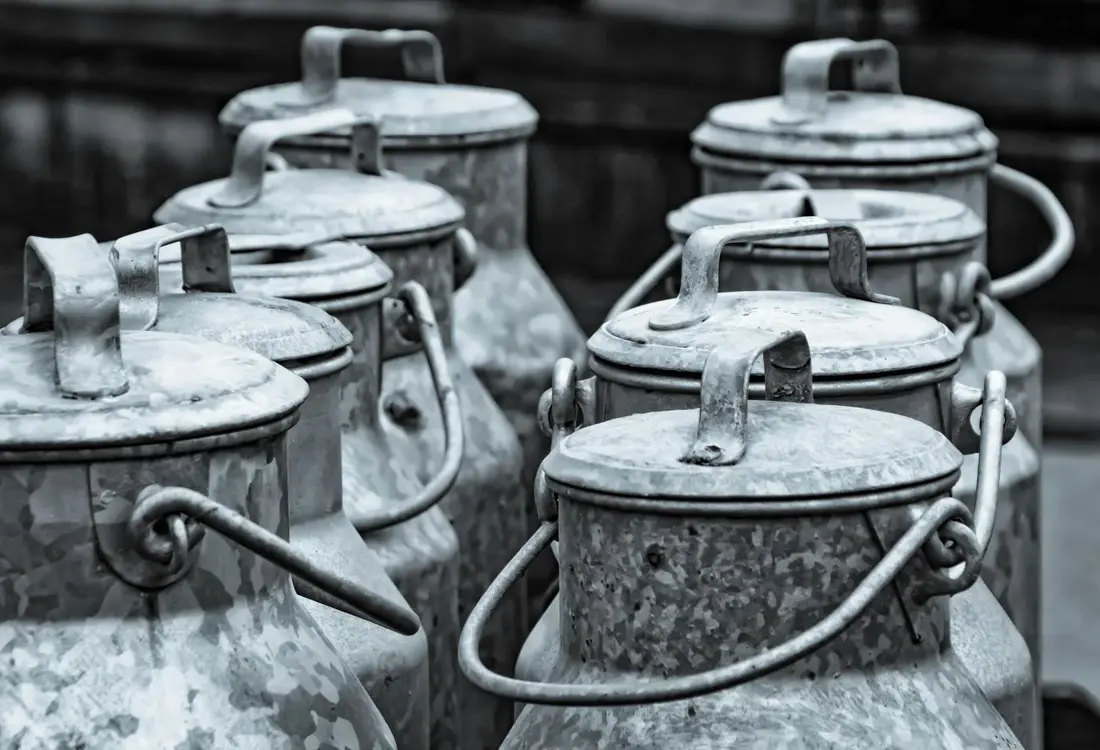
Stainless steel is virtually the „gold standard“ for hygienic water storage. No taste, no plasticizers, robust and durable for decades. Whether in the form of canisters, kegs or even large tanks - stainless steel is probably the most reliable choice. However, it is also the most expensive.
3. enamel or ceramic vessels
The advantage of enamel containers is that they have a smooth, water-repellent coating on the inside. Clay or ceramic jugs, on the other hand, „breathe“ slightly, which provides a certain amount of cooling. However, they are usually smaller and therefore more suitable for the kitchen or everyday use than for long-term storage.

4. concrete or masonry cisterns
For larger quantities, it is almost impossible to avoid permanently installed solutions. An underground cistern keeps water cool and dark. However, it requires construction work and good sealing, otherwise the water will quickly become undrinkable.
Comparison of the alternatives
| Material | Advantages | Disadvantages | Suitable for |
| Glass | Neutral, no release of substances | Heavy, fragile | Small to medium stocks |
| Stainless steel | Extremely durable, hygienic | Expensive, heavy | Long-term storage, larger quantities |
| Enamel/clay | Traditional, partly cooling | Risk of breakage, limited volume | Household use |
| Cistern | Large quantities, cool, dark | Construction effort, high costs | Self-sufficient supply, gardens |
How much water should you store?
The rule of thumb is: At least 2 liters per person per day for drinking only. If you add cooking and minimal hygiene, you quickly end up with 3-5 liters. For a family of four, this means around 60 to 100 liters per week.
If you want to plan self-sufficiently for months, you either need large tanks or a reliable source for refilling.
Practical tips for implementation
List: Using glass and stainless steel correctly
- Only store glass bottles tightly closed and in a dark place (e.g. in crates).
- Boil the stainless steel container thoroughly or clean it with a baking soda solution before filling it for the first time.
- Replace the water at least once a year, even if the containers are tight.
- Emergency: Preserve water with a few drops of silver solution (alternatively boil before drinking).
List: Cisterns and wells
- Only use materials suitable for drinking water (no cheap DIY store concrete without waterproofing).
- Always keep the lid closed - insects, animals and leaves are a risk.
- Plan for filtration: activated carbon or ceramic filters are mandatory.
- For rainwater, make sure to use a pre-filter (leaves, sand, dust).
A personal thought
I still remember how my grandmother always had several glass carboys of water in the cellar of her old house. At the time, I didn't understand why. Today I understand: it was part of a generation that had learned never to leave supplies to chance. When I put glass carboys of fresh water in the dark storeroom myself, I have this feeling of security - as if I am carrying on a piece of tradition.
Sensory analysis: not all water tastes the same
Anyone who believes that water is simply „tasteless“ is mistaken. Anyone who has ever tasted stale water from a plastic canister knows the slightly musty aroma. A sip from a glass bottle is different: cool, clear, refreshing. Even stainless steel sometimes gives an almost „pure“ note. These differences may seem small in everyday life - but in a crisis, when water is the most important commodity, they are more noticeable.

A picture at the end
Imagine it's summer heat outside. Electricity and waterworks are at a standstill. You go into your pantry, open a cool glass carboy and pour yourself a glass of clear water. No plastic taste, no worries about chemicals - just the reassuring feeling of having taken precautions.
Conclusion
Plastic is convenient, cheap and lightweight - but not always the best choice when it comes to long-term storage of drinking water. Glass, stainless steel, ceramic or even cisterns offer healthier, more sustainable and often more durable alternatives.
The decision depends on your space, your budget and your goal: do you want to bridge a few weeks or make provisions for months? But one thing remains clear: Water is the foundation of any crisis preparedness - and how you store it determines its quality and safety.
 Deutsch
 English