

A clear stream, the gentle rippling between stones, sparkling sunlight on the surface. You want to dip your hands in, take a sip - and yet you know that as harmless as the water looks, it can be dangerous. Germs, bacteria, parasites or chemical residues are invisible to the naked eye. One sip is all it takes, and instead of refreshment, there is the threat of stomach cramps, diarrhea or, in the worst case, life-threatening infections.
This is precisely why water treatment is a key issue in crisis preparedness. Whether you are hiking, in a blackout or in a prolonged emergency situation, anyone who can provide clean water has a decisive advantage. But which method is the best? Filters, UV light or chemicals?
Why treat water at all?
The answer is obvious - but the danger is often underestimated. Water can pose the following risks:
- Biological impuritiesBacteria (E. coli, cholera), viruses, protozoa (Giardia, Cryptosporidium).
- Chemical loadsPesticides, heavy metals, industrial waste.
- TurbiditySand, sludge, organic particles.
Clear water is not automatically clean water. And especially in times of crisis, we often lack the luxury of being able to choose a safe source. You have to take what is available - and make it safe.
Water treatment methods at a glance
There are three main ways to make water usable: mechanical filters, UV disinfection and chemical treatment. Each method has its strengths and limitations.
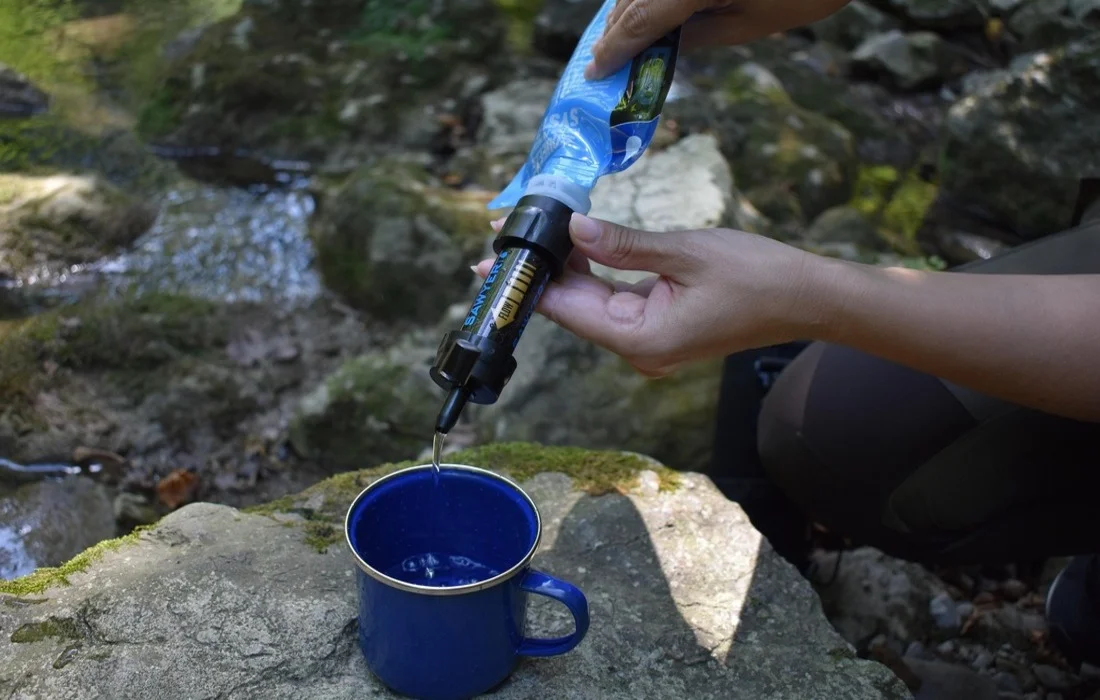
1. mechanical filters
They are classics among outdoor enthusiasts and preppers. The principle: the water is pressed through a fine membrane or ceramic that retains dirt particles and microorganisms.
Advantages:
- Remove particles, bacteria and protozoa.
- Immediately drinkable water.
- No chemicals in the taste.
Disadvantages:
- Viruses are often too small and pass through.
- Filters can become clogged and must be cleaned or replaced.
- Relatively high weight for larger models.
2. UV light
Compact devices, battery-operated or with solar cells. They emit ultraviolet light that destroys the DNA of microorganisms. The water remains chemically unchanged and the germs can no longer multiply.
Advantages:
- Very effective against bacteria, viruses and protozoa.
- No taste, no chemicals.
- Fast: ready for use in minutes.
Disadvantages:
- Only works with clear water (turbidity blocks the rays).
- Dependent on batteries or electricity.
- Devices are sensitive to breakage or moisture.
3. chemical disinfection
Tablets or drops, usually based on chlorine or silver ions. They kill germs and preserve water for a longer period of time.
Advantages:
- Lightweight, compact, can be stored almost indefinitely.
- Good for emergency supplies and traveling.
- Preservation possible: water remains drinkable for weeks.
Disadvantages:

- Often unpleasant in taste (chlorine).
- Works more slowly: 30 minutes to several hours.
- Less effective against protozoan cysts.
Comparison of methods
A brief overview shows the differences at a glance:
| Method | Against bacteria | Against viruses | Against protozoa | Removes suspended solids | Durability of the device |
| Mechanical filter | Very good | Weak | Good | Yes | limited (cleaning required) |
| UV light | Very good | Very good | Very good | No | durable, electricity required |
| Chemical agents | Good | Good | Restricted | No | Long shelf life of tablets |
Combinations are often the key
No single method is perfect. In practice, they are often combined:
- Filter + UVFirst clarify cloudy water, then kill germs.
- Filter + chemistryMechanical cleaning, followed by chemical preservation.
- Boiling + chemistryClassic and reliable when energy is available.
This achieves a high level of security - and minimizes the weaknesses of the individual procedures.
Realistic scenarios and solutions
- When hikingA compact filter is often sufficient. In combination with a UV device you are on the safe side.
- At home in the blackoutCanisters with tap water can be preserved with tablets. A filter should be used for supplies from rainwater or rivers.
- In long crisesRobust filter devices and chemicals as a backup. UV works well as long as you have power reserves.

What to look out for when buying?
The choice is huge. But there are a few criteria that you should definitely consider:
- PerformanceHow much water per minute or hour can the appliance handle?
- Filter fineness0.1-0.2 micrometers are standard for bacteria.
- MaintenanceCan the filter be cleaned? Are spare parts available?
- Weight & size: Important for outdoor use, less so at home.
- Cost per literTablets are cheap, filters are cheaper in the long term.
Small checklist for emergencies
- Always have a backup ready: If the UV device fails, you should be able to switch to filters or tablets.
- Allow the water to settle first: dirt particles sink, which relieves the filter.
- Don't just think of „clear streams“ - rainwater, ponds, even puddles can be sources in an emergency.
- Don't underestimate the taste: People don't like to drink water that smells like a swimming pool.
Personal experience
I remember a hike in Norway. We only had a small filter with us and trusted the clear mountain water. On the third day, the filter clogged up. There we were: clear, cold water everywhere - and yet no confidence to drink it just like that. A UV lamp would have saved us. This experience showed me that one system is good, two are better.
Psychological component
Clean water is not just a physical necessity. It is also a matter of trust. Those who know that their supply is safe sleep more soundly. Those who have doubts consume less, risk dehydration or weaken their immune system. A clear sip that is safe has the effect of a piece of normality - in the midst of chaos.

Conclusion: No patent solution, but clear rules
The question „Filter, UV or chemicals - which is better?“ cannot be answered in a single word. Each method has its place:
- Filter are ideal for removing dirt and most germs from river or pond water.
- UV is a fast, effective germ killer - as long as the water is clear and electricity is available.
- Chemistry is light, compact and perfect for supplies or traveling when you need to preserve.
The best is a Combined approach. A filter for everyday life, supplemented by UV or tablets for additional safety. Those who are prepared no longer have to worry if the water from the tap runs dry or the stream outside the door is the only source.
And that's exactly what it's all about: the certainty that you can not only survive in an emergency, but also regain your strength with a clear, safe drink of water.
 Deutsch
 English