

You can imagine a house without electricity. A life without a supermarket too, if you make a little effort. But a garden without nutrients? That's hardly conceivable. After all, what use is the most beautiful area with raised beds or planters if the soil is depleted after two seasons? This is exactly where an inconspicuous, often underestimated helper comes into play: the composter.
Many people see a compost heap as just a place for waste to rot. But for self-sufficient people - and even more so for preppers - it is much more than that. It is a treasure trove that turns kitchen scraps into humus. A cycle that keeps the supply stable when nothing more comes in from outside.
Why compost is essential for preppers
When crises last longer, it's not enough just to stockpile supplies. At some point you need fresh food. Vegetables, herbs, maybe fruit bushes. But plants are not machines. They live from the soil, and the soil lives from humus.
Humus is more than just „soil“. It stores water, releases nutrients and makes the soil loose. Without it, every plant will grow poorly. And while you can buy fertilizer, the question arises in a crisis: who will deliver it when the trucks stop driving?
The answer is right on your doorstep: in the composter.
Practical benefits at a glance
A well-managed composter has several advantages:
- Nutrient cycle: Kitchen and garden waste is turned into fertilizer.
- Waste reduction: Less waste, more benefits.
- Soil improvement: Compost makes soil more fertile and stable.
- Independence: No dependence on purchased fertilizers or potting soils.
- Long-term supply: Plants can grow year after year without the soil being depleted.
What types of composters are there?
Not every composter is the same. There are different systems depending on space, requirements and preferences:
| Type | Advantages | Disadvantages | Suitable for |
|---|---|---|---|
| Open compost heap | simple, free, flexible | slow process, messy | large garden |
| Wooden or metal box | organized, better optics | Construction effort, costs | Garden, medium sized |
| Thermal composter | Faster, more compact, hygienic | Less volume, more expensive | small garden, courtyard |
| Worm composter | Can also be operated indoors | sensitive, care required | Balcony, city apartment |
| Drum composter | Easy to ventilate, fast | Acquisition costs | small areas, experimenters |

What can go in - and what can't?
Not all waste is suitable. If you throw everything blindly into the garbage can, you will soon have odors or vermin.

Well suited:
- Vegetable peelings, fruit stones, coffee grounds, tea bags
- Egg shells (chopped)
- Garden waste such as leaves, grass, small branches
- Cardboard and paper (in small quantities, unprinted)
- Wood ash (sparingly)
Not suitable:
- Meat, fish, dairy products (attract rats)
- Cooked leftovers (rot quickly)
- Plastic, glass, metal (of course)
- Large quantities of citrus peel (too acidic)
The secret lies in the balance. „Green material“ (moist, nitrogen-rich, e.g. kitchen waste) and „brown material“ (dry, carbon-rich, e.g. leaves, cardboard) must come together in the right ratio.
Step by step to your own compost
- Choose a seat. Semi-shaded, not directly against the house wall, preferably sheltered from the wind.
- Set up the container. Whether bought or home-made, ventilation is important.
- Create layers. Fill alternately with green and brown material.
- Check humidity. The compost should be as moist as a squeezed sponge - not dripping, not dry as dust.
- Implement regularly. Oxygen accelerates the process. Stir with a fork or shovel.
- Have patience. Mature compost is ready after six to twelve months.
Avoid common mistakes
- Too wet: It rots, stinks and attracts flies. Solution: more dry material such as leaves or cardboard.
- Too dry: The process stalls. Solution: moisten with water or add fresh waste.
- Kitchen waste only: The mixture is missing. Solution: balance with garden waste.
- Do not implement: Without air, it remains a stinking pile.
Little tricks for better compost
- Coffee grounds loosen the mass and add nitrogen.
- Crushed eggshells provide calcium.
- Nettles or comfrey act like turbo fertilizers in compost.
- Wood shavings help if the compost becomes too moist.
Psychological effect - order in chaos
In a crisis situation, the feeling of creating something yourself can be incredibly reassuring. While there is uncertainty outside, you know: Something valuable is being created here. Food for tomorrow is growing from waste that would otherwise end up in the bin.
A composter is more than just a container. It is a symbol of self-reliance. For the thought: I can maintain something by my own efforts.
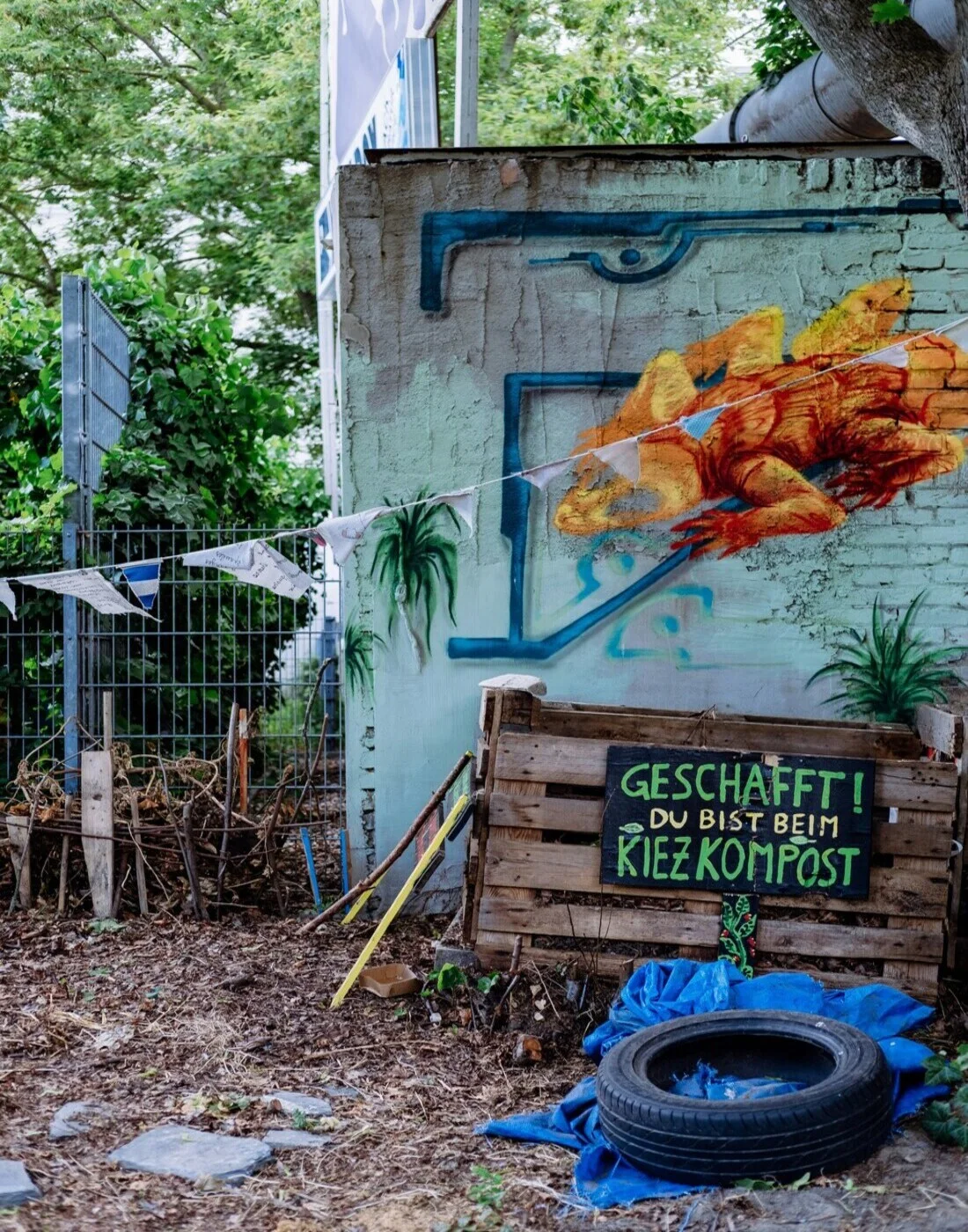
A personal moment
I remember the first compost I dug up months later. There were still remnants of cabbage leaves on top, and crumbly, dark soil underneath. It smelled of forest, of freshness, of life. I filled it into a raised bed, sowed radishes - and they came up faster and stronger than anything I had ever planted before. At that moment, I realized that this was more than just fertilizer. It's self-sufficiency in its purest form.

Compost in combination with self-sufficiency
A garden that only harvests will exhaust itself. A garden that closes the cycle remains stable.
- Raised beds: need fresh soil regularly - compost is ideal.
- Planters: can be refreshed with a layer of compost.
- Seeds: grows more vigorously when the seedlings start out rich in nutrients.
This makes the composter the centerpiece of self-sufficiency.
Comparison: Purchased fertilizer vs. your own compost
| Criterion | Purchased fertilizer | Own compost |
|---|---|---|
| Availability | dependent on trade | On site at any time |
| Costs | ongoing, often expensive | practically free of charge |
| Sustainability | limited, energy-intensive | Part of the natural cycle |
| Diversity of nutrients | often one-sided | broadly diversified, adapted |
Two lists for practical use
What you should always have ready:
- Composter or material for a heap
- Shovel or pitchfork
- Supply of cardboard or dry leaves
- Bucket for kitchen waste
- Cover against rain (e.g. old tarpaulin)
Warning signals that the compost is tipping:
- Strong rotten smell → too wet, too little air
- Lots of mosquitoes or flies → too many kitchen leftovers, not covered
- Mass mold growth → imbalance, more variety needed
Metaphor: The compost as a silent cook
You could say that a composter is like a slow cook that never sleeps. It takes what you give it - peelings, leaves, scraps - and stirs them tirelessly. No fire, no pan, no noise. Months later, he serves you a dish that is not on the plate, but in the soil - and therefore in the plants you harvest.
Conclusion
For preppers, a composter is not a luxury, but a basic necessity. It turns waste into fertile soil, keeps the cycle closed and makes you independent of supply chains. It saves money, calms the nerves and literally puts soil under your feet.
In a world that can be shaky, it remains stable. Silent, reliable, inconspicuous - and yet a cornerstone of self-sufficiency.
In the end, it's like many things in prepping: if you start in good time, you not only harvest vegetables, but also serenity. And sometimes this serenity smells of fresh humus, dark and lively, like a promise of tomorrow.
 Deutsch
 English