

There are images that you never forget. Empty supermarket shelves, for example. Cans that look as if they have been emptied, pasta and rice that only exist on the price tags. In moments like these, you suddenly realize how dependent you are on the system. On truck drivers, supply chains, warehouses and the silent processes that keep life going in the background.
But what happens when these processes come to a standstill? When suddenly nothing can be taken for granted? This is exactly where self-sufficiency becomes interesting - not as a romantic gimmick, but as a tangible crisis precaution.
A garden would be ideal, of course. But what if you don't have one? Or if the space is too small? That's when raised beds, planters and seeds come into play - inconspicuous helpers that can make all the difference.
Why raised beds and planters are more than just garden decoration
At first glance, raised beds and planters look like a trend from the DIY store catalog. But in reality, they are based on an old idea: using limited space efficiently, controlling the soil and maximizing the harvest.
The advantage is obvious: you are independent of the soil that is available to you. Even if your garden only consists of grass or you live in an apartment with a balcony - with the right containers, every square meter can be used.
Raised beds also have other advantages:
- They are ergonomic, which means you don't have to bend down all the time.
- The soil warms up faster, which extends the growing time.
- You decide which soil goes in - no surprises from depleted soils.
- Pest infestations are easier to control.
A raised bed is basically a fortress for plants. And like any fortress, it needs good planning.
Planters - mobile, flexible, underrated
While raised beds are permanently installed, planters score points for their mobility. Tubs, boxes, even old zinc tubs or rain barrel halves can be turned into small gardens.
The special thing about it:
- They are mobile. You can put them under cover when the weather changes or carry them to sunnier spots.
- They are inconspicuous. Nobody notices a balcony full of flower boxes - and yet tomatoes, peppers or even potatoes can grow in them.
- They are ideal for experiments. Different soils, different crops - a lot can be tried out in a small area.
Seeds as a treasure trove
But whether raised beds or containers - without seeds, everything is nothing. In times of crisis, a supply of seeds is as valuable as gold. Because a small bag of radish seeds can produce food for weeks.
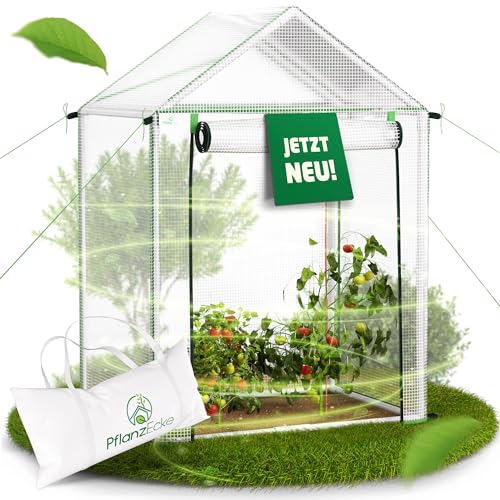
It is important to Seed-resistant seed to set. Hybrid varieties (often labeled F1) produce good yields, but their offspring are unreliable. If you really want to take precautions, you need varieties that can be propagated year after year.
Seed is a heritage. It carries knowledge and history. Every variety we plant is the result of centuries of human selection. When you consider this, a small seed suddenly doesn't seem so inconspicuous.
Practical benefits in times of crisis
Why is it worth the effort? Three points are decisive:
- Food security: You are not completely dependent on supermarkets.
- Freshness & health: Home-grown vegetables contain vitamins that are lacking in canned food.
- Psychological strength: Working with soil, growing and harvesting has a calming effect. It gives you back a bit of normality.
First steps: How to get started
Many people shy away from planting a raised bed or seedbed because it sounds complicated. But it's actually enough to start small.
Step 1: Determine area. Balcony, terrace, garden - even a sunny windowsill can suffice.
Step 2: Select containers. Simple wooden boxes, plastic buckets or special raised beds - everything works if there are drainage holes.
Step 3: Organize the soil. Garden soil, compost, if necessary also purchased potting soil. Important: nutrient-rich mixture.
Step 4: Acquire seeds. A few robust varieties are better than exotic experiments.
Step 5: Plant, water, observe. Almost everyone can get started with radishes or lettuce.
Which plants are suitable to start with?
Not everything grows equally well in containers or raised beds. Some plants need a lot of space, others are frugal.
| Plant | Suitable for raised beds | Suitable for tubs | Level of difficulty | Harvest time |
|---|---|---|---|---|
| Radish | Yes | Yes | very light | 4-6 weeks |
| Salad | Yes | Yes | light | 6-8 weeks |
| Potatoes | Yes | yes (large tubs) | medium | 3-4 months |
| Tomatoes | Yes | Yes | medium | Summer-Autumn |
| Beans | Yes | restricted | light | Summer |
| Herbs (basil, parsley) | Yes | Yes | very light | continuous |
Two lists that can help
Materials you should have ready:
- Seed-resistant seed (store in a dry and dark place)
- Planters of different sizes
- Soil and compost (or the knowledge of how to make compost)
- Watering can or irrigation system
- Covers (e.g. fleece, films against cold)
- Tools: shovel, gloves, small hoe
Mistakes that should be avoided:
- Use hybrid seed without the possibility of offspring
- start too many varieties at the same time
- Use soil without drainage (risk of waterlogging)
- Plant too densely - they need space
- Store seeds incorrectly (moisture is the mortal enemy)
A personal thought
I remember the first time I harvested my own potatoes in a plastic bucket. There were only eight tubers - tiny, misshapen, but mine. I cooked them that very evening and the taste was incomparable. Not because they were objectively better than the ones from the market, but because I knew that this food was the result of my hands. In a real crisis, this feeling of self-efficacy could be crucial.

Psychological aspect - gardening as consolation
In uncertain times, working with plants can unfold an unexpected power. While there may be uncertainty or even fear outside, something is growing quietly and steadily in the raised bed. A delicate green that grows stronger day by day reminds us that life goes on.
This feeling is hard to describe, but anyone who has ever planted a seed in the ground knows it. It's like burying a promise - and weeks later that promise is fulfilled with a handful of radishes or a bunch of fresh lettuce.
Seed storage - an underestimated detail
Seeds do not last forever. Depending on the plant, seeds lose their germination capacity after two to five years. It is therefore important to regularly replenish stocks. A simple tip: sow and re-harvest a portion of the emergency supply every year. This keeps the chain alive and you always have fresh seeds.
Small experiments are worthwhile
When you start, you soon discover that not everything works right away. Sometimes the tomatoes take care of themselves, sometimes the radishes take off. But it is precisely these experiences that are valuable. Because in a real crisis, there is no time for learning processes. Experimenting now means being prepared later.
Conclusion - small gardens, big impact
Raised beds, planters and seeds are more than just a hobby. They are the building blocks of realistic emergency provisions. They provide security when supermarkets are empty. They provide fresh vitamins when the pantry is full of cans. And they give hope - because the green in the bed reminds us that we can do more than just wait and see.
Whether on the balcony, in the backyard or in your own garden - anyone can get started. Not with a perfect self-sufficiency plan, but with a single seed. Because sometimes a small plant is enough to sow a piece of confidence in the midst of uncertainty.
 Deutsch
 English