

Imagine the power goes out. No internet, no lights, no streetcars. Everything suddenly seems quiet, and at the same time there is an invisible tension in the air. People are wandering through the streets, looking for information, for orientation. And there you are - with a device in your pocket that is normally your constant companion: your smartphone. But how useful is it when the networks go down or the battery charge is in the red? This is exactly where the question comes in: How do you make your smartphone crisis-proof?
It's not about technology fetishism or the latest gadgets. It's about preparedness, independence and remaining capable of acting in an emergency. When properly prepared, a smartphone can become a digital Swiss army knife - full of tools, information and possibilities that go far beyond making phone calls.
Why the smartphone in particular?
Many preppers first think of water filters, flashlights and radios. All important, no question. But almost everyone always carries their smartphone with them anyway. Doing without it would be like ignoring a first aid kit in the car just because you'd rather have a „real“ trauma kit in your rucksack.
The device is full of sensors: GPS, camera, microphone, compass. It can store maps, manage notes, encrypt documents and send signals. It is a navigator, an archive, a means of communication and - not to forget - a flashlight. Of course: all this only as long as the battery and software play along. That's why it's worth having a plan.
First construction site: Power supply
The best setup is useless if the battery runs out after a few hours. Energy is the Achilles heel of every smartphone. So how do you keep it going when there's no power socket available?
Practical possibilities:
- Powerbanks - robust, reusable, in various sizes.
- Solar chargers - not always efficient, but often the only permanent solution in the event of longer outages.
- Hand crank chargers - exhausting, but worth its weight in gold in an absolute emergency.
- Energy saving mode - not a gimmick, but a life insurance policy for the last percent battery.
I remember a camping trip where my friends had drained their cell phones on the first day with selfies and music. On the third day, it was my device that was still working - because I used it sparingly right from the start. In a real crisis, it's precisely this difference that makes all the difference.

Offline is king
Many people rely blindly on mobile data. But what if the network goes down? Then only what you saved beforehand counts.

Things you should definitely have available offline:
- Card material (e.g. with apps such as OsmAnd or Maps.me).
- Important documents (ID cards, emergency contacts, insurance policies - scanned and encrypted).
- Manuals and guides (first aid, plant identification, survival basics).
- Personal notes (Addresses, telephone numbers - if you don't want to rely on your memory).
A smartphone without the Internet is like a knife without a handle - still sharp, but difficult to use. With the right files on board, however, it becomes a handy tool.
Apps that really help in an emergency
There are countless applications that can be useful in a crisis. But which ones are indispensable? Here is a selection that you should consider:
- Offline map apps - Navigate even without a network.
- Radio and messenger apps with mesh function - Communication via Bluetooth/WLAN directly between devices.
- Note apps - Preferably ones that also work offline.
- Scanner apps - To digitize documents.
- Translator apps - With downloaded language packs.
The trick is not to stockpile as many apps as possible, but to choose the right ones - lean, reliable, offline-capable.
Protection from external influences
A smartphone is sensitive: water, dust, drops. But in a crisis, these are exactly the things that can happen all the time. A fall on asphalt, a rain shower, a muddy puddle - and the device is unusable.
Simple precautions can help here:
- Shockproof cover - Not beautiful, but functional.
- Waterproof bag or cover - preferably according to the IP standard.
- Display protection - Glass or foil to avoid cracks.
The smartphone is not a tank. But with a few protective measures, it can survive more than just a fall from the sofa table.
Security and privacy
A crisis can also involve sensitive data. Imagine your smartphone falling into the wrong hands. Information stored on it could harm you or your family. That's why data security is not a luxury, but a duty.
Basic rules:
- PIN or password instead of fingerprint (biometric data can be enforced).
- Activate encryption.
- Create backups, even offline.
- Only save really necessary data.
A device full of personal details can be more dangerous than an open front door in an emergency. Better to keep the digital doors closed.
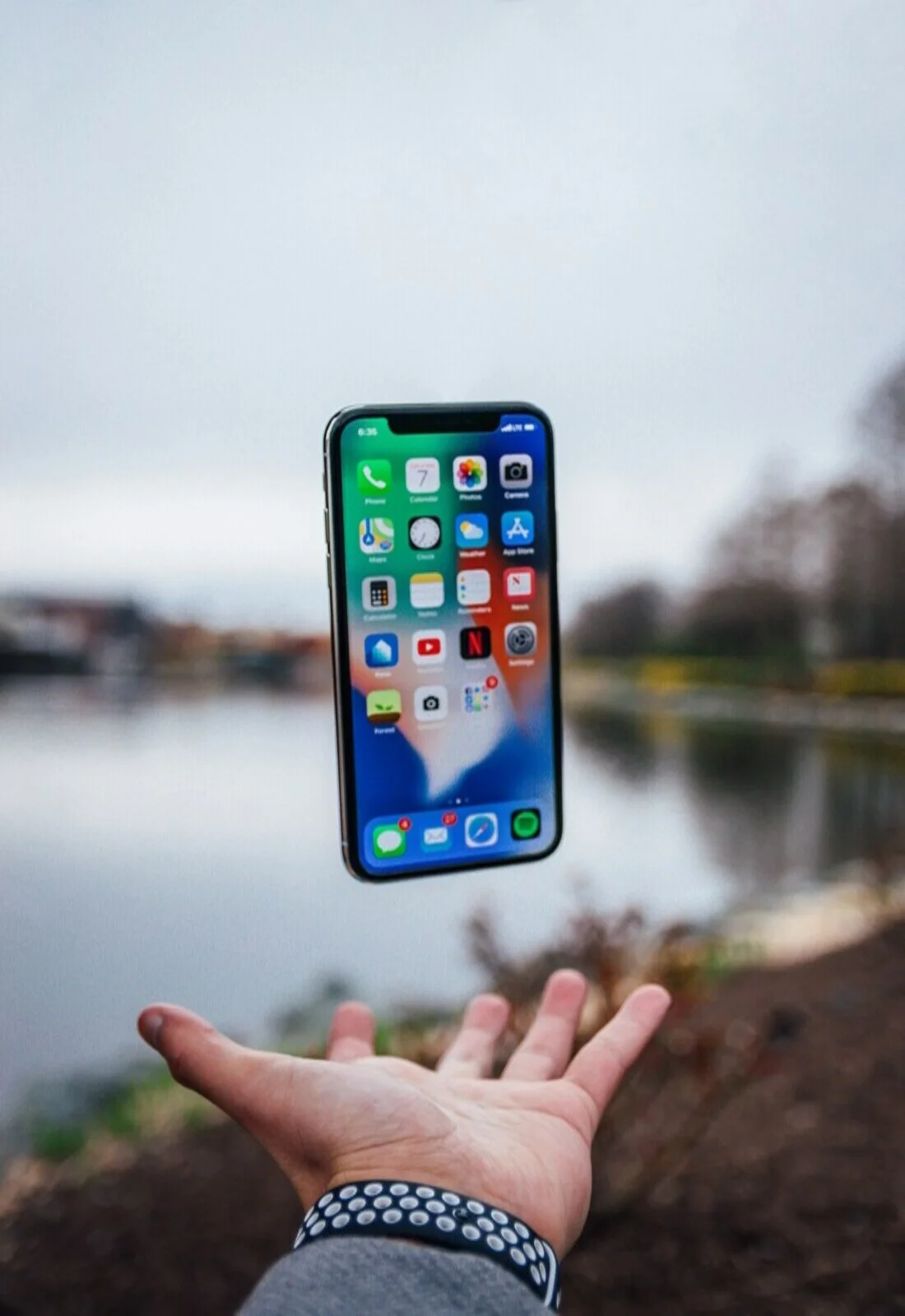
Overview: What makes your smartphone crisis-proof
| Range | Measures | Benefit |
| Energy supply | Powerbank, solar, energy-saving mode | Longer service life |
| Offline data | Maps, documents, notes | Orientation, information at any time |
| Useful apps | Navigation, communication, scanner | Practical tools |
| Physical protection | Cover, waterproof bag, screen protector | Longer service life |
| Security/privacy | Encryption, PIN, backups | Protection of sensitive data |
Typical mistakes you should avoid
- Save everything online. Cloud services are worthless in a blackout.
- Too many gimmicks. An app that doesn't work offline in an emergency is just dead weight.
- Do not test the device. Charging times, battery life, usability - you should know this in advance.
- Weak protection. Without a case and screen protector, the smartphone quickly becomes a pile of broken glass.
Play through crisis scenarios
Theory is nice, practice is more important. Sit down and try it out:

- Only use your cell phone in flight mode and see how long the battery lasts.
- Go on a hike with offline maps only.
- Save and open documents in encrypted form, without a network.
Such exercises take very little time, but give you a feel for how reliable your setup is.
Conclusion: your digital rescue tool
A crisis-proof smartphone is not a panacea. It can't replace a radio, a water filter or a flashlight. But it is a powerful building block in your personal emergency plan.
Maybe you can look at it like this: Your smartphone is like a loyal dog. Often inconspicuous in everyday life, sometimes even annoying. But when things get serious, it's ready to serve you - provided you've taken good care of it beforehand.
So it's worth investing a few hours now. So that you don't end up sitting in the dark while your most important tool lies lifeless in your pocket.
 Deutsch
 English