

One question that many people ask themselves when they start thinking about crisis preparedness is: „Do I really need all this equipment?“ The images that come to mind are often of overflowing basements full of tin cans, expensive solar generators or tactical backpacks that look like they came straight out of a disaster movie. But to be honest: What good is the most expensive backpack if you don't know how to pack it properly? What good is a water filter if you have no idea how to use it or where to find clean water?
This is exactly where the core lies: Knowledge is the true currency of crisis prevention.
Equipment can be lost - knowledge remains
A knife can fall out of your hand. A generator can break. Even the best supplies run out at some point. But the ability to make something out of what you have available - that remains.
You could say: Equipment is like a toolbox, knowledge is like a craftsman's hand. Without skill, the tool remains worthless.
An example: Imagine you have stored expensive gas cartridges. However, in an emergency, the cartridge stove breaks down. If you have never learned how to start an improvised cooking fire with just a few resources, you will be just as helpless as someone who has nothing at all.
What makes knowledge so valuable
Knowledge has several advantages that cannot be bought with money:
- It is indestructible.
Your head is the only „storage place“ that cannot be stolen or taken away from you. - It is flexible.
Once you have learned how to improvise, you will be able to deal with very different situations. - It creates self-confidence.
Those who know how to act remain calm - even if the situation becomes confusing. - It saves money.
Knowledge helps you to distinguish which equipment really makes sense - and which is just expensive frills.
List: Five key areas where knowledge takes precedence
- Water: How to find, filter, boil and store it.
- Fire: Techniques for lighting, even without a lighter.
- First aid: Basic knowledge to treat injuries or illnesses.
- Orientation: Read maps, use landmarks, even without GPS.
- Psychology: Dealing with stress, avoiding panic, keeping a clear head.
Little stories that make it clear
I remember an exercise in the forest that I took part in a few years ago. Everyone was given the same rucksack: water bottle, penknife, matches, a tin of ravioli. After a few hours, some people had used everything up and were sitting exhausted by the campfire. Others, on the other hand, had built small cooking stoves with the same resources, filtered water from a stream and collected additional food. The difference was not in the equipment, but in the knowledge.
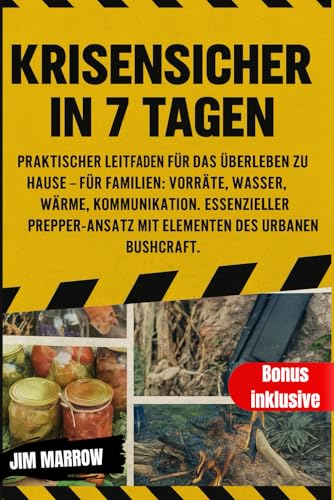
Same tools, completely different results
Table: Knowledge vs. equipment
| Situation | With equipment, but without knowledge | With knowledge, but little equipment |
| Water shortage | Expensive filter, incorrect use - water remains unclean | Simple pot, boil water - safe to drink |
| Emergency injury | First aid kit, improperly used | Shirt strip, correctly applied - bleeding stopped |
| Power failure | Generator available, no gasoline | Candles, cooking over an improvised fire |
| Orientation in the forest | GPS, but battery flat | Map, sun, stars - destination found |
How to build knowledge
Of course, the question now arises: How do I get this knowledge? Do you have to be a survival expert or train for years? No, there is an easier way.
- Learn step by step
Nobody has to be able to do everything at once. Start small: Learn how to make a fire with a fire steel. Practice cooking on a gas stove.
- Combine theory + practice
A book about wild plants is valuable - but only if you practice recognizing these plants outdoors. Knowledge that you never try out gets stuck in your head.
- Allow errors
Some things don't work the first time. And that is exactly what is valuable. It's better to fail when practicing in the garden than in an emergency.
- Seeking community
There are courses, outdoor groups and first aid seminars. Knowledge is easier to share if you learn it together.
List: Specific sources of knowledge for preppers
- Books and manuals on first aid, outdoor, crisis prevention.
- Online courses & webinars, often free of charge.
- Experiences of older people - Many grandparents still know how to preserve food, cook or manage without electricity.
- Practical exercises in everyday life: consciously switch off the electricity, survive with candles and a can stove.
- Workshops from aid organizations or fire departments.
Knowledge is also mental strength
An often underestimated point: knowledge not only protects the body, but also the mind. If you know how to solve a problem, you feel less at the mercy of others. This calmness can be contagious in an emergency - for partners, family and friends.
There is this old saying: „Fear is more contagious than courage.“ If you are prepared, you can spread both. And that doesn't start with a generator, but with the knowledge of how to keep calm.
A metaphor: the umbrella in the rain
Equipment is like an umbrella. It protects you - as long as it doesn't break or you haven't forgotten it. Knowledge, on the other hand, is like knowing where to find shelter when it rains. Maybe under a tree, maybe in a doorway. You are more flexible, independent of external things.
Practical examples of suitability for everyday use
- Power failure: If you know how to keep food fresh for longer without a fridge, you can save on supplies.
- Natural disaster: If you have learned to read maps, you can find your way to a safe place even without a navigation system.
- Disease: If you know first aid, you can help even if a doctor is not immediately available.
Conclusion: Knowledge as a foundation

Prepping is often equated with material stockpiling. But the real foundation is what's in your head. Knowledge determines whether you can improvise, whether you can cope with less and whether you can help others.
Or to put it another way: A head full of knowledge is the best backpack you can carry.
Equipment is important - no question about it. But it is the second level. Without knowledge, it remains lifeless. With knowledge, it becomes the tool that carries you.
 Deutsch
 English