

Let's imagine a simple situation: A power cut paralyzes the city. The first few hours are almost idyllic - candlelight, maybe a board game. But after a day, the supermarkets are empty, the petrol stations close, and suddenly we realize how vulnerable our everyday lives are. In moments like these, a single household can absorb a lot, but a community is stronger. This is exactly where the idea of a local prepper group begins.
Why a group at all?
Many people think of prepping as something deeply individual. Stockpiling supplies, keeping equipment ready, making plans - all behind closed doors. But in reality, people are communal beings. If you try to master a crisis alone, you quickly reach your limits.
For example: someone has a generator but no medical knowledge. Another person knows about first aid but has no equipment. A third person is talented in manual work but has physical limitations. Together they can do more than each of them alone.
Or, as the old saying goes: „Alone you are fast, together you go far.“
First steps: How do you find like-minded people?
The most difficult point is often at the beginning: how do you address the topic without immediately being labeled as a cranky end-time prophet? The key is to use the language of everyday life. Many people understand crisis preparedness better when they think of real-life examples: floods, power outages, snowstorms, supply chain problems.
Possible ways to find like-minded people:
- Neighborhood: A conversation about emergency power or supplies can open doors.
- Associations: shooting clubs, fire departments, horticultural associations - practical minds can often be found there.
- Online forums and local Facebook groups.
- Events on disaster management or civil defense.
It's important to start slowly. Don't start with the worst-case scenario, but with concrete topics such as: „What will you do if there's no power here for three days?“
Build trust
A prepper group thrives on trust. After all, people share information about supplies, skills, and sometimes even their vulnerabilities. Distrust can destroy everything, whereas openness can sustain everything.
In the beginning, it is enough to organize small meetings - perhaps over coffee and cake. This should not immediately be about „secret camps“ or „bug-out plans“, but about people. Who is reliable? Who thinks practically? Who wants to build something together?
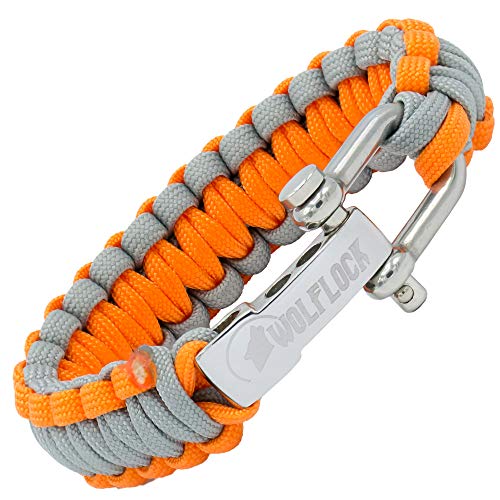
Here's a tip: You don't recognize a good team by the size of its equipment, but by the way its members work together.
Create structures
Once a group has been formed, it is worth slowly introducing order. Not as a rigid regiment, but as an orientation.
Possible roles and focal points:
- Coordination: Someone who organizes meetings, collects information.
- Medicine First aid experts or people with a medical background.
- Logistics: Who plans how supplies are stored, distributed, and replenished.
- Security: Knowledge of self-defense or property protection.
- Communication: Radio operators, members with IT experience.
- Craft: People who can repair, build and improvise.
Here is a brief overview:
| Range | Typical tasks |
| Coordination | Plan meetings, keep documentation |
| Medicine | First aid, hygiene, emergency care |
| Logistics | Inventory, transportation, storage |
| Security | Protection concepts, self-defense |
| Communication | Radios, keeping in touch, information flow |
| Craft | Repairs, construction of equipment |
Joint exercises
Theory is one thing, practice is another. A local group gains enormously if it practices together regularly. It doesn't have to be a disaster scenario. Small steps are enough.
Ideas for group exercises:
- Cooking together with emergency equipment (e.g. spirit stove, campfire).
- Radio exercise: Everyone reports in at set times.
- First aid refresher course.
- Short hike with rucksack - test what you really need.
- „Power-free weekend: 48 hours without mains power, mastered together.
Such activities are not only fun, they also show where there are still gaps.
Dealing with conflicts
Every community has frictions. Different opinions, temperaments, priorities. That is normal. What matters is how you deal with it.
A practical approach is to define rules from the outset:
- Make decisions together wherever possible.
- Address disputes openly but respectfully.
- Distribute tasks fairly.
- Talking honestly about boundaries - nobody has to be able to do everything.
A sentence I once heard in a group stuck with me:
„We're not here to impress each other, but to be there for each other.“
Advantages of a local prepper group
Even a well-organized group can find itself in a crisis:
- Bundling knowledge: Everyone brings something different to the table.
- Share resources: From water filters to tools.
- Improve security: More eyes, more hands, more protection.
- Provide psychological strength: Cohesion provides support.
In everyday life, such a group can also accomplish a great deal even without crises: helping neighbors, gardening together, and small projects. This fosters a vibrant community that goes far beyond crisis prevention.
Two practical lists
Skills that are particularly valuable in a group:
- First aid and medical knowledge
- Radio and Communication Skills
- Craftsmanship (wood, metal, electrics)
- Gardening and preserving food
- Mechanics and Vehicle Maintenance
- Orientation and Navigation
Items a group could buy together:
- Radios with spare batteries
- Water filter for larger quantities
- Emergency tent or communal shelter
- Repair Tool Kit
- First aid kit in professional quality
- Solar devices for power generation
A parable at the end
A local prepper group is like a campfire. On your own, you can start a small fire that provides warmth for a little while. But when several people gather wood together, it grows into a strong, long-lasting fire that protects and warms everyone.
Conclusion
Not every step will be easy - some conversations will falter, some plans will have to be changed. But in the end, something valuable will emerge: a community that is more than the sum of its parts.
In a world that is becoming increasingly complex and vulnerable, this is perhaps the strongest protection we can have: people who know each other, trust each other, and are there for one another in an emergency.
 Deutsch
 English