

Crisis preparedness, self-sufficiency and the pursuit of independence are universal human instincts. But how people prepare for potential disasters - be it a blackout, a natural disaster or a social collapse - depends heavily on their cultural background, history and political environment.
While American preppers are known for their pronounced individuality and love of weapons, lay European crisis management value community, structure and state support. Asian preppers In turn, they are often characterized by pragmatic discipline, technological adaptation and social responsibility.
This article highlights the Differences, similarities and backgrounds of these three major prepper cultures - and shows what we can learn from each other.
USA - The motherland of prepper culture
When you think of „prepping“, you almost automatically think of the United States. No other country has shaped the movement so much - in terms of ideology, media presence and economic importance.
1.1 Historical roots: pioneering spirit and mistrust
The American prepper culture is deeply rooted in the historical self-image of the USA. Even the first settlers had to survive in a hostile environment - far removed from government assistance.
This Pioneering spirit formed a mentality of „self-reliance“: only those who can help themselves survive. This attitude later became the basis of American individualism and is still reflected in the prepper scene today.
In the 20th century Crises such as the Cold War, oil crises and terrorism the need for self-protection. The fear of government failure - whether during Hurricane Katrina or the pandemic - is driving many Americans to become independent.
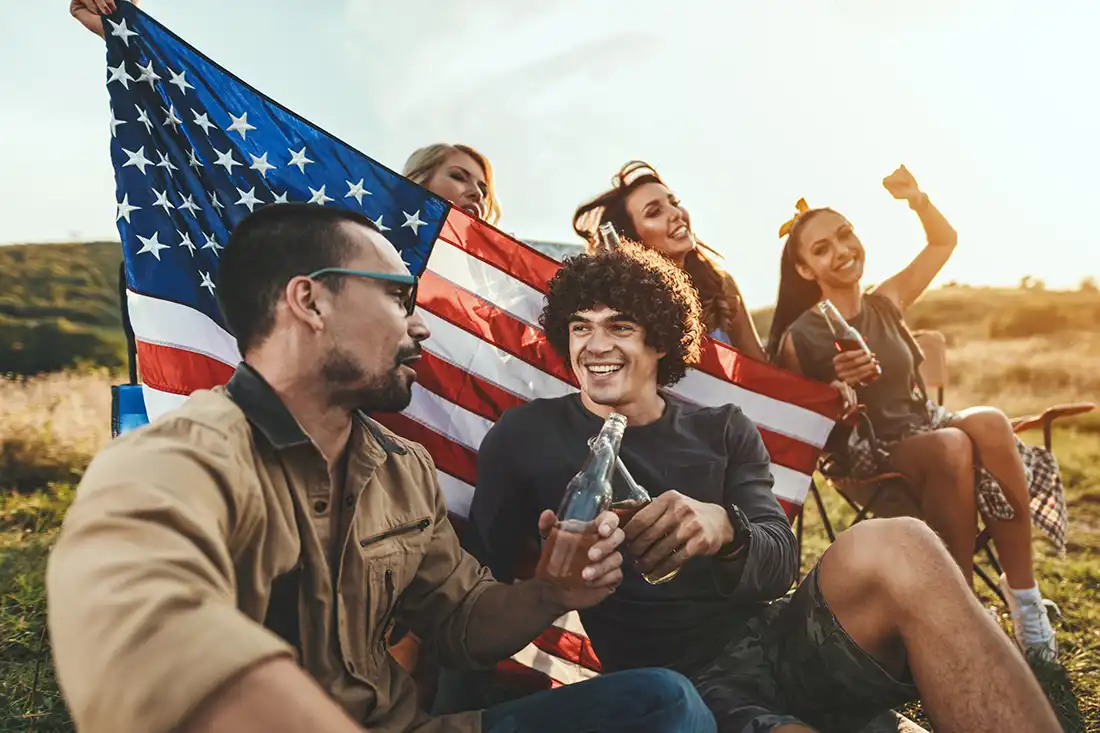
Key features of American prepping
The US prepper scene is diverse, but it shares some characteristic features:
- Gun ownership and self-defense: In the USA, the right to arm oneself is considered a cornerstone of freedom. For many preppers, firearms are just as much a matter of course as food supplies.
- Individualism: The ideal of the „lone wolf“ - the individual who looks after himself - is deeply rooted. Although community preparation also exists, it plays a lesser role.
- Commercialization: Prepping is a billion-dollar business in the USA. From freeze-dried emergency food to bunkers and bug-out vehicles - everything is for sale.
- Political coloring: Especially in the conservative and libertarian spectrum, prepping is part of an ideology that distrusts state control.
American prepping: between reality and myth
TV formats such as Doomsday Preppers or YouTube channels with an apocalyptic flair have strongly shaped the image of American preppers. In reality, most US preppers are pragmatic crisis management - often families, farmers or former military personnel who have realistic risks such as blackouts, tornadoes or cyber attacks in mind.

Nevertheless, the American scene remains pervaded by one basic idea: Freedom through preparation.
The state is not seen as a savior, but as a potential weak point. Therefore: „Better to have it and not need it, than to need it and not have it.“
Europe - Precaution between rationality and trust in the system
Prepping is a relatively new phenomenon in Europe. It is only in the last 15 to 20 years - fueled by terrorist attacks, natural disasters and political uncertainties - that public awareness of crisis preparedness has grown.
Historical context: war, reconstruction and the welfare state
In the 20th century, Europe experienced two world wars, economic crises and political upheavals. After 1945, security became a state responsibility. In many countries Civil defense systems, emergency supplies and state-sponsored aid organizations.
Unlike in the USA, Europeans relied more heavily on State crisis planning and social security systems. The idea of relying solely on oneself was long considered unnecessary or even distrustful of the state.
Only events such as the Cold winter 2010, which Euro crisis, the refugee movement in 2015, The corona pandemic and finally the war in Ukraine made many people realize that systems can reach their limits.
2.2 Characteristics of European prepping
The European prepper culture differs significantly from the American one in several respects:
- State-recommended preparation: Many countries, e.g. Germany, Sweden and Switzerland, give official advice on stockpiling. The Federal Office for Civil Protection, for example, recommends having 10 to 14 days„ worth of food in stock.
- Sense of community: European preppers rely more on neighborly help and networks than on armed lone wolves.
- Legal restrictions: Strict gun laws and data protection regulations characterize the scene. Gun ownership is rarely part of prepping.
- Pragmatism instead of paranoia: In Europe, it is not so much the end of the world but the Real disaster case such as floods, energy shortages or supply chain failures.
- Sustainability: Many European preppers combine crisis preparedness with environmental protection, permaculture and energy self-sufficiency.
2.3 Regional differences in Europe
- Germany: Here, prepping is still often met with skepticism, but is gaining acceptance. Topics such as emergency power, drinking water and stockpiling are coming to the fore.
- Scandinavia: Countries such as Sweden and Finland have a long tradition of state crisis preparedness. In Sweden, every household received a brochure: „When the crisis or the war comes“.
- Switzerland: Thanks to its compulsory military service and civil defense culture, Switzerland is considered one of the best prepared countries in Europe. Many homes have their own shelters.
- Eastern Europe: After the collapse of the Soviet Union, self-sufficiency and improvisation have remained everyday skills - a natural part of life, not just a hobby.
Overall, European prepping is less ideological, more rational and community-oriented. The focus is on practical provision - not on resistance to the state.

Official sources of information on crisis preparedness in Europe
If you would like to find out more about European crisis preparedness, you can find reliable and up-to-date information directly from the official bodies of the individual countries. Germany, Austria and Switzerland all offer clear guidelines, checklists and recommendations on topics such as emergency supplies, drinking water supply, power outages and what to do in the event of a disaster.
Recommended contact points:
Germany: BBK
Austria: Civil defense
Switzerland: BABS
These portals offer practical advice for households, provide background knowledge and help to set up individual pension plans sensibly and realistically.
Asia - Discipline, community and technology
While prepping is often considered a trend or subculture in Western countries, it is Crisis prevention in Asia part of the collective everyday consciousness.
Asia is regularly affected by natural disasters - earthquakes, typhoons, floods, volcanic eruptions. Precautionary measures, evacuation drills and emergency plans are therefore firmly anchored in society.
3.1 Japan - The nation of preparation
Japan is perhaps the best prepared country in the world. The experience of Earthquakes, tsunamis and nuclear disasters (e.g. Fukushima 2011) has created a culture of constant mindfulness.
- Every Japanese knows where the nearest shelter is.
- Schools and companies regularly carry out evacuation drills.
- Emergency backpacks, water and food supplies are part of the basic equipment of many households.
Japanese prepping is very different from Western prepping:
It is Collaborative, pragmatic and unagitated.
You don't prepare out of fear, but out of a sense of responsibility.
The state, economy and population work closely together - a prime example of what collective resilience can look like.
3.2 South Korea - high-tech and security thinking
South Korea is characterized by the constant threat from North Korea. Therefore Air raid drills, bunkers and emergency alarms to everyday life.
In urban areas, many buildings are equipped with underground shelters equipped. At the same time, South Korea is one of the most technologically advanced countries in the world - which is also reflected in prepping:
Apps warn of dangers, provide evacuation instructions or display emergency locations in real time.
The South Korean approach combines Traditional discipline with modern technology - a form of „smart prepping“ that is increasingly spreading to other Asian countries.
3.3 Southeast Asia - Improvisation and community
In countries such as the Philippines, Indonesia or Thailand, surviving natural disasters is part of normality. These countries often lack a strong state infrastructure - which is why Community and the ability to improvise are decisive.
People help each other, share resources and rely on experience rather than equipment. Many of these societies live in a state of „permanent preparation“, simply because crises are so frequent.
Common ground, different philosophies
Despite all the differences, there are universal principles that unite all prepper cultures:
| Principle | USA | Europe | Asia |
| Motivation | Distrust of the state, individualism | Rationality, system supplementation | Community, sense of duty |
| Focus | Freedom, self-protection | Safety, sustainability | Discipline, technology, cooperation |
| Crisis awareness | Political & economic | Energy, climate, supply | Natural disasters |
| Mentality | „Me against the world“ | „We can do this together“ | „We have to be prepared“ |
| Gun culture | central | restrictive | unusual |
| State role | low, often mistrusted | supportive | integrative |
These differences result from history, politics and mentality. While Americans see prepping as an expression of Freedom Europeans see it as Complementing state systems - and Asians as Collective responsibility.
What we can learn from each other
Every culture has its strengths - and weaknesses - when it comes to crisis preparedness. Anyone who takes a serious look at prepping can learn a lot from the international differences:
- From the Americans: Courage to take the initiative, independence and practical implementation.
- From the Europeans: Systematic thinking, sustainability and a balance between personal and community provision.
- From the Asians: Discipline, practice and the integration of technology and social cohesion.
The future of crisis prevention is likely to be a combination of all these elements be:
self-sufficient energy supply, digital early warning systems, community networks - and the knowledge that you can help yourself if everything else fails.
The global future of prepping
In an increasingly interconnected and unstable world, awareness of crisis preparedness is growing everywhere. But prepping is moving away from apocalyptic fantasies and towards a realistic concept of global resilience.
International crises such as the COVID-19 pandemic or the Ukraine crisis have shown that no country is completely safe - no matter how modern or rich.
This is why a new generation of preppers is emerging worldwide:
- less paranoid,
- more community-oriented,
- technology-based and
- ecologically aware.
Prepping becomes Life skills for the 21st century - similar to digital education or sustainable management.
Conclusion: Three ways to the same security
Whether American individualism, European organization or Asian discipline - all prepper cultures follow the same goal: Preparation creates freedom and security.
The differences lie in the way to get there.
America relies on the individual, Europe on systems, Asia on community. But practice shows that
The most effective crisis prevention is hybrid - It combines knowledge, technology and solidarity.
Because in a globally networked world:
No one is completely self-sufficient. But everyone can be prepared.
 Deutsch
 English