

There are moments when an entire society holds its breath. An earthquake, a power cut, an explosion, a war, a piece of news that suddenly changes everything. In such moments, what otherwise remains invisible becomes tangible: our dependence on stability.
But stability is deceptive. It can exist in politics - or in nature. And when it falters, people react in surprisingly different ways. Some build bunkers, others stockpile supplies. Some remain calm and organized, others act as if none of this concerns them.
So how do you shape Political stability and Natural disasters the behavior of people who prepare themselves - the so-called preppers? Why is every household in Japan trained for earthquakes, while many Europeans still dismiss the topic?
To understand this, you have to take a look, like trust, fear and experience are interwoven with each other. Because prepping is less a question of material than of mindset.
1. trust in the state - or rather in yourself?
The political stability of a country acts like an invisible safety net. When it is stable, as in Germany, Sweden or Canada, people tend to rely on authorities, infrastructure and organizations. This is comfortable, and sometimes naive.
For a long time, many Europeans thought they didn't need emergency plans. Crises were something that happened to others - far away, in countries with poor governments or weak healthcare systems.
But then reality came in waves:
First the financial crisis, then the pandemic, then the war in Ukraine. And suddenly people in Central Europe were standing at petrol stations again, hoarding flour and talking about emergency generators.
A typical example: when the German Federal Office of Civil Protection officially recommended the use of, Food supplies for ten days was almost met with ridicule. „Typically German“, was the response - exaggerated, panicky. A few years later, the same recommendation seemed almost too optimistic.
The lesson is clear:
Political stability can be deceptive. The stronger it seems, the more people suppress the risk that it might not be there one day.
2. when the earth shakes: living with disaster as normality
In other parts of the world, prepping is not a niche topic, but a everyday necessity.
Japan is probably the best-known example. There, crisis preparedness is so commonplace that no one sees it as unusual.
Following the devastating earthquake in 2011, which triggered the tsunami and the Fukushima disaster, the country has further perfected its preparedness. Schools regularly practise evacuations, authorities send out warnings via app and loudspeaker, and even children know how to take cover under a table.

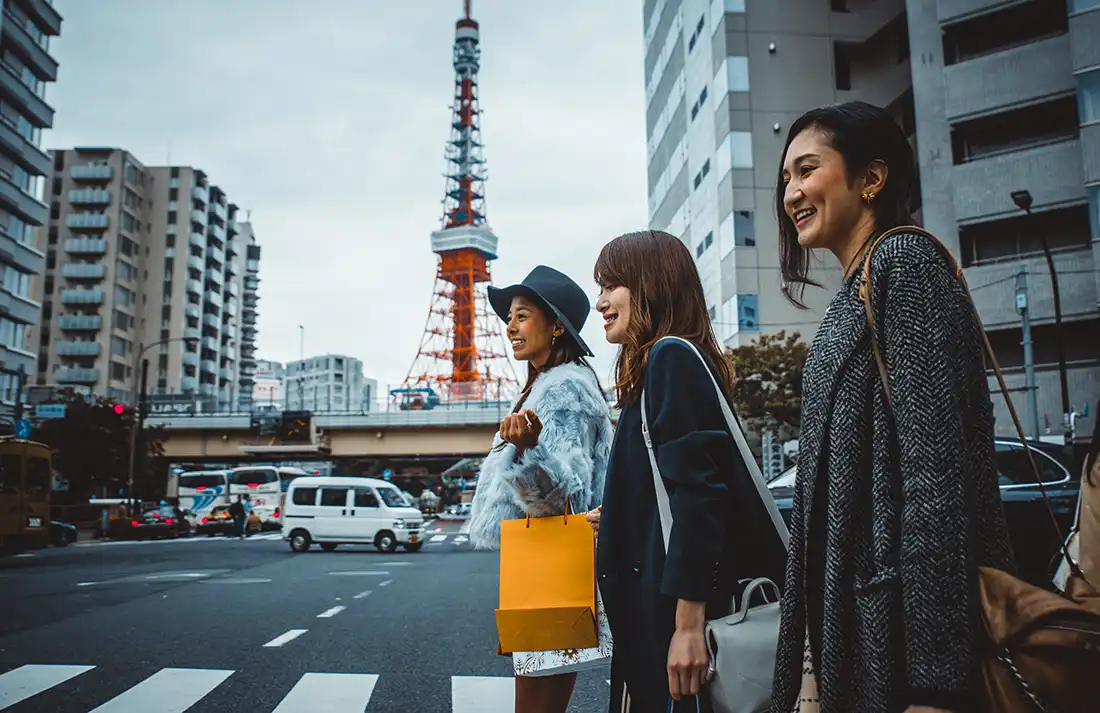
„Preparation is not a sign of fear, but of respect,“ a Japanese government official once said in an interview. And that is exactly the point.
While in Europe the word „prepper“ often conjures up images of suspicious loners, in Japan it simply means "prepper": a responsible citizen.
The difference is not in the technology, but in the attitude. In Japan, people assume that disasters are inevitable - so they plan for them. In Europe or North America, people assume that disasters are inevitable. avoidable are - so one hopes.
Why Japan is a pioneer
Japan is regarded worldwide as a prime example of crisis preparedness. Regular evacuation drills, mandatory school programs and clearly structured emergency plans make prepping a social routine there - not a hobby for individuals.
3. where politics fluctuates, the need for control grows
The situation is quite different where political stability is a rare commodity.
In parts of Latin America, Africa and Eastern Europe, trust in the state is deeply flawed.
When corruption, economic insecurity or violence are part of everyday life, personal initiative becomes life insurance.
Trust vs. personal initiative
In politically stable countries, people rely more heavily on state structures. This reduces individual prepping behavior - until a crisis shows that the authorities can only help to a limited extent. In unstable regions, on the other hand, people automatically take more initiative.
In Venezuela, for example, entire underground networks have emerged in recent years in which people exchange knowledge - about water treatment, bartering or improvised energy sources. In Ukraine, the topic of prepping began long before 2022: first because of political unrest, later because of the actual threat of war.
In the USA, on the other hand - a country that is politically stable works, but is deeply divided socially - has developed its very own culture. There, prepping is closely linked to Independence and mistrust linked.
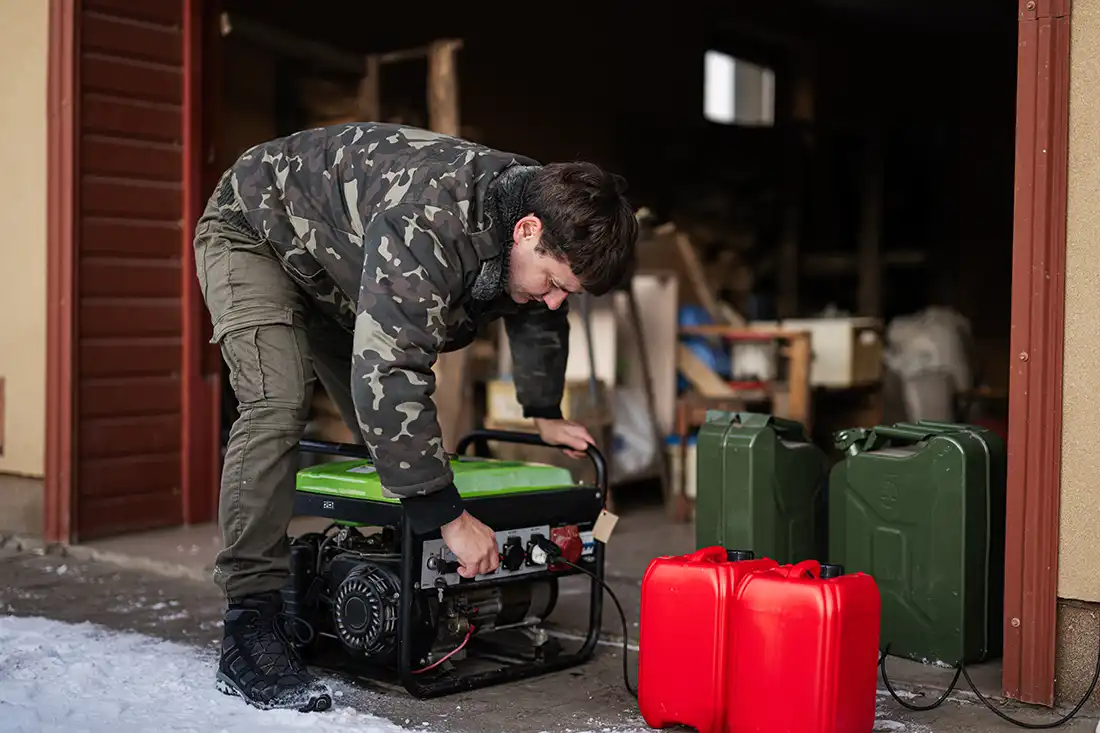
Many Americans believe that the state will fail in an emergency. The result: storerooms full of cans, weapons and generators - and an entire industry that capitalizes on this.
The American prepper movement is therefore less a reaction to disasters than to Political mistrust.
While the Japanese stockpile because they take nature seriously, many Americans do so because they distrust the government.
4. natural disasters teach humility
There are areas where political and ecological insecurity overlap - for example in the Philippines, Indonesia and the Caribbean.
There, the combination of weak structures and frequent destruction is brutal, but instructive.

People who live there develop a Another type of resiliencenot through supplies, but through community.
When a typhoon tears houses away every year, no bunker helps. Then what counts is who helps you, who gives you water, who takes you in.
A resident of Cebu (Philippines) once said to a reporter after a storm:
„We can't store everything, but we can be there for each other.“
This sentence sounds simple, but it contains a profound truth.
Crisis prevention can be material - or social.
In countries where both are weak, one replaces the other.
5 What you can learn from these differences
Depending on where you live, prepping takes on a different face. It helps to take a look at them side by side:
| Region | Typical risk | Main motif | Type of preparation |
| Western Europe | Energy shortage, supply problems | Complementing state systems | Supplies, emergency power, information sources |
| USA | Social unrest, mistrust | Independence, self-protection | Weapons, bunkers, off-grid life |
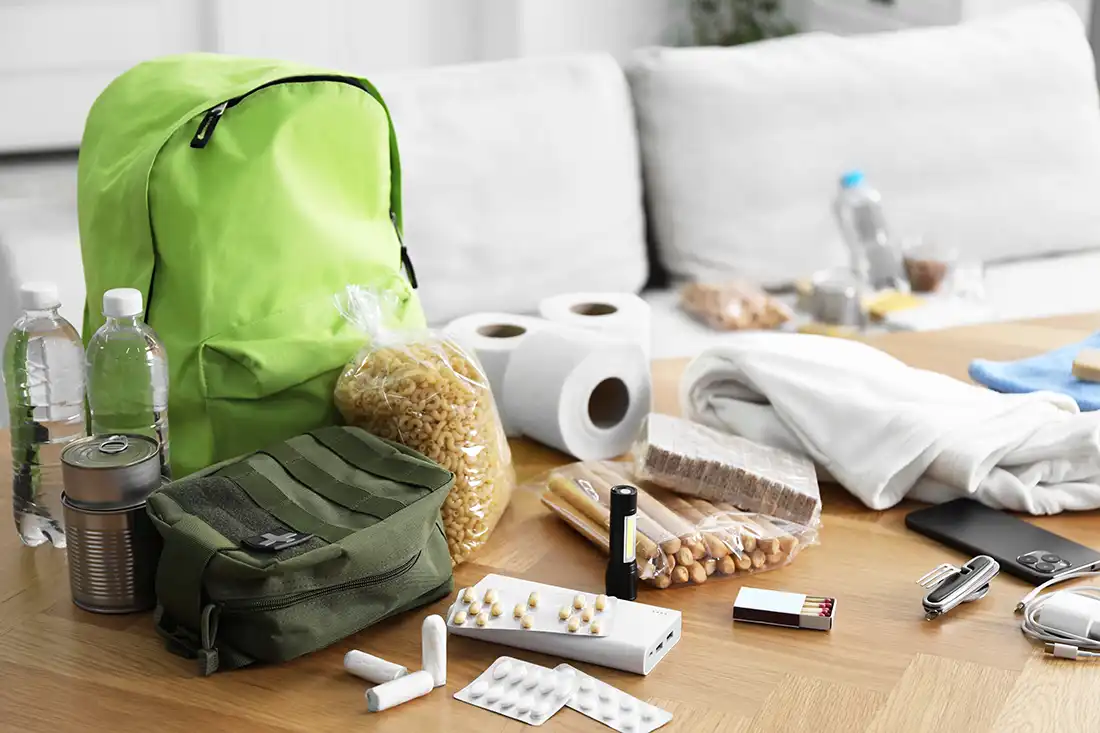
| Japan | Earthquakes, tsunamis | Routine, responsibility | Emergency backpacks, evacuation exercises |
| Southeast Asia | Typhoons, floods | Survival in everyday life | Community, improvisation |
| Eastern Europe / Ukraine | War, power failure | Self-defense, security of supply | Supplies, shelters, solidarity |
These differences show that Prepping is not a globally standardized concept, but rather a Reflection of local reality.
Everyone reacts to what they know - or what has shaped them.
6. how you can derive your own strategy from this
What can you take away from this as an individual, whether you live in Munich, Madrid or Manila?
Basically, your own crisis preparedness can be divided into three steps - inspired by the different cultures:
1. watch like a Japanese
Recognize the risks in your environment. Do you live in an earthquake region, near a river or in a politically unstable zone?
Information is the first step towards preparation.
Japanese schools are already teaching children: Knowledge saves lives.
2. plan like a European
Structure is the key. Stock up on supplies, check your stocks regularly, make contingency plans with your family.
In Scandinavia or Switzerland, this has long been routine - not a sign of fear, but of a sense of responsibility.
3. act like an American
Don't wait for someone to tell you what to do. Be proactive.
Personal initiative can be the difference between panic and calm.
You don't have to build a bunker, but you can learn to filter water, make a fire or generate electricity with a solar panel.
This mix - knowledge, structure, initiative - is probably the best insurance you can have.

Prepping in the USA
In the USA, prepping is based less on natural hazards and more on political mistrust. Many households rely on independence, self-protection and off-grid solutions. This has given rise to an industry worth billions.
7 Political stability - both a curse and a blessing
Interestingly, political stability can influence prepping behavior. inhibit, because it conveys a deceptive sense of security.
People in stable democracies tend to suppress risks - until they experience them themselves.
In unstable regions, the opposite is true: there, reality forces people to be prepared.
But this is where another problem arises - fear can paralyze.
Too much uncertainty does not lead to sensible preparation, but to constant stress and resignation.
So the goal lies in the middle: Awareness instead of fear, preparation instead of panic.
8 A little exercise in perspective
Imagine you're sitting at home on a quiet evening.
It's quiet outside, the rain pattering softly against the window. Suddenly the power goes out.
No light, no internet, no fan heater.
After an hour, you notice how quiet the apartment has become - no humming, no whirring. Just darkness.
Most people would look at their cell phone at a time like this. No network. Then?
This is exactly where prepping begins. Not with panic, but with planning.
What do I really need? How long can I manage without electricity? Do I have water, candles, a plan B?
Such thoughts are not paranoid. They are pragmatic.
And they lead back to the actual idea behind the topic:
Prepping is not an escape from society - it is its safety valve.
9 Conclusion: The art of being prepared
Political stability and natural disasters shape prepping behavior in very different ways.
Where governments are reliable, people often rest on their laurels.
Where the earth trembles, precautions are a matter of course.
And where politics fails, personal responsibility grows.
But regardless of whether you live in Tokyo, Texas or Thuringia - the principle remains the same: Preparation is freedom.
Not the freedom to isolate yourself, but the freedom to remain calm when others panic.
In the end, it's not about cans, generators or bunkers.
It's about taking responsibility - for yourself, for those you love and perhaps also for those who have failed to do so.
Because one thing is certain: the disaster does not ask how stable your country is. But it does show how stable you are.

 Deutsch
 English