

In a world full of uncertainties - whether geopolitical tensions, natural disasters, pandemics or energy crises - many people have a growing desire for security and self-determination. Terms such as Survivalism, Homesteading and Bug Out Location are appearing more and more frequently in prepper communities, YouTube channels and crisis preparedness blogs.
But what exactly is behind these concepts? How do they differ - and how do they interact to form a comprehensive crisis prevention system?
This article looks at the three main pillars of modern self-sufficiency and shows how you can adapt them to your own life - whether you live in the country, the city or somewhere in between.
Survivalism - The art of survival
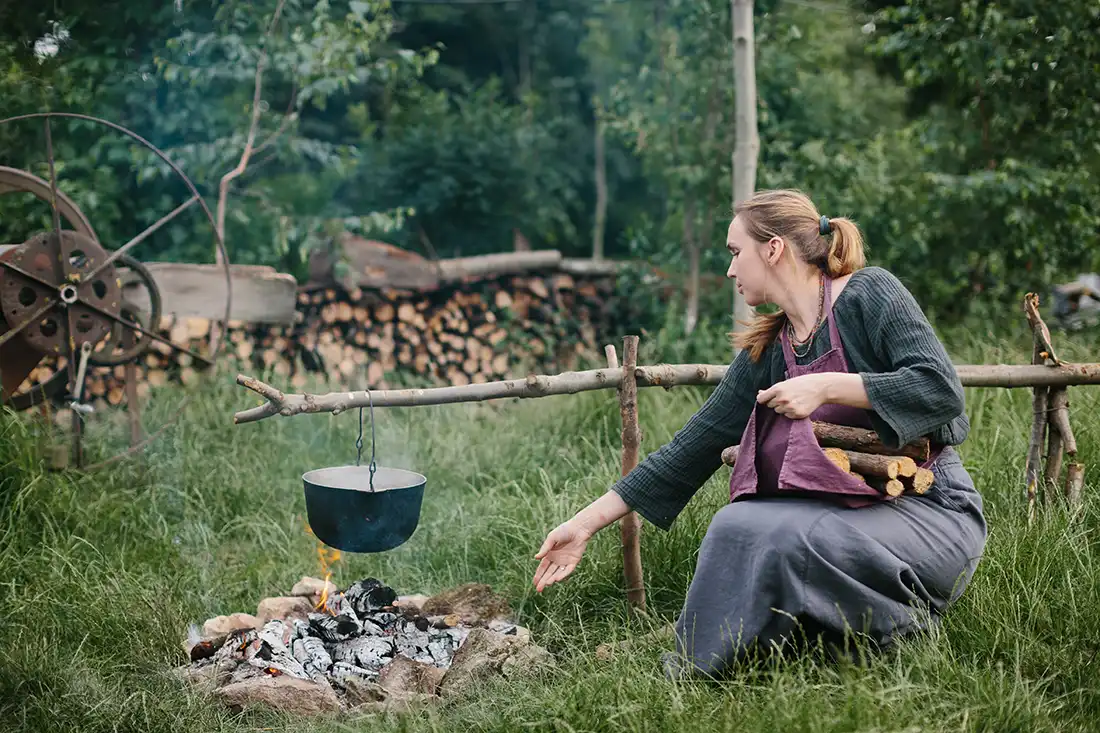
The term Survivalism is derived from the English word survival meaning „survival“. But survivalism means far more than just physical survival in the wilderness. It is a Philosophy of self-control, preparation and adaptability.
1.1 From primal instinct to modern movement
Modern survivalism has its roots in the 1960s and 1970s, particularly in the USA. Inspired by the Cold War, oil crises and economic uncertainty, people began to prepare for „Day X“ - be it a nuclear war, a financial collapse or a natural disaster.
However, while traditional survivalists mainly focused on short-term survival strategies - making a fire, finding water, building shelter - this has developed into a holistic movement in recent decades. Today, survivalism is not just about bare survival, but about Resilience, knowledge and personal responsibility.
1.2 Skills instead of equipment
Many beginners believe that survivalism means having as many gadgets, knives and rucksacks as possible. But experienced preppers know: Knowledge beats equipment.
You can lose a knife - but you can't lose knowledge.
This is why modern survivalism focuses on learning core skills:
- Light a fire under different conditions
- Finding, filtering and storing water
- First aid and basic medical care
- Orientation with and without technical aids
- Procuring food (hunting, fishing, edible plants)
- Crisis psychologyKeep calm, make decisions, set priorities
These capabilities make you independent - not only in the forest, but also in an urban environment if, for example, the usual system fails after a power cut or supply breakdown.
1.3 Survivalism in everyday life
Survivalism is no longer a niche movement. Many people today integrate small elements into their everyday lives:
- Emergency supplies in the cellar
- First aid training
- Alternative heating methods
- Power supply via solar or generators
- Escape plans for various scenarios
The basic idea: „Hope for the best, prepare for the worst.“
Hope for the best - but prepare for the worst.

Homesteading - living in self-sufficiency
While survivalism is often associated with short-term crisis management, the Homesteading for the Long-term, sustainable living in independence.
The term comes from the USA and originally refers to people who live on their own land, cultivate it and are largely self-sufficient - a modern form of the pioneering spirit of the early settlers.
2.1 The dream of independence
Homesteading is about gradually detaching ourselves from industrial systems: from the supermarket, from the electricity grid, from the globalized economy.
This does not necessarily mean sacrificing comfort - but rather regaining control over your own livelihood.
Typical elements of a homestead are
- Vegetable garden and fruit trees
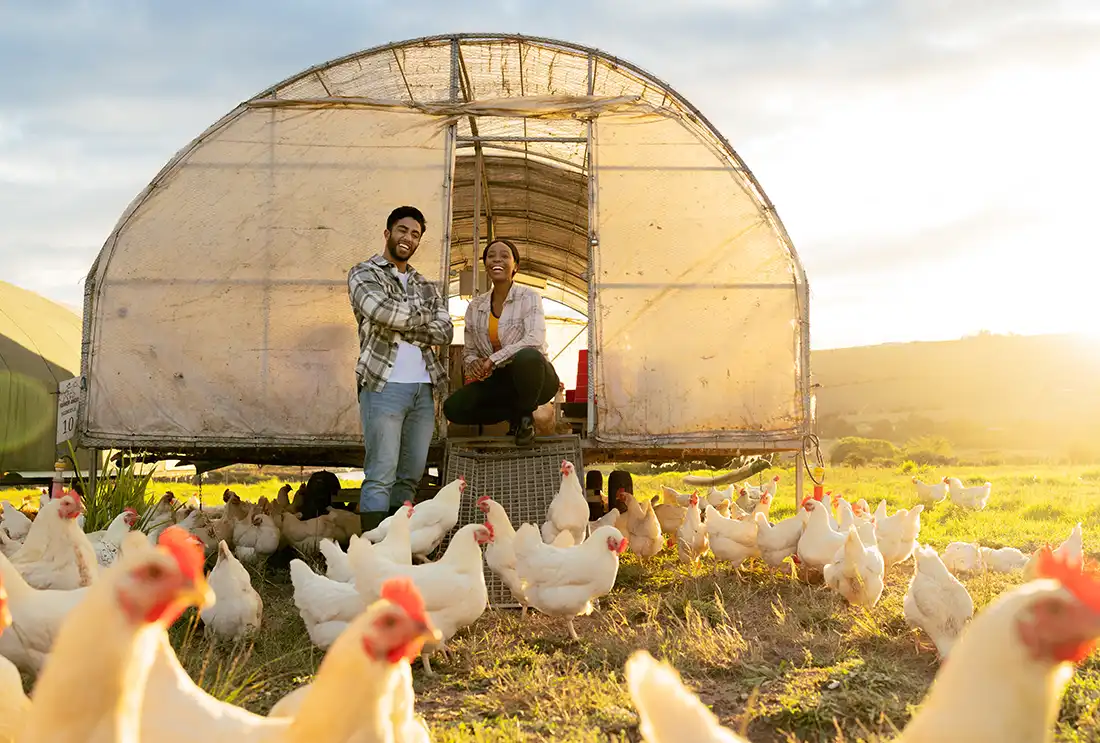
- Chickens, goats or beekeeping
- Water storage and rainwater harvesting
- Alternative energy sources such as solar or wind power
- Preservation of food by preserving, drying, fermenting
A homesteader is not a dropout in the traditional sense, but someone who Self-sufficiency as a life principle understands. The aim is to manage existing resources efficiently, sustainably and with foresight.
2.2 Homesteading as a lifestyle
Many homesteaders report that the motivation often begins with crisis prevention - but soon becomes a philosophy of life.
Working with your hands, the rhythm of the seasons, knowing what you eat and the satisfaction of being independent - all this creates a deep sense of self-efficacy.
Homesteading is not just a method of preparation, but a way to inner stability and satisfaction.
Because if you know how to bake bread, grow vegetables and filter water, you won't feel helpless if the system starts to falter.
2.3 Homesteading in the city?
Many people believe that homesteading is only possible in the countryside. But that's not true.
You can even implement parts of this philosophy in the city:
- Balcony or indoor garden with herbs and microgreens
- Rainwater storage tank or water filter
- Fermenting or preserving food
- Use solar cells or power banks
- Support community gardens or swap meets
The principle remains the same: Self-sufficiency within the scope of your possibilities.
Bug Out Locations - The safe retreat in the event of a crisis
While survivalism and homesteading are concerned with skills and lifestyle, the Bug Out Location (BOL) around a very specific place: the Sanctuary, when the familiar environment is no longer safe.
3.1 What is a Bug Out Location?
The term „bug out“ originally comes from military jargon and means „to break out quickly“ or „to retreat“.

One Bug Out Location is therefore a prepared retreat - usually remote, safe and self-sufficient - where you can go in an emergency if the urban infrastructure or social order collapses.
Examples of such scenarios are
- Large-scale power failures (blackout)
- Natural disasters such as floods or fires
- Civil unrest
- War or political instability
3.2 Selection of a suitable bug out location
The perfect BOL is a balancing act between accessibility, security and sustainability. Important criteria:
- Location: Away from conurbations, but still within reach.
- Access: Easy to reach on foot or by car - even when roads are blocked.
- Resources: Access to water, wood, arable land or game.
- Protection: Natural cover, retreat options, defensibility.
- Self-sufficiency: Possibility of power and food supply without external systems.
An old farmhouse, a hunting estate, a secluded cabin or even a tiny house in the countryside - anything can become a BOL if it is properly prepared.
3.3 Preparation and storage
A well thought out bug out location should contain basic supplies:
- Long-term food (dried, freeze-dried, canned)
- Water filters and supplies
- Medical equipment
- Tools and spare parts
- Fuels and energy sources
- Sleeping bags, clothing, emergency shelters
Important: A BOL is not a luxury resort, but a place to survive.
Regular maintenance, inventory and discretion are crucial. No one should know where your retreat is - except the people you absolutely trust.
The interplay of the three pillars
Survivalism, homesteading and bug out locations are not competing concepts, but rather complement each other perfectly.
- Survivalism provides the Skills, to survive in any situation - whether in the city, in the forest or on the road.
- Homesteading creates the Basis of independence - Food, energy, water, knowledge.
- Bug Out Locations offer the Retreat, when all else fails.
If you combine all three areas, you will achieve what many prepping experts are aiming for: Complex resilience - in other words, the ability to react flexibly to any crisis.
A practical example:
You live as a homesteader in the countryside, generate your own electricity and grow vegetables. Suddenly, a forest fire forces you to leave your home.
Thanks to survivalism, you know how to cope in the great outdoors - and thanks to your prepared bug out location, you have a safe place where you can hold out until the situation is stable.
The psychological factor: self-confidence instead of fear
A central aspect of all three pillars is the inner attitude.

Survivalism, homesteading and prepping are often associated with fear or paranoia. But anyone who deals with these topics knows that it's not about fear - it's about Self-confidence.
Preparation creates serenity.
Those who know that they can act independently feel less at the mercy of others - regardless of whether it's a power cut, political crisis or natural disaster.
In this sense, prepping is not an escape from the world, but a conscious way of taking responsibility - for yourself, your family and your environment.
The path to your own preparation
Nobody becomes a survival expert or self-sufficient overnight. The decisive factor is, in small, realistic steps to start:
- Analysis: What risks are likely in your region (e.g. flooding, power failure, supply bottlenecks)?
- Planning: Set priorities - what do you need for 72 hours, for a week, for a month?
- Knowledge: Learn the basics - filtering water, making a fire, preserving food, first aid.
- Supplies: Slowly build up a stock instead of buying everything at once.
- Network: Find like-minded people, form communities - whether online or locally.
- Location: Think long-term about whether and where you could set up a bug-out location.
Important: Flexibility is the key. No plan survives reality unchanged - but those who are prepared can adapt.
Conclusion: Three paths, one goal - independence
Survivalism, homesteading and bug out locations are three different answers to the same question:
How can I live a self-determined life in an uncertain world?
Survivalism teaches you, to survive.
Homesteading shows you, how to become independent.
And a bug out location gives you the The security of a retreat.
Together, they form the foundation of modern crisis prevention - practical, sustainable and realistic.
Because true security does not come from fear or panic, but from Knowledge, preparation and self-confidence.
Or, as a well-known survival trainer put it:
„Prepping doesn't mean expecting the end of the world - it means being prepared to live on when it changes.“
 Deutsch
 English