

London, on a gray November evening. The streetlights flicker, a cold wind blows through the alleyways of Hackney. Between closed stores and crowded bus stops stands a man in a weatherproof jacket, rucksack on his back, head torch in his hand. Not a hiker - but an „urban prepper“.
Just a few years ago, the image would have been unusual. Today, it is part of a movement that is growing in the UK - quiet, pragmatic and surprisingly diverse.
After Brexit, the pandemic and the energy crisis Urban Survival is no longer a marginal issue. It is a response to the feeling that even in a modern country, nothing can be taken for granted.
A country under constant stress - and the moment when people woke up
Great Britain was long regarded as the epitome of stability. Order, reliability, dry humor - that was the self-image. But this image began to crumble.
First came Brexit.
What began as a political project quickly turned into a social ordeal. Supply chains broke down, prices rose, shelves became emptier.
Then came the pandemic, followed shortly afterwards by the energy crisis - with record prices, power cuts and the first real winter, during which many Britons felt what vulnerability means for the first time.
„I remember the moment when I was standing in the middle of London and couldn't get any milk,“ said one woman in a BBC interview. „It made me realize how thin the net is that supports us all.“
It was precisely in this gap - between routine and reality - that something new emerged: a urban-oriented survival movement, which has little to do with the romantic images of classic forest preppers. This is not about huts in the Scottish highlands, but about survival in a jungle of concrete, glass and asphalt.
Urban Survival - Survival between supermarket and smartphone
„At its core, “urban survival" means being prepared when the city comes to a standstill.
What happens if the power goes out, local transport is paralyzed or the water supply is interrupted?
How long can you manage without heating in a rented apartment in London?
Where do you get drinking water when the pipes are down?
Water - the underestimated weak point
In British cities, drinking water is the most critical factor in a crisis. Urban preppers therefore rely on compact 5-liter canisters, simple water filters and improvised collection systems such as balcony rain catchers. Even a 24-hour outage can be enough to put a serious strain on households - which is why water planning is central to urban survival.
While traditional preppers often rely on rural exodus and self-sufficiency, British urban preppers have recognized this:
Not everyone can leave. So you have to learn to survive here.
What makes Urban Survival different
Urban prepping focuses less on long-term self-sufficiency and more on short-term resilience. The focus is on energy, water, communication and improvisation in confined spaces - not on rural exodus or self-cultivation. It's about surviving a major urban crisis until the system works again.
This requires a new way of thinking. Instead of farmland and solar power, what counts here is knowledge, improvisation and community: Knowledge, improvisation and community.
Many British urban preppers don't even call themselves that. They see themselves as „resilient citizens“. People who take responsibility because they know that no one else will come.
Why Great Britain in particular?
The British urban survival movement is a product of its time - and its island mentality.
The UK is densely populated, heavily dependent on imports and highly interconnected. Even minor disruptions in global supply chains have an immediate impact on everyday life.
After Brexit, these suddenly ceased to be theories.
Supermarkets had to ration products, fuel shortages led to long queues at filling stations, and the energy crisis made electricity a luxury even in middle-class neighborhoods.
These crises left their mark - but also an awareness.
Many Britons began to ask themselves questions that they would previously have considered exaggerated.
How secure is the supply really?
How long can I survive in my apartment if everything is at a standstill?
And how dependent am I on the system?
The new faces of the British preppers
The image of the British prepper has changed. In the past, it was mainly ex-soldiers, bushcraft fans or libertarian loners. Today, it's the teacher who keeps an emergency stockpile in her kitchen. The IT specialist who attaches a solar panel to the window. Or the pensioner who founds an energy community with her neighbors.
A London blogger called „Urban Fox“ describes it like this:
„People used to think that prepping was for weirdos with camouflage jackets. Today it's common sense.“
This is also reflected in the structure of the movement. Many urban preppers network via forums and social media. Platforms like UKPreppersGuide, The Prepared UK or smaller Telegram groups are used to share tips - from electricity storage and water filters to improvised heating methods.
But the special thing about the British scene is its Community approach. While American preppers often focus on isolation and independence, the British emphasize cooperation.
Neighbors share equipment, form barter systems, organize „skill-sharing“ meetings - practical workshops for things that people have forgotten how to do: Making a fire, making candles, cooking without electricity.

Typical Strategies of British Urban Survival
British urban preppers have developed their own priorities. Their aim is not to get out of the system, but to Bridging crises, until it works again.
Here are some typical tactics:
Energy self-sufficiency on a small scale
As British cities are densely built-up, many rely on portable solutions:
- Small solar panels on windows or balconies
- Power banks, mini generators, USB-powered hot plates
- Insulation material to retain heat in homes („heat bubble“ technology)
The British heat bubble technique
During the energy crisis, many British urban preppers developed the so-called „heat bubble“: a thermally insulated area within a cold home, often just a separate room with blankets, insulating foil and candle heat. This method saves energy and increases survivability during power cuts in winter.
Water supply
Drinking water is an underestimated risk in large cities.
Urban preppers therefore use:
- Water filters, tablets and simple rainwater collectors
- Supplies in 5-liter canisters, usually in the cellar or under the bed
- Exchange networks with neighbors
Food and storage
Space is at a premium, so we think space-saving:
- Canned food, freeze-dried meals, oatmeal, instant noodles
- Small gas stoves, emergency cooking systems
- Stock rotation according to shelf life (the motto: „Store what you eat, eat what you store“)
Communication
In the event of a power cut, the cell phone network and Internet often only work to a limited extent.
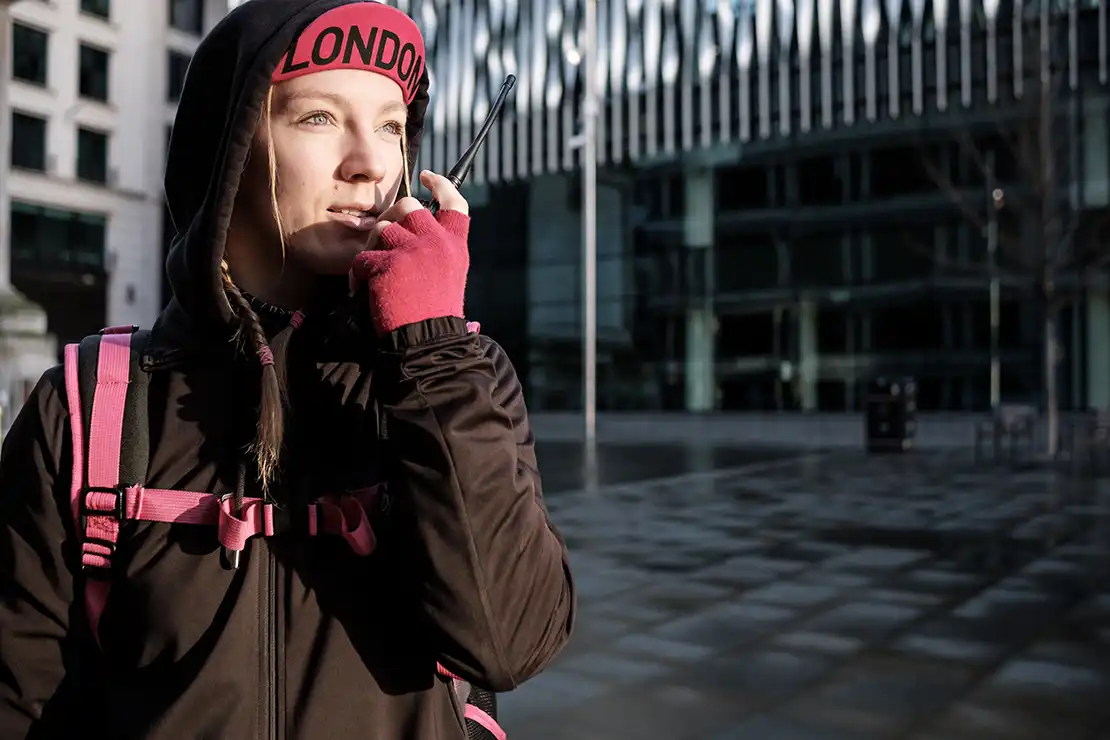
Many urban preppers use simple shortwave radios or walkie-talkies - and train to get by without GPS.
Mental Resilience
Perhaps the most underrated element: British composure paired with improvisation.
A member of a London prepper group once said:
„We're not alarmists. We're just people who know that making tea without electricity should also be a plan.“
The Brexit effect - and how it has changed thinking
Brexit was not a classic emergency, but it was a stress test. It showed how fragile even a highly developed country becomes when trade flows come to a standstill.
Suddenly there were no vegetables on the shelves, medicines became scarce and prices exploded.
Many Britons realized at the time that Self-sufficiency is not a luxury, but a survival strategy is. Gardening projects, community beds, repair cafés - they sprang up all over the country.
„Grow your own“ became the motto of a new generation of city dwellers who had never planted a tomato before.
Even in densely built-up districts such as Brixton or Manchester North, people began turning balconies into mini gardens. Not out of romanticism, but out of pragmatism.
Energy crisis - The hour of urban improvisation
The energy crisis of 2022/23 was the moment when Urban Survival became a mass reality in the UK.
Millions of households were faced with the question: heating or eating?
The government announced austerity measures, but the population reacted differently: with ingenuity.
Instructions circulated in forums for Candle stoves from flower pots, Self-made thermal covers for windows, tips for insulating old houses.
YouTube channels explained how to preserve food without electricity or how to use mobile batteries efficiently.
This phase made it clear how much an urban society relies on improvisation when central systems falter.
And it showed that people had learned.
Urban Survival - A new form of British pragmatism
The British „urban survival“ trend is not a dystopian retreat from society. Rather, it is a modern form of pragmatism, could hardly be more typically British.
Instead of panic, there is a kind of dry determination: „It won't be perfect, but it will do.“
You improvise, you share, you carry on.
Skill sharing in the city
British urban prepper groups rely heavily on shared learning: workshops on water filters, emergency cooking without electricity, repairs, energy efficiency or navigation without GPS. This cooperative approach replaces expensive equipment with knowledge - and makes entire neighborhoods more resilient.
It is interesting to see how strongly Neighborhood and community are at the forefront. Many initiatives emerged during the pandemic and survived it - now they serve as local safety nets.
Whether it's communal heating, barter markets or shared tools - the city as chaos becomes a city as opportunity.
Comparison: classic prepping vs. urban survival
| Feature | Classic prepping | British Urban Survival |
| Location | Rural, remote | Urban, cramped |
| Goal | Long-term self-sufficiency | Short-term resilience |
| Focus | Supplies, weapons, retreat | Energy, water, community |
| Mentality | Independence | Cooperation |
| Typical risks | Natural disasters, social collapse | Power outage, supply gaps, price shock |
How how to approach urban survival practically
If you live in a city - whether London, Berlin or Vienna - you can learn a lot from the British urban preppers. Here are a few simple but effective steps:
- Know your surroundings.
Where is the nearest water source, the nearest park, the nearest neighbor with tools? Urban survival begins with orientation. - Create small reserves.
Don't overdo it, but plan wisely: food for two weeks, water for five days, an independent source of energy. - Think in networks.
Find like-minded people, form small groups. When everyone contributes something different - electricity, tools, knowledge - real security is created. - Practice improvisation.
Deliberately cook without electricity once a year, test the emergency backpack Once. Routine takes away fear. - Stay calm.
The most important resource in an emergency is not a battery, but your own head.
Navigation without a smartphone
Mobile communications and GPS can quickly fail during power outages. Many British urban preppers therefore practice analog orientation techniques: district maps, prominent points, evacuation routes, meeting points for families and small walkie-talkies. If you really know your own neighborhood, you can stay in control even if all the displays remain black.
Conclusion - The new British school of survival
Britain's urban survival movement is not a spectacular phenomenon. It doesn't wear camouflage uniforms, it doesn't preach doomsday scenarios. It is quieter, more practical, perhaps even more human than many other prepper cultures.
It did not arise from ideology, but from experience.
From the realization that stability is not guaranteed - and that you can survive in the city if you are prepared.
Perhaps this is her greatest achievement: she has shown that prepping doesn't have to start in the country, but in the kitchen of a London apartment.
With a water filter, a few candles, a plan - and the determination, not to be surprised.
 Deutsch
 English