

Imagine this: You're out and about, perhaps on the run from a crisis situation, perhaps „just“ on a planned tour, and your water supply is exhausted. Suddenly you realize something that seems obvious in everyday life: without water, you won't be able to function for long. Hunger lasts for a few days, thirst becomes torture after just a few hours. Your mouth becomes dry, your tongue heavy, your head dull. This is when you realize at the latest: Finding water is the most important survival skill of all.
But how do you do that when you don't have a bottle to hand and no tap for miles around? That's exactly what this article is about - practical, comprehensible ways to discover water sources in nature. For preppers, this is not a romantic adventure, but a sober precaution.
Why water is so crucial
There is a rule of thumb that almost every prepper knows: Three minutes without air, three days without water, three weeks without food. This roughly sums up how our body sets priorities. Water is at the top.
If the body becomes dehydrated, it rapidly goes downhill. A loss of just 2 % of body weight in fluid causes headaches and concentration problems. At 5 % it becomes critical, from 10 % life-threatening. This makes it clear that if you don't know where and how to find water in a crisis, you will quickly find yourself in real danger.
Basic principles of water search
Before we go into specific methods, a few simple guidelines:
- Always think in motion. Water is part of the cycle: it evaporates, collects and flows.
- Search depth. Valleys, depressions and hollows are the places where water accumulates.
- Observe animals. Birds, insects and wild animals often have a keen sense for water sources.
- Read vegetation. Green, dense plant growth often indicates moisture in the soil.
Keeping these principles in mind helps enormously when you are getting your bearings.
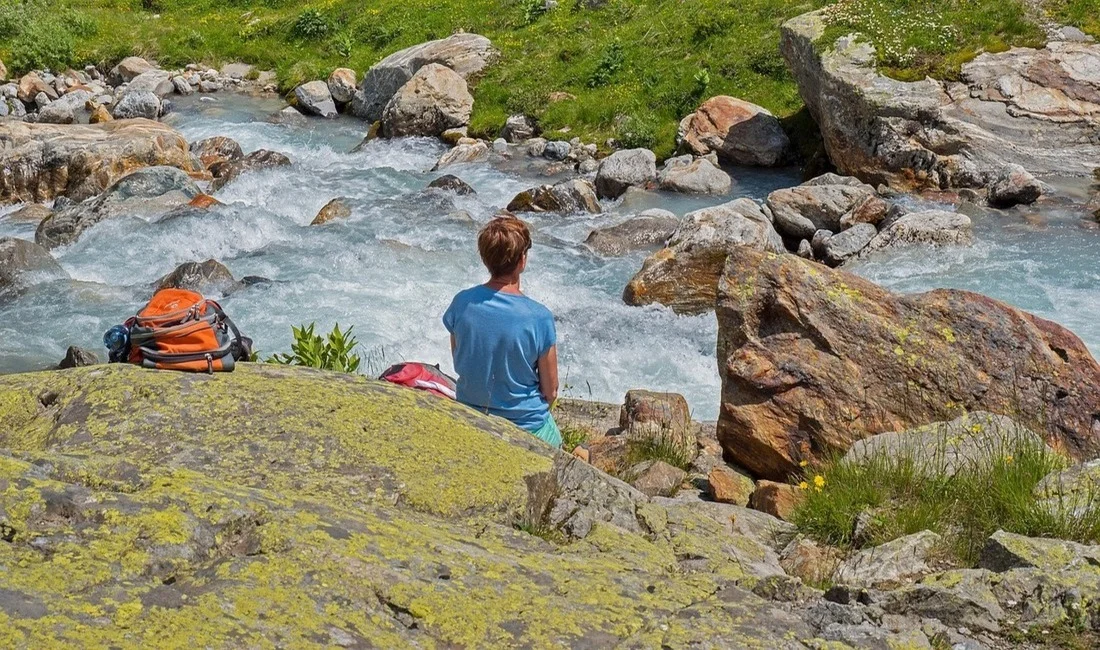

Finding natural water sources
1. rivers, streams and lakes
The most obvious sources are flowing or standing water. But be careful: even clear water can contain germs, parasites or chemicals. Therefore, the following always applies: Never drink unfiltered.
rainwater
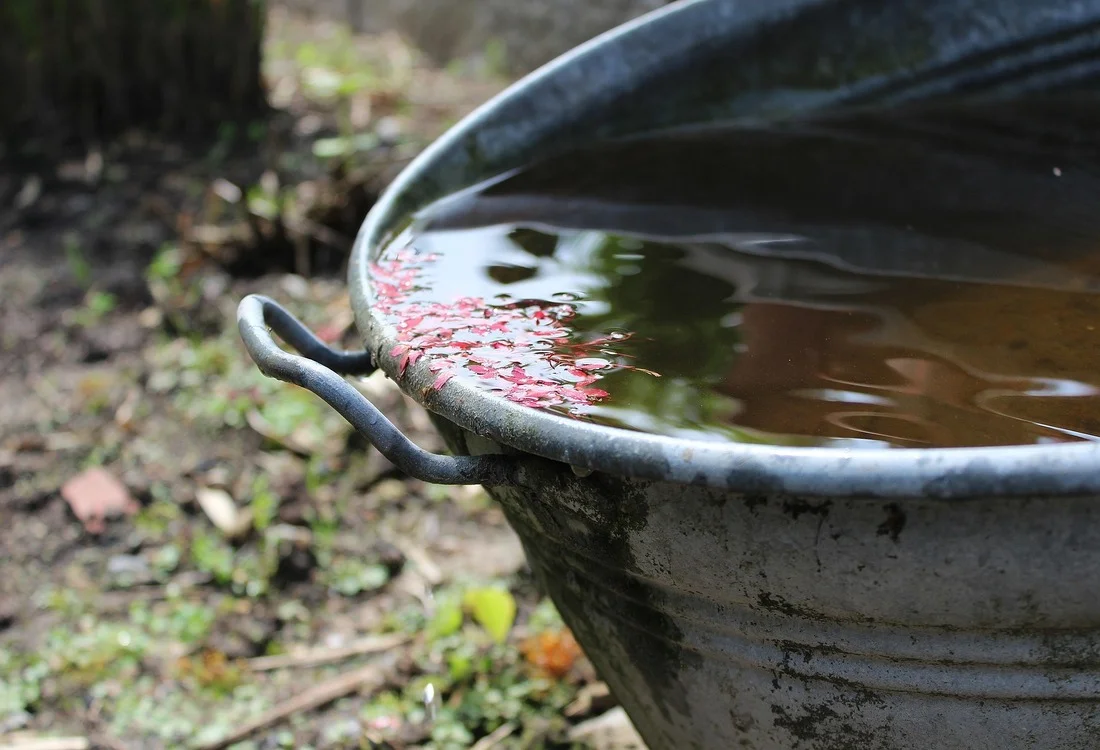
Collecting rain is one of the safest ways to obtain drinking water. Simple containers, tarpaulins or even large leaves can help to collect rain. In crisis situations, rain barrels are worth their weight in gold.
3. plants as a source of information
- Willows and alders like to grow near water.
- Reeds, bulrushes, nettles - where they thrive, water is usually not far away.
- Lush grass in an otherwise dry area may indicate a source in the soil.
4. morning dew
A well-known trick: in the morning before sunrise, pull a cloth over the grass to soak up the dew. Then wring out the cloth. This won't save any liters, but it can save lives in an emergency.
5. underground springs
Sometimes you hear them rather than see them - a quiet gurgle, a damp spot between stones. Small springs seem inconspicuous, but often provide the cleanest water.
Methods of extracting water from nature
Water is not always open in front of us. Sometimes you have to get creative.
Solar stillness
Dig a hole in the ground, place a container in it, cover it with a transparent film and weigh down the center with a stone. The sun will cause moisture to evaporate from the soil, condense on the foil and drip into the container. This is slow, but effective.
Extracting water from plants
Many plants contain usable liquid. If you cut fresh, green shoots, you can sometimes collect drops. Vines and birch trees in particular provide sap. But beware: not every plant is edible - safety-conscious action is mandatory here.
Condensation on the plastic bag
A pragmatic method: put a transparent plastic bag over a green branch and tie it shut. After a few hours, water will collect in the bag.
List: Typical places to find water
- Deep valleys and gorges.
- At the foot of hills or mountains.
- In depressions where rain collects.
- Under dense plant growth.
- On animal trails - they often lead to waterholes.
- Behind rock faces, where rivulets emerge.
- Under stones or in tree hollows after rain.
Table: Comparison of methods
| Method | Advantage | Disadvantage | Suitable for |
| River/stream | Mostly abundant | Must be filtered | Short thirst, large quantities |
| Rainwater | Relatively clean | Depending on the weather | Storage, crisis preparedness |
| Morning dew | Possible almost everywhere | Very small quantity | Emergency, short-term |
| Solar stillness | Produces clean water | Slow, needs material | Long-term |
| Plant juices | Partly very nutritious | Risk of poisonous plants | Experienced users |
| Plastic bag trick | Simple, effective in the sun | Only small quantities | Supplementary method |
Observe and combine
The best results are achieved when you combine several clues. An example: You see a group of tall willows in the valley, hear the quiet buzzing of insects and notice fresh animal tracks in the ground. All of this together means: there is water here.
It's like a puzzle - the more pieces you put together, the clearer the picture becomes.
Always treat water
As tempting as a clear mountain stream may seem: Unfiltered, it is a risk. Bacteria, parasites or animal carcasses above your location can contaminate the water.
Processing options:
- Boil-off (bubbling for at least 3 minutes).
- Filter (ceramic or carbon filter).
- Chemical agents (chlorine tablets, silver ions).
- UV light devices (practical, but technology-dependent).
Mistakes to avoid
- Drink unfiltered water. It may work in the short term, but it pays off in the long term.
- Relying on just one method. Weather, season and landscape change the conditions.
- Search is too late. If you start even in a state of dehydration, you already lack sufficient strength.
- Do not label water. Keep found sources in mind or mark them - they can be decisive.
A personal thought
I remember a tour in Scandinavia. We had lost sight of the river and the water was running low. The mood was tense. Suddenly, one of the group spotted a series of bird tracks in the sand - they actually led us to a small spring. An inconspicuous trickle, barely visible. But at that moment it felt like a treasure.
Conclusion: Searching for water is a craft
Finding water is less a single trick than a combination of observation, experience and common sense. Nature provides clues - you just have to learn to interpret them. For preppers, this knowledge is an insurance policy: against chance, against dependence, against their own helplessness.
Those who practise finding water in nature gain twice over: they ensure their survival in times of crisis - and they sharpen their senses for the environment that surrounds us.
 Deutsch
 English