

There are words that you often hear in the same breath without anyone really separating them. Bushcraft and Survival are such a pair. Both sound like adventure, like wilderness, like campfires under the stars. And yet they are not the same thing. If you take a closer look, you'll notice that it's not just a matter of juggling words, but of two different approaches to life outdoors - each with its own philosophy, its own benefits and its own effect on us.
But what does that mean in concrete terms? And why should anyone care whether you see yourself more as a bushcrafter or a survivalist?
Two sides of the same coin?
Bushcraft and survival seem like siblings who grew up in the same house but have developed completely different characters.
Survival is the sober, tough kid: focused, pragmatic, sometimes uncompromising. It's all about survival when it comes down to it - after an accident in the mountains, a sudden storm or, in the worst case, after a social collapse. Survival asks: How do I hold out until help arrives or I make it back to civilization?
Bushcraft on the other hand, is the more playful, laid-back brother: curious, hands-on, close to nature. Here it's not just about persevering, but about settling in. Bushcraft asks: How can I lead a good, perhaps even comfortable life with nature's resources?
A simple example
Imagine you suddenly find yourself in the middle of the forest, your map is useless and your cell phone has no reception.
- The survival approach: build a shelter, find water, eat roots or insects if necessary, until you are safe again.
- The bushcraft approach: building fires with wood, carving improvised tools, identifying edible plants, setting up a small camp - and seeing the forest not as a threat but as a resource.
A small table for an overview
| Topic | Survival | Bushcraft |
| Goal | Survive until help arrives | Living and working in nature |
| Time horizon | Short term | Long-term |
| Focus | Efficiency, saving energy | Creativity, comfort, skills |
| Typical methods | Emergency food, emergency shelter, signal fire | Fire drilling, carving, botany |
| Posture | „How do I survive?“ | „How do I live here?“ |
Why this distinction is useful
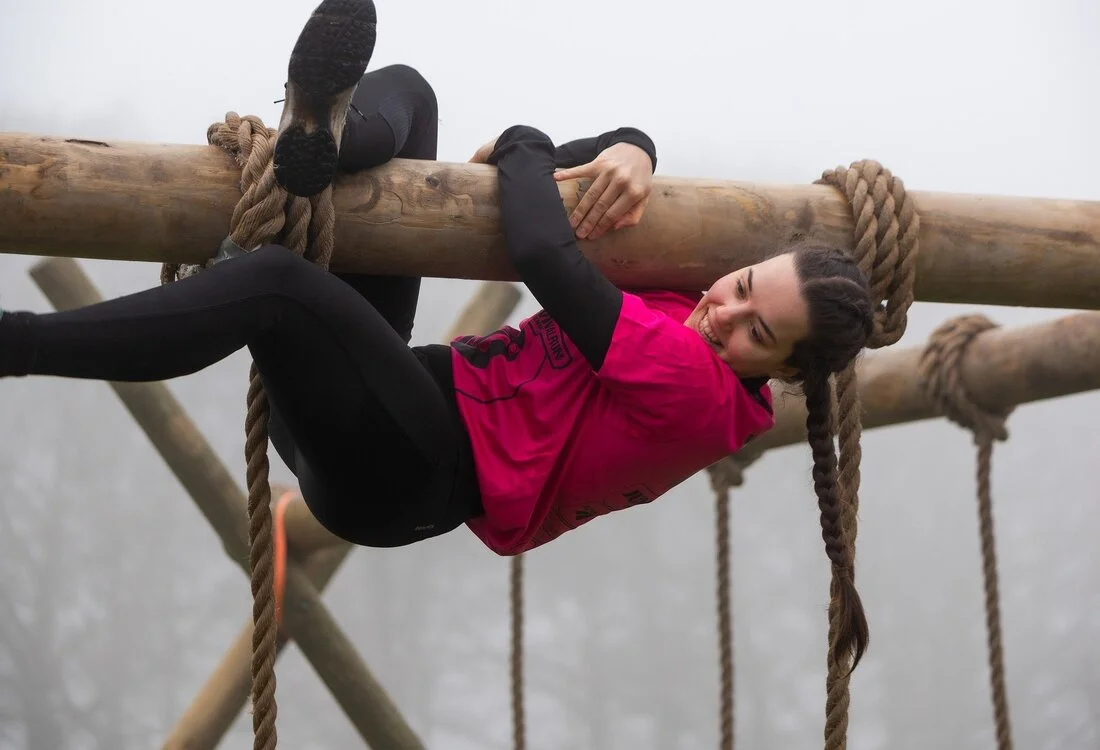
You could say: In the end, it's all survival. That's true - and yet it would be too short-sighted. Because whether you are interested in one approach or the other changes how you learn, practise and prepare.
- Survival sharpens your eye for crises: It trains you to think clearly when it really matters.
- Bushcraft strengthens your connection to nature: it makes you more independent and self-confident in dealing with the wilderness.
Both can be learned, both are valuable - but depending on the situation, the focus lies elsewhere.

Steps into survival training
If you are interested in survival, you don't need a box full of equipment, but rather a clear mindset and a few basic skills. Typical beginner exercises could be:
- Procuring and purifying water - whether by boiling, filtering or improvised methods such as solar still.
- Build a shelter - from tarpaulins, branches or even just with what the forest has to offer.
- Light the fire - in the rain, without a lighter, only with sparks.
- Train orientation - Use the sun, stars and landscape features.
- Practicing first aid - because survival is not only nature, but also health.
After just a few days, you realize how much such exercises change your own view of everyday life and safety. You think less in terms of „comfort“ and more in terms of „what do I really need?.
Steps into the bushcraft experience
Bushcraft is less focused on alarm and crisis, but is deeper, calmer and more manual. It's worth starting small:
- Making a fire like in the old days: Fire steel or bow drill instead of lighter.
- Practicing knots and ropesSimple connections that turn a branch into a tool.
- Get to know edible plantsNot out of hunger, but out of interest.
- Carve your own toolsSpoons, stakes, pegs - small projects that build skill.
- Design a warehouseNot just a roof over your head, but a place where you feel comfortable.
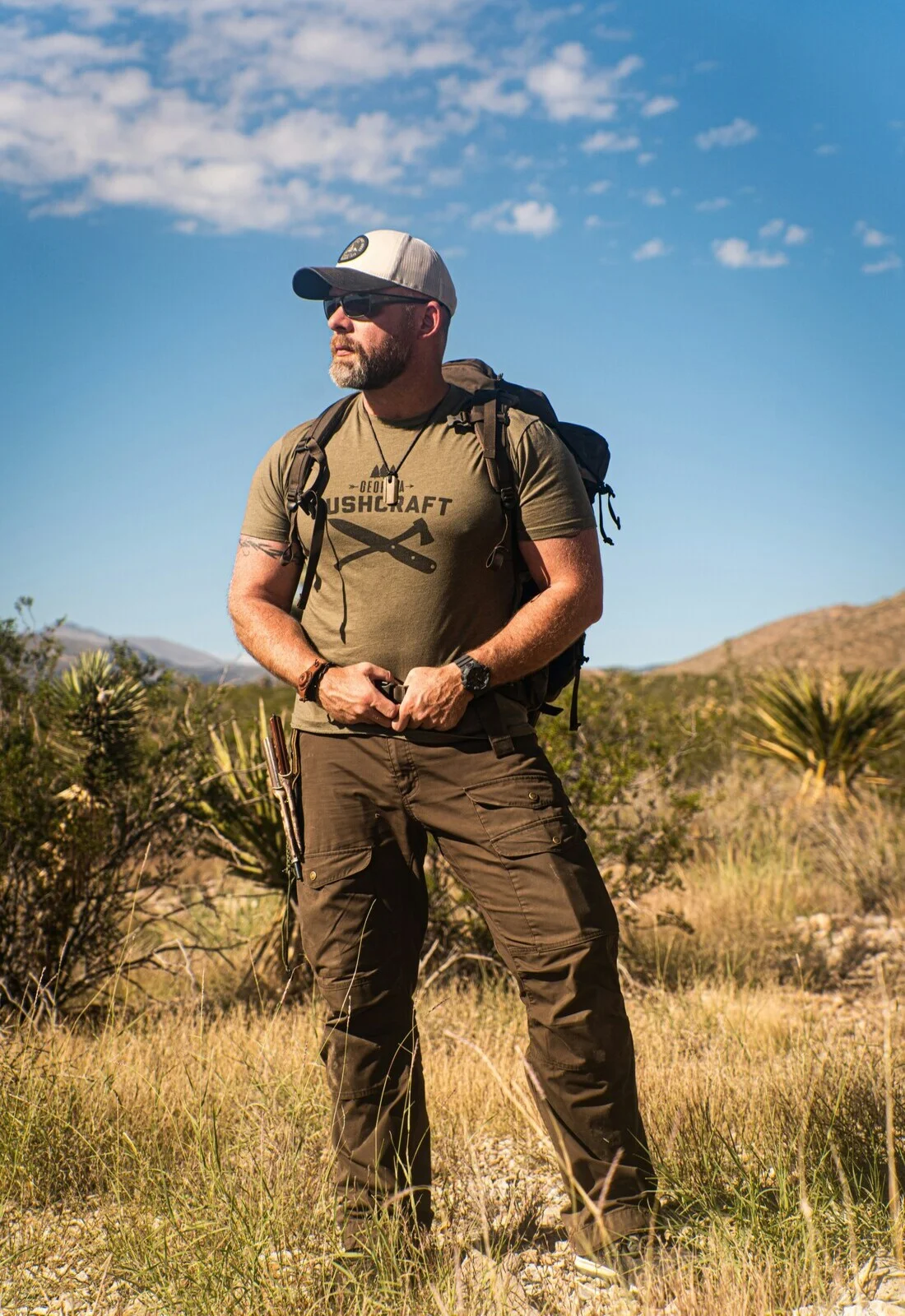
Bushcraft means that the forest is no longer a backdrop, but a space in which you move around like in a familiar house.
How to combine both approaches
People who practise bushcraft are often automatically better equipped for survival - simply because they know how to make a fire, how to improvise and how to keep calm. Conversely, survival exercises sharpen your sense of priorities: What is really important? Water before food, warmth before comfort.
A good combination could look like this:
- Survival training teaches you, to survive in emergency situations.
- With Bushcraft you learn, Make nature your ally.
Realistic scenarios
A friend of mine who hikes a lot in Scandinavia once told me about a situation that illustrates this interaction. He was surprised by a storm and his tent collapsed. He resorted to his survival skills: quickly build a makeshift tent, stay warm, wait. Later, when the situation was calmer, he was able to use his bushcraft skills to set up a small, stable camp and even enjoy the days afterwards.
This shows: The two disciplines are not mutually exclusive - they complement each other.
The emotional side
Anyone who has ever lit a fire alone in the wilderness feels an archaic power that has become rare in our modern world. And anyone who realizes that they can manage without a supermarket, electricity and GPS gains a confidence in themselves that is not easily shaken.
Perhaps that is the real value of these two approaches: not just to survive or live outside, but to become stronger, calmer and freer inside - in your own head.
Conclusion: two paths, one goal
Bushcraft and survival are not opposites, but two perspectives on the same question: How do I cope when I'm on my own?
- Survival gives us the tools for emergencies.
- Bushcraft gives us the knowledge and the joy of being at home outdoors.
And perhaps, in the end, it is not important which camp you feel you belong to more. What's more important is that you get started - be it with a small fire in the garden, a night in the open air or an exercise in a crisis scenario.
Because those who practise outdoors also grow indoors.
 Deutsch
 English