

Have you ever wondered why a deer looks practically invisible in the undergrowth even though it isn't wearing any camouflage at all? Or why we humans, despite all our camouflage suits and equipment, often stand out from afar? The answer is simple: camouflage is more than just fabric and color. It starts with clothing, but doesn't end there - the decisive factor is how we move.
Camouflage does not mean lying in the mud like a soldier. It means blending in with your surroundings, becoming inconspicuous, not attracting the attention of others. Whether you want to move quietly as a prepper in a crisis situation or simply don't want to be spotted while observing wildlife - the principle remains the same.
Why camouflage is important
Camouflage is not a game. It can provide security. In times of crisis, it makes a difference whether you are visible from afar or disappear in the landscape. Visibility means vulnerability. Invisibility gives you room to maneuver.
It is also useful in everyday life. Hunters and nature photographers know this: If you want to see animals up close, you have to become invisible. Anyone who moves too conspicuously or is dressed too brightly will be noticed - and more quickly than you think.
Camouflage begins with clothing
People often first think of camouflage patterns when it comes to camouflage. But it's not that simple. Camouflage only works when clothing, environment and behavior fit together.
Colors and patterns
- Natural colors: Green, brown, gray, beige. Tones that occur in nature are almost always better than garish patterns.
- Adaptation to the environment: Forest camouflage in the forest, light earth colors in open terrain. Camouflage always depends on the location.
- No black: Sounds like „invisible in the night“, but in nature it looks like a dark spot that is immediately noticeable.
Materials and surfaces
- Shiny fabrics reflect light. Even a ray of sunlight can give you away. Matt fabric is less conspicuous.
- Rustling materials are just as telltale as bright colors. If you want to move quietly, you need fabrics that don't make noise with every movement.
Camouflage through equipment
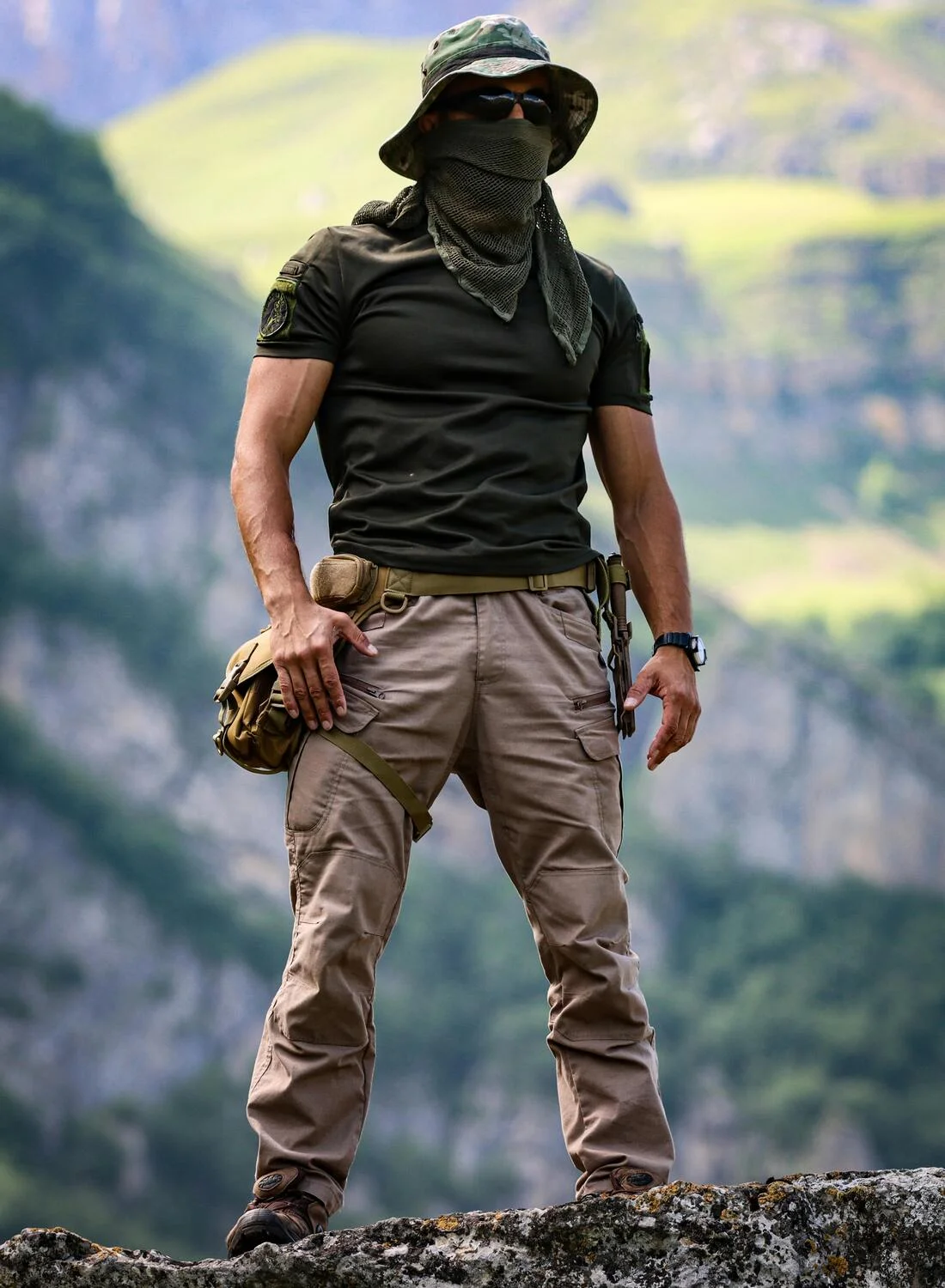
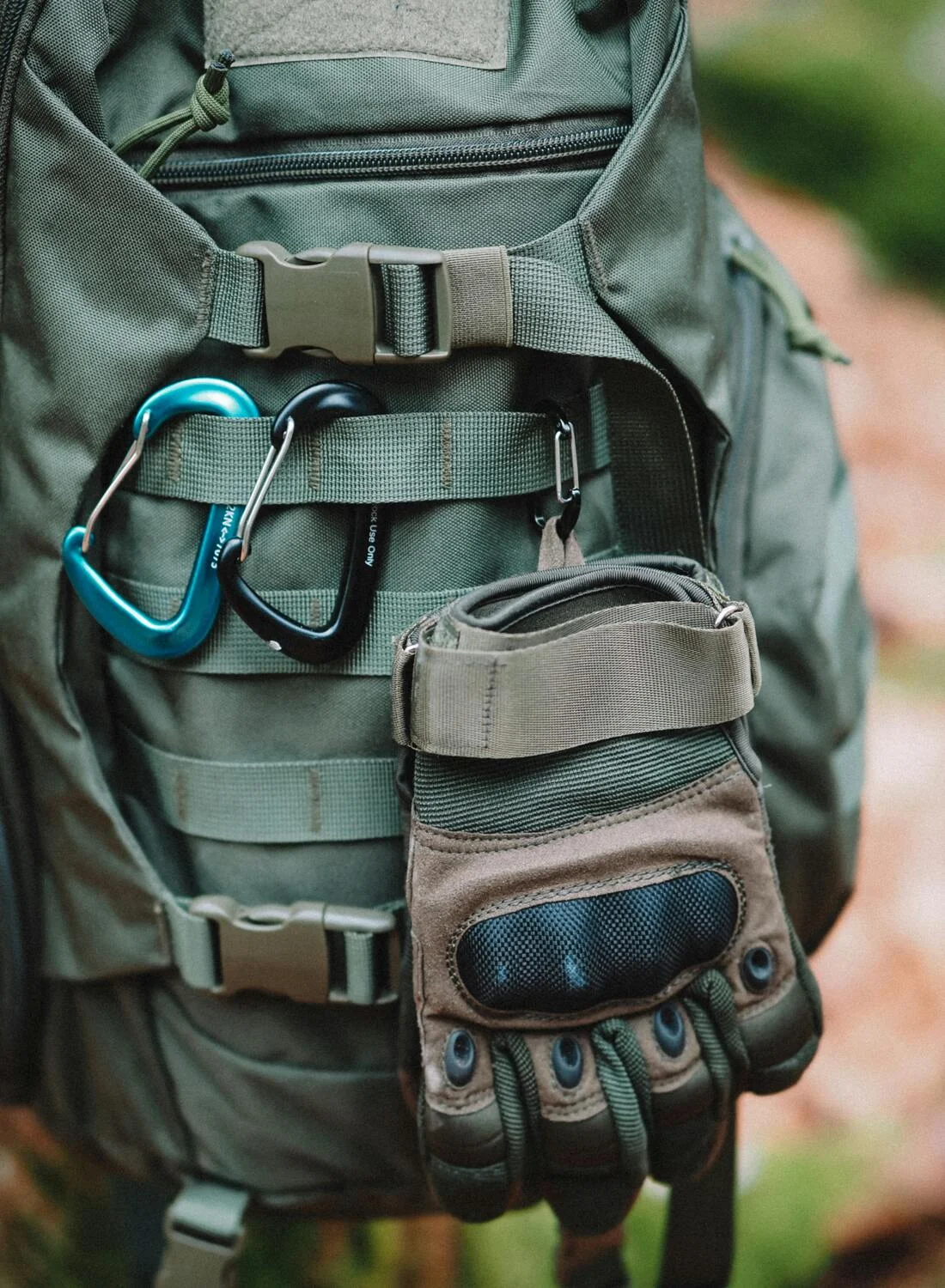
It is not enough for the jacket and trousers to be inconspicuous, while the rucksack and shoes shine like warning signals.
- Backpack: Camouflage with natural materials - a few twigs, some earth-tone fabric.
- Face and hands: Light skin reflects light. Dirt, soil or a cloth break up the contours.
- Dissolve forms: People are recognized instinctively - head, shoulders, silhouette. Loose clothing or attached camouflage materials blur the shape.
The power of movement
Even the best camouflage clothing is useless if you move conspicuously. Our brain is trained to perceive movement immediately. A bird does not recognize a lurking fox as long as it remains still - but it flies away at the slightest jolt.

Basic principles
- Slowly and consciously: Fast movements attract attention.
- Stop and observe: Pause every few steps, scan your surroundings, then continue.
- Merging with the surroundings: Move to the rhythm of the wind or sounds. When leaves rustle, a step in the undergrowth can also be more inconspicuous.
Avoid noise
Camouflage is not just visual. Cracking branches, rattling equipment, loud breathing - everything makes you noticeable. Controlling noise is just as important as your clothing.
List: Common mistakes when camouflaging
- Clothes that are too colorful or too clean.
- Black outfits in nature.
- Rustling through cheap rain jackets.
- Movements too hasty, too restless.
- Backpack and equipment not adapted.
- Stay in the sun instead of seeking shade.
Table: Clothing & exercise at a glance
| Range | What to look out for? | What to avoid? |
| Clothing | Natural colors, matt fabrics | Bright, shiny, black |
| Shoes | Quiet soles, muted colors | Bright sports shoes |
| Backpack | Camouflage with fabric or natural materials | Eye-catching logos, neon colors |
| Face & Hands | Break contours, earth or cloths | Open, light-colored skin areas |
| Movement | Slowly, to the rhythm of the surroundings | Hasty, jerky |
| Noises | Fix equipment, breathe calmly | Rattling, breaking branches |
Practical exercises
You don't learn camouflage from books alone. It has to be experienced. Here are a few simple exercises that you can try out right away:
- Exercise 1: Put on clothes in natural colors and ask someone to look for you in the garden or forest. Sit still. Observe how difficult or easy it is to spot you.
- Exercise 2: Move through the forest for ten minutes without cracking a branch. You will realize how much you need to focus your attention on the ground.
- Exercise 3: Try to approach a group of wild birds in a meadow. The aim is not to catch them, but to see how close you can get before they fly up.
Realistic scenarios
Imagine you want to stay off the roads in a crisis situation. A rucksack full of supplies makes you interesting to others. With bright clothing, you would be visible from a hundred meters. With camouflage, on the other hand, you can move more quietly, take detours and hide in the shadows.
Or you sit at the edge of a forest in the evening and watch a herd of wild boar. With muted clothing and quiet movements, you might witness a scene that you normally only see in nature documentaries.
Personal experience
I remember one night in the forest when I was trying to remain as unnoticed as possible. There was no wind, every step seemed loud. I sat down in the undergrowth, covering my hands and face with earth. Suddenly I heard rustling - a deer stepped out not ten meters away. It looked in my direction, pricked up its ears - and then moved on at a leisurely pace. A moment that made me realize: camouflage works if you have patience.

The inner attitude
If you really want to be invisible, you have to radiate composure. Hectic, nervousness, anxiety - all of these are reflected in movement and body language.
It's like fishing: If you wriggle restlessly, you scare the fish away. If you sit still, you merge with the river.
Conclusion: camouflage is both a craft and an art
Whether for preppers, hunters, photographers or adventurers - camouflage is more than just a pattern on fabric. It is a combination of clothing, equipment, movement and inner calm. Those who master it gain an invaluable advantage: the ability to be inconspicuous when it counts.
In the end, you don't have to become invisible like a chameleon. It is enough to be less conspicuous than the rest. In a world full of bright colors, noise and haste, this is perhaps even the greatest art.
 Deutsch
 English