

There are few things that are as deeply rooted in our human history as fire. Warmth, protection, light, the ability to cook - we owe it all to the art of lighting flames. Anyone who travels in the wilderness or is involved in crisis preparedness knows that fire is more than just a romantic campfire. It is survival.
But what if the lighter is empty, the matches are wet and the storm is raging outside? Then all that remains is the old knowledge - methods that people have been using to create embers for thousands of years. The good news: it is possible. The bad news: it takes patience, technique and often more strength than you think.
Why fire is so important
Before we dive into the methods, a quick reminder: Why is fire actually so important for preppers and outdoor enthusiasts?
- Heat: Protects against hypothermia, especially in wet or windy conditions.
- Cooking: Allows water to be boiled and food to be made edible.
- Light: Provides orientation and safety on dark nights.
- Signal: Smoke or flames are visible from afar.
- Protection: Animals avoid fire, and it conveys psychological strength.
Fire is more than energy - it is a piece of control in a situation in which many things seem uncontrollable.
Basic requirements: Tinder, wood, patience
No matter which method you use, nothing will happen without good fuel.
- Tinder Fine and dry, easily flammable. Examples: dry grasses, birch bark, cotton fabric, absorbent cotton, pine shavings.
- kindling kindling.
- Firewood Larger pieces that keep the fire alive.
An old rule of thumb: „Take twice as much tinder and three times as much kindling as you think you need.“ Because the flame often goes out faster than you would like.
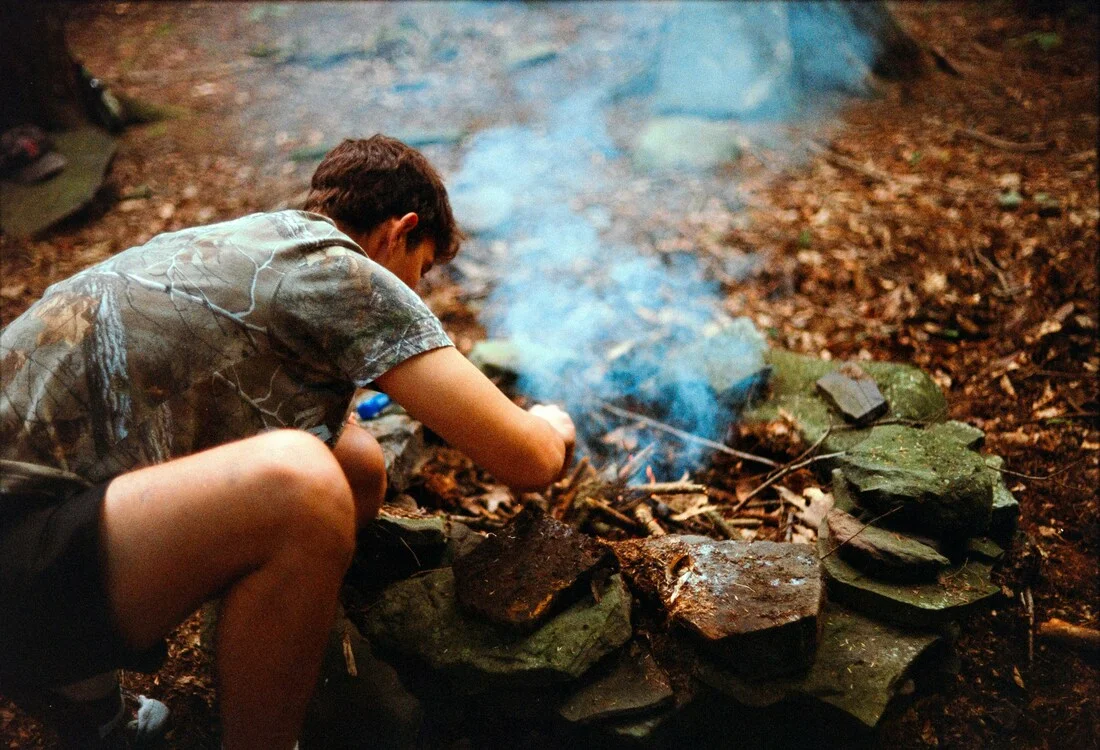

Methods for lighting a fire without a lighter
1. fire steel (ferrocerium stick)
Probably the best-known helper in the survival sector. A small metal rod that produces sparks when scraped.
- How it works: Scrape over the stick with a sharp piece of metal (back of a knife). The sparks hit the tinder and ignite it.
- Advantage: Also works when wet, durable, small and light.
- Disadvantage: You have to practise using it - many beginners fail to get the sparks onto the tinder in a targeted manner.
2. fire drilling - the supreme discipline
A method as old as mankind. Wood against wood, friction generates heat, heat generates embers.
- Material: Spindle (straight stick), fireboard (soft wood), bow with string (bow drill), handpiece.
- Procedure: Place the spindle on the board, move it back and forth quickly with the bow and apply pressure. After a few minutes, dark, smoking powder is produced which ignites.
- Advantage: Works without metal if you have mastered the technique.
- Disadvantage: Extremely strenuous, error-prone, requires a lot of practice.
It is said that those who have mastered fire-drilling have truly understood the essence of survival.
3. fire plow
Less well known, but similar to fire drilling.
- How it works: A hard stick is pushed over a soft board in a notch. The friction creates embers.
- Advantage: Simple structure.
- Disadvantage: Very exhausting, takes a long time.
4. striking fire with sparks (stone & steel)
The classic method of the Vikings and pioneers.
- Material: A hard flint (e.g., flint) and a piece of carbon steel.
- Procedure: Strike the steel against the stone - small sparks will fly. These must fall on tinder, often on charred cloth (charcloth), which easily takes on sparks.
- Advantage: Traditional, reliable with the right equipment.
- Disadvantage: Difficult to succeed without prepared tinder.
5. use sunlight (lens or mirror)
Sometimes the power of the sun is enough.
- How it works: Use a magnifying glass, glasses, glass or even water in a transparent bag to focus the sun's rays and direct them at tinder.
- Advantage: No physical effort, works with little equipment.
- Disadvantage: Only possible in direct sunlight, patience required.
I remember an afternoon when we actually made a fire with children from an old jar and dry birch bark - the cheers were great when the first plume of smoke rose.
6. chemical reactions
Flames can also be ignited with simple household products.
- Examples:
Steel wool + battery (fibers ignite immediately).
Potassium permanganate + glycerine (chemical reaction produces fire). - Advantage: Very effective, if available.
- Disadvantage: Not always available, sometimes dangerous.
Table: Comparison of methods
| Method | Difficulty level | Material requirements | Reliability | Remark |
| Fire steel | medium | Fire steel + tinder | high | even in wet conditions |
| Fire drill | Very high | Spindle, board, bow | low-medium | needs practice |
| Fire plow | high | Stick + board | low | very strenuous |
| Stone & Steel | medium | Flint and steel | high | Charcloth is helpful |
| Sunlight | low | Magnifying glass/glass/water | medium | only in the sun |
| Chemical methods | low-medium | Steel wool, batteries, etc. | high | Caution necessary |
List: Tips for Success
- Always prepare tinder first. There's no chance without the finest fibers or easily combustible material.
- Have everything to hand. Place kindling and firewood within reach before the embers are present.
- Store in a dry place. Make sure to have kindling on hand well in advance, even in the rain (e.g., birch bark in your jacket pocket).
- Practice before it gets serious. Anyone attempting a fire drill for the first time in an emergency will almost certainly fail.
- Bring patience. A fire rarely starts immediately - the moment when the first smoke rises is the reward for perseverance.
A personal thought
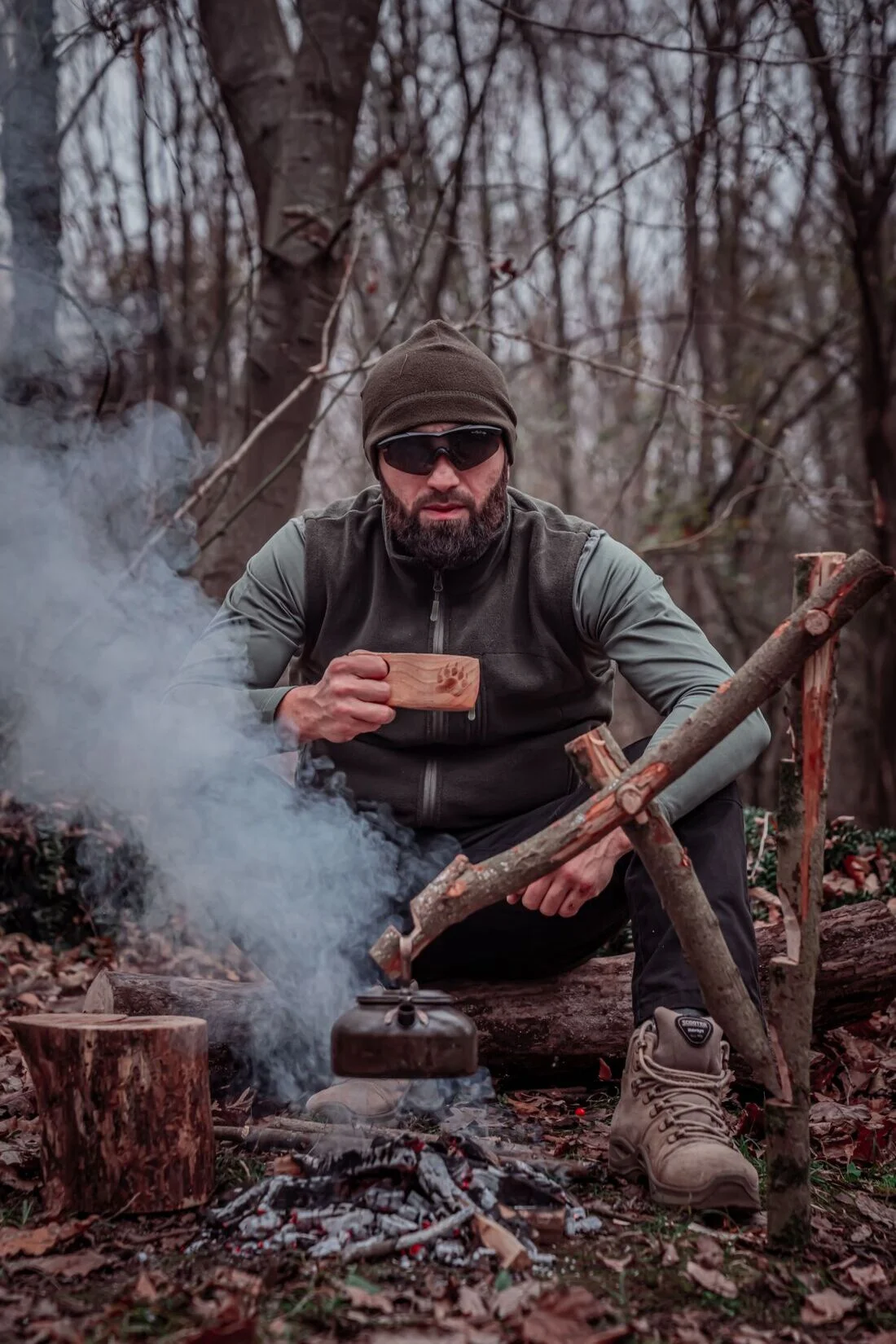
I still remember my first „real“ fire without a lighter. It was frustrating. Sparks flew, but the tinder remained silent. After half an hour, with black fingers and a sweaty forehead, a thin wisp of smoke began to rise. Seconds later, a flame blazed up. And suddenly I felt not only warm, but also connected—to all the people who had come before me and already possessed this knowledge.
Metaphor: Fire as a test
Starting a fire without a lighter is like cracking a safe: lots of small steps that have to work together precisely. Sometimes it works right away; other times, you spend ages fiddling with the combination. But when you hear that click—or, in our case, see the embers—it feels like a triumph.
Conclusion
Fire is more than just a survival tool—it is a symbol. Anyone who can start a fire without a lighter not only possesses a practical skill, but has also preserved a piece of ancient knowledge.
The methods are varied: from modern fire starters to ancient fire drills, from sunlight to chemical tricks. Some are simple; others require hours of practice. But they all have one thing in common: they provide warmth, safety, and hope in an emergency.
And that's exactly why it's worth learning these skills - not just when the lighter is long empty.
 Deutsch
 English