

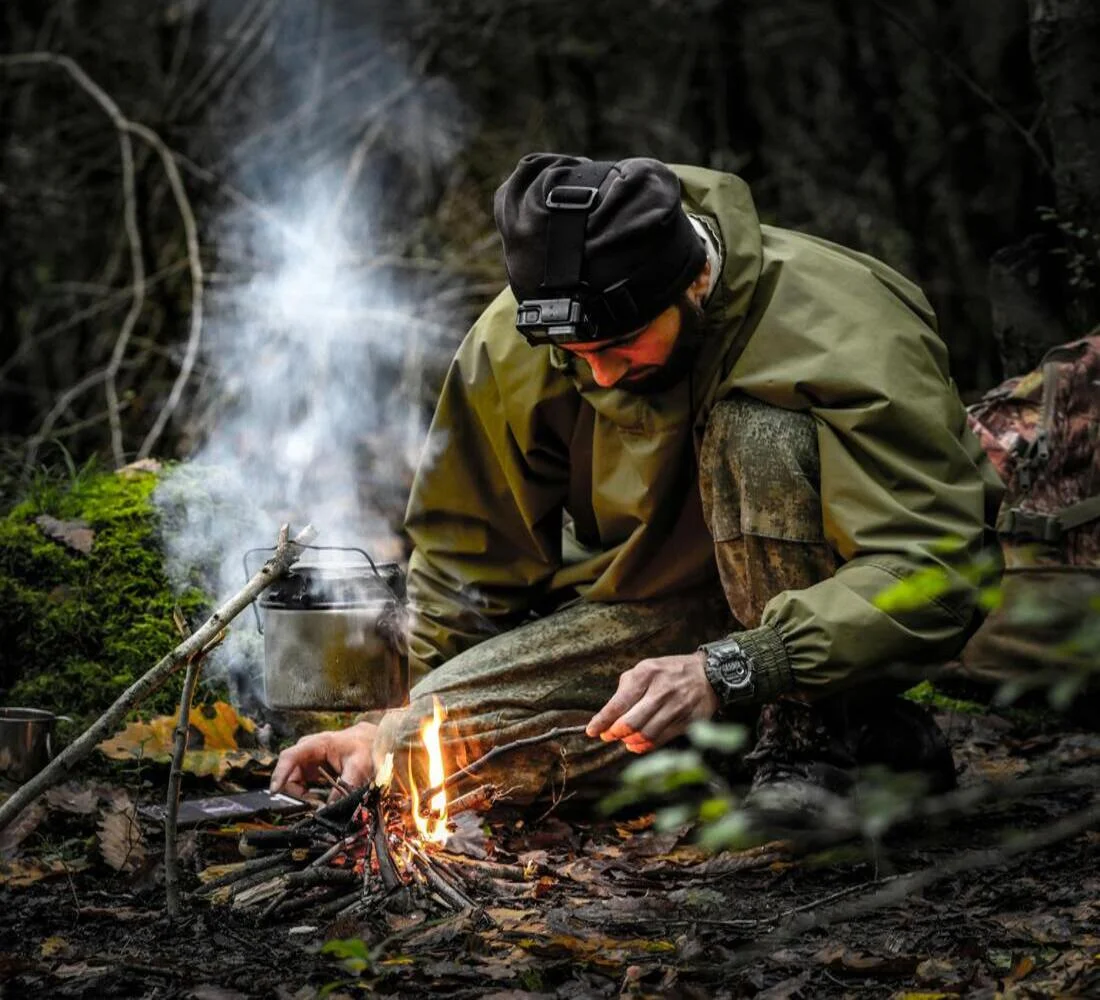
There are images that are deeply anchored in human memory. A crackling fire in the dark. Flames that not only warm, but also provide security. For our ancestors, fire was the gateway to civilization - warmth, protection, food, light. And basically nothing has changed to this day. Anyone who has ever stood outside on a cold, wet night knows that fire means survival.
For preppers, one thing is clear: you can't do without fire. But how do you light it when storms, rain or simply modern convenience make the usual matches useless? This is exactly where the question comes into play: Which fire starter is the right one and how do you use it?
Why fire is indispensable for preppers
A fire is much more than just a romantic campfire moment. It fulfills several essential functions:
- HeatHypothermia is one of the most common causes of death in emergency situations. A fire prevents cooling.
- Water treatmentBoiled water is free from germs. Without a fire, the only hope is often to use tablets or filters.
- FoodMany plants and meats are inedible or even poisonous when raw. They only become safe when heated.
- SignalSmoke by day, flames by night - a fire makes you visible.
- PsychologyA fire is calming. It gives structure, hope and a sense of control.
You could say that a fire is like a silent ally that won't leave you alone in the darkest hour.
Fire starters at a glance - from lighters to fire drills
Not every tool works in every situation. Some fire starters are ingeniously simple, others seem archaic and require practice.
Classic methods
- Matches
Simple, inexpensive, but sensitive to moisture. - Lighter
Practical, but only while gas or gasoline lasts. - Fire steel (Ferro Rod)
Robust, also works when wet, delivers thousands of sparks.
Alternative methods
- Magnesium blockChips are easy to ignite, even in windy conditions.
- Magnifying glass or Fresnel lensSunlight as a detonator - only reliable when the sky is clear.
- Friction fire (fire drill)Archaic, extremely difficult without practice, but possible.
- Chemical detonatorsPotassium permanganate with glycerine, for example - for specialists.
Here is a short table for orientation:
| Fire starter | Durability | Difficulty | Weather resistance | Remark |
| Matches | short | very light | bad | only with waterproof packaging |
| Lighter | medium | very light | medium | Gas/petrol finally |
| Fire steel | very long | medium | very good | Universal, but requires practice |
| Magnesium block | long | medium | very good | Ideal in wet conditions |
| Magnifying glass/Fresnel lens | unlimited | light | bad | only in the sun |
| Fire drill | unlimited | Very heavy | medium | traditional, hardly efficient |

Tinder - the secret ingredient
A fire starter alone is not enough. Without tinder, every spark is ineffective. That's why preppers should always have something to hand that is guaranteed to burn.
Natural types of scale
- Birch bark - burns even when damp.
- Dry grasses or reeds.
- Seed wool (e.g. cattail).
- Pieces of resin from conifers.
Artificial scales
- Cotton balls with Vaseline.
- Wax-soaked cotton pads.
- Chemical ignition cubes.
A small tin of prepared tinder is often more valuable than the most expensive fire steel.
Practice: Lighting a fire step by step
- Preparation
Collect more wood than you think. Fire eats faster than you think.
Separate into three categories: Tinder, kindling (thin), firewood (thicker). - Building a fireplace
Erect a windbreak (e.g. stones or earth).
Create a base - damp soil absorbs heat. - Ignite tinder
With spark, flame or lens.
Blow carefully until the embers grow. - Structure of the fire
First thin branches, then larger and larger ones.
Classic: tipi shape or pyramid. - Adding firewood
Do not choke too early with large pieces. Patience pays off.
Realistic scenarios - when the worst comes to the worst
An example: You are on a hike lasting several days, rain has soaked your clothes. The thermometer only shows a few degrees above zero. Without warmth, it becomes dangerous. Your lighter is empty, the matches are soaked. This moment shows whether you are prepared.
A fire steel, combined with a absorbent cotton pad from your survival kit, causes sparks to glow. The wind tugs, your fingers are clammy, but the little flame grows. Finally, the first wood crackles - and at that moment you know: You are able to act again.
Tips for preppers - clever use of fire starters
- Create redundancy: Don't rely on just one method. Carry at least two, preferably three fire starters.
- PracticeA firesteel needs to be practiced. Those who only try it out in an emergency often fail.
- Prepare tinderAlways have a small tin to hand, even in the car or rucksack.
- Store in a dry placeFire starters should be packed in waterproof packaging, e.g. in zip bags.
- Knowing natural resourcesIf you know where birch trees grow or what cattails look like, you have an advantage.
Fire and psyche
A fire is more than just technology. It is a signal to the soul: „You are not powerless.“ The crackling sounds, the warm glow, the smell of smoke - all this grounds and calms. This is priceless, especially in times of crisis.
I remember one night in the fall when we were surprised by a sudden shower at a bivouac site. Everything was wet, we were tired and our spirits were low. Only when the first sparks finally caught the tinder and a small flame rose did everything change. Suddenly we were laughing, cooking and talking again. A fire not only gives warmth, it gives hope.


Small list: Fire starters that are worthwhile for preppers
- Gas lighter (storm-proof, refillable).
- Fire steel with 5-6 mm thickness.
- Magnesium block with integrated blade.
- Emergency matches, waterproof packaging.
- Fresnel lens in the wallet.
- Tin with tinder (absorbent cotton, wax, birch bark).
With this combination, you are prepared for almost any scenario.
Training fire in everyday life
No one has to wait until disaster strikes to practice using fire starters. A few ideas:
- On the next hike, light a fire using only fire steel and natural tinder.
- Build a small campfire with children and explain why preparation is key.
- Test different types of tinder - what works in the rain, what burns the longest?
- Trying out the fire starter in the dark or with gloves - surprisingly difficult.
Conclusion - fire as a key competence
While food supplies are used up at some point, the fire remains a constant companion - as long as you know how to light it.
For preppers, the knowledge of fire starters is therefore essential. It is a connection to our roots, to what has always characterized us humans: the ability to create warmth, security and confidence with sparks and patience.
In the end, no complicated technology is needed. A simple spark is enough. But it has to be there at the right moment - and that's exactly what preparation ensures.
 Deutsch
 English