

Just imagine: You're outside for longer than planned. A storm rolls in, the temperature drops, your clothes are soaked. Or worse still - they are damaged or lost. What are you left with? It is precisely at moments like this that the question arises: can I make something out of what nature gives me that will protect me?
The idea may sound like Stone Age romanticism at first, but it is surprisingly practical. People did nothing else for thousands of years: they clothed themselves with what they found, hunted or collected. Just because we have high-tech materials today doesn't mean that these old techniques have become useless. Especially for preppers and outdoor enthusiasts, this knowledge is more than just a gimmick - it is a piece of independence.
Why improvised clothing can be important
Clothing is more than just decoration. It is our first protective shield against the cold, wet, sun and insects. Anyone who is out and about quickly realizes how much the body depends on it.
- Protection against hypothermia: Even a few hours without suitable protection can be life-threatening.
- Protection from the sun: Without headgear, there is a risk of heatstroke or sunburn.
- Protection against injuries: Thorns, branches and insects take their toll.
When the usual equipment is missing, improvisation is required. This is exactly where you can see how much nature has to offer.
Basic principles of improvised clothing
Before we get into materials and techniques, a few basic ideas:
- Shift principle: As with modern clothing, several layers keep you warmer than one thick layer.
- Breathing vs. protection: Materials that are impermeable keep out wind and water, but can accumulate.
- Availability: Take what is within reach. Perfect material is useless if you have to search for it for a long time.
- Function before beauty: Improvised clothing is not elegant, but functional.
Materials from nature
The question is: What is there and how can I use it?
Plant fibers
- Stinging nettles: The fibers can be used to make an amazingly strong yarn or fabric.
- Tree bark (e.g. lime bast): Can be peeled off in strips, beaten soft and braided.
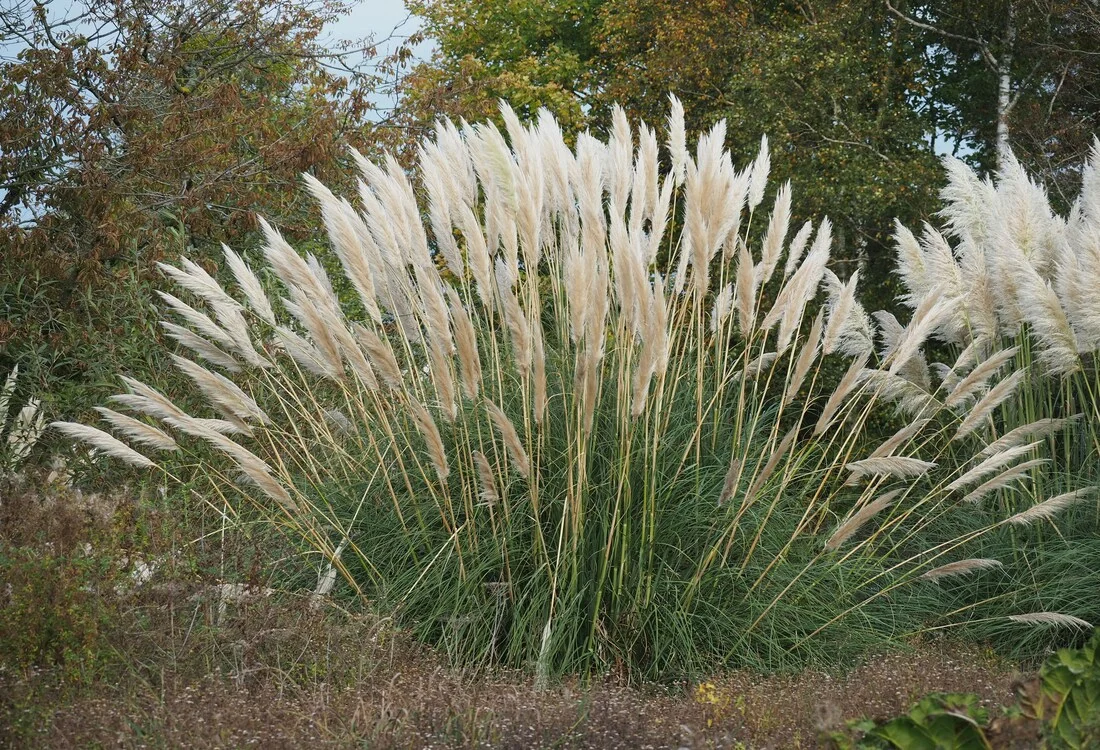
- Grasses: Tightly bundled as a belt, cord or even as a „skirt“.
Leaves
- Reeds or rushes: Wide sheets can be tied overlapping like roof shingles.
- Large leaves (e.g. rhubarb, burdock): Short-term protection against rain or sun.

Wood & bark
- Birch bark: Water-repellent, flexible, suitable for hats or insoles.
- Soft bark strips: Can be used for binding or braiding.
Animal material (if available)
- Skins: Warming, robust - the classic since the Stone Age.
- Skins: Dried or tanned for stable protection.
List: What you can improvise quickly
- Headgear: Leaf bundles, bark, woven grass - protects against sun and rain.
- Foot protection: Thick layers of grass or moss fixed in bark or fabric remnants.
- Rain cape: Tie large leaves or reed mats like scales.
- Insulating belt or skirt: Tie bundles of grass or leaves around your waist.
- Hand protectors: Wrap strips of bark or fiber bundles.
Table: Problems & possible solutions
| Problem | Solution with natural materials |
| Cold | Tie in several layers of grass, moss or leaves |
| Wetness | Birch bark, large leaves as outer layer |
| Sun | Leaf hat or bark cap |
| Foot injuries | Moss cushion wrapped in bark or scraps of fabric |
| Insects | Smoke-impregnated clothing, dense layers of leaves |
How to make clothes - step by step
Example: A simple cloak made from reeds
- Collect long, wide reed leaves.
- Lay them on top of each other like scales so that water runs off.
- Braid or tie them together with grasses or strips of bark.
- Secure with a fiber belt or cord around the shoulders.
Example: Emergency shoes
- Collect several layers of moss or soft grass.
- Place around the foot and secure with bark strips or paracord.
- Outer layer of birch bark or stable leaves.
Realistic scenarios
- Sudden drop in weather: Rain comes on a day trip and your jacket tears. An improvised reed cape keeps you dry enough not to get cold.
- Lost footwear: The strap breaks, the shoe is lost. With moss, bark and string, you can build an emergency shoe that will get you home.
- Sunstroke is imminent: Forgotten your headgear? A quick leaf hat makes all the difference.
Personal touch
I remember an exercise where we were deliberately sent into a wet area without a rain jacket. After an hour, it was clear: without improvised protection, you quickly freeze. I made a cloak out of reeds and bark. It wasn't pretty, it wasn't comfortable - but it worked. In the end, I was sitting halfway dry by the fire, while others came back soaking wet.
The psychological effect
Improvised clothing has another benefit: It gives you the feeling of being able to act. Instead of freezing helplessly, you do something. This boosts morale and stamina - an often underestimated factor in emergency situations.
Practice makes all the difference
Improvised clothing sounds simple in theory, but is unfamiliar in practice. Fibers tear, leaves slip, bark breaks. That's why it's worth practicing beforehand:
- Try weaving simple hats from reeds in summer.
- Build a makeshift cloak out of grass in the garden.
- Test how long an improvised shoe lasts.
This will give you a feel for the equipment and technology - and you will be able to act more quickly in an emergency.
Conclusion: nature dresses you - if you let it
Improvised clothing made from natural materials is not a return to the Stone Age, but a reassurance. It shows us that we can survive without modern equipment.
The materials are literally at our feet. All we need is an eye for them, the hands to try them out and the courage to accept imperfect solutions.
In the end, it's like a silent agreement with nature: it gives you what you need - if you are willing to recognize it.
 Deutsch
 English