

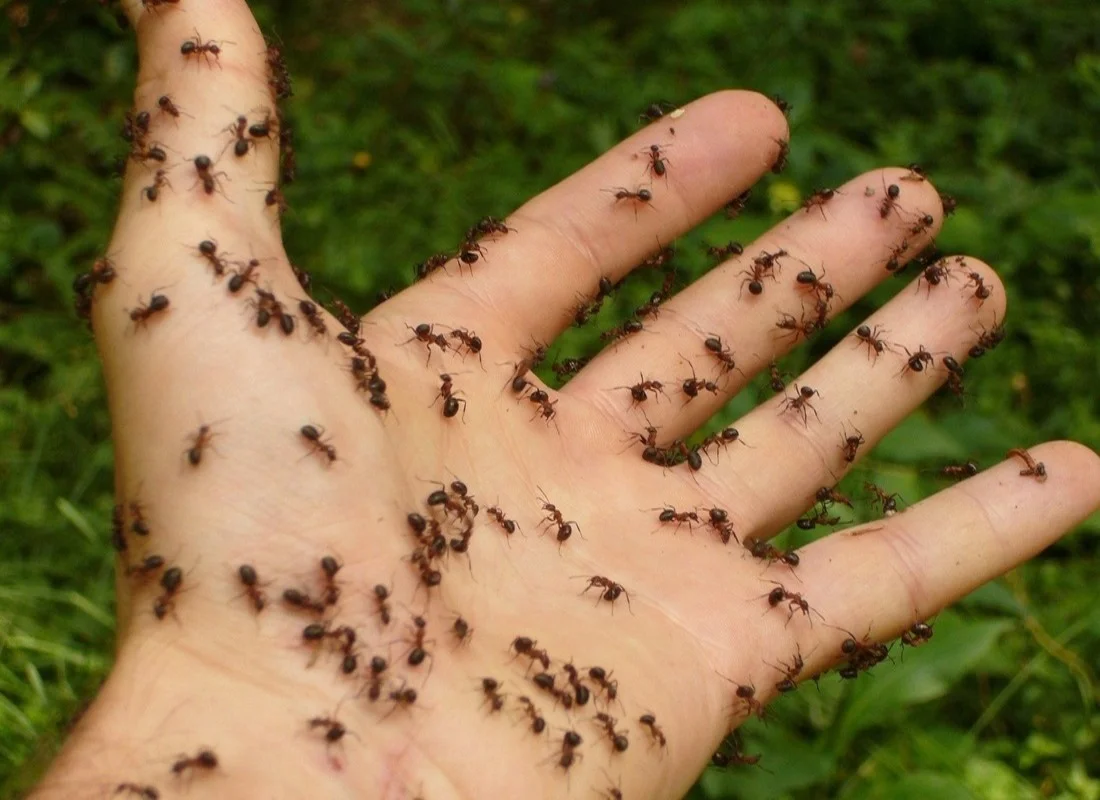
It's a strange contradiction: nature is our retreat, our place of longing - and at the same time it is teeming with tiny creatures that can make life difficult for us. Anyone who has ever lain in a tent on a summer night without a net will be familiar with this buzzing that triumphs over sleep. And anyone who has seen an army of ants marching over their equipment on a hike in the tropics knows that insects are more than just a minor nuisance. They are both a matter of survival and a limit to comfort.
But how do you protect yourself when you're out and about - whether trekking, bushcrafting or as a prepper in an emergency? The answer does not lie in a single miracle cure, but in a mosaic of knowledge, preparation and a little pragmatism.
Why protection against insects is so important
Insects are not a minor matter. They are carriers of dangerous diseases - malaria, dengue, Lyme disease, to name but a few. But even where there are no exotic viruses lurking, they can pose a serious threat. Mosquito bites lead to inflammation, scratching to infections. Ticks can transmit Lyme disease or TBE. In an emergency, a swarm of horseflies or midges can disrupt concentration to such an extent that it becomes impossible to work properly or think clearly.
And let's be honest: no one builds a shelter in the forest, collects firewood or prepares a meal while constantly beating their skin. Insects can drain us - physically and mentally. So protection is not a minor matter, but part of basic care, just like water or fire.
Basic principles: How to think before you act
Before we get to the specific means, it is worth taking a look at the basic principles. They sound simple, but are crucial in practice:
- Avoidance instead of defense. The best sting is the one that doesn't happen in the first place. If you know when and where insects are active, you can avoid them.
- Physical barriers. Clothing and nets are often more effective than any chemicals.
- Targeted means. Repellents or home remedies are supplements, but not the sole solution.
- Cleanliness and mindfulness. Insects are magically attracted to leftover food, sweat or garbage.
These principles are the basis on which all other strategies are built.
Practical measures in the field
1. clothing as armor
Lightweight, long clothing is a classic. It looks inconspicuous, but is one of the most reliable methods. Light colors are better than dark ones, as they are less attractive. Anyone who has ever walked through a summer meadow in black trousers knows the phenomenon.

A tip that experienced wilderness hikers are happy to pass on: Tuck your trouser legs into your socks. It doesn't look elegant, but it reliably prevents ticks or ants from finding their way up.
2. mosquito nets and shelters
A mosquito net in your rucksack may seem like a luxury at first glance. But anyone who spends a night without it in mosquito areas quickly realizes its true value. Improvised solutions also work: stretch a fine cloth over the sleeping area or choose a tent that has an integrated net.
3. repellents - chemistry and nature
This is where opinions differ. Products with DEET or Icaridin are scientifically proven and indispensable in many situations. But they have a strong smell, can attack plastics and are not everyone's cup of tea. Natural alternatives such as lemon eucalyptus oil or neem are gentler, but often less effective.
A brief overview:
| Active ingredient / agent | Effect | Durability | Disadvantages |
| DEET | very strong | up to 8 hrs. | corrodes plastic, strong odor |
| Icaridine | strong, skin-compatible. | 6-8 hrs. | less common |
| Lemon eucalyptus oil | medium | 2-3 hrs. | must be applied more often |
| Neem oil | weak-medium | 2-3 hrs. | Intense odor |
4. smoke and fire
A crackling fire is not just romantic. Smoke effectively repels insects, especially if you add certain plants or resins to the fire. Herbs such as sage or juniper produce an odor that keeps mosquitoes away. In some cultures, smoking is still part of everyday life.
5. seat selection
If you set up camp next to a swamp or slow-moving water, don't be surprised if you become a meal for mosquitoes. A few meters higher up, with a light breeze, and the situation looks very different. Choosing the right location is often half the battle.
Specific tips for on the go
Here is a compact list that has proven itself in practice:
- Check campsite: No proximity to standing water.
- Impregnate clothing: Fabrics treated with permethrin repel ticks and mosquitoes.
- Wash off sweat: Even without soap, water is enough to reduce the attractant.
- Pay attention to rituals: Always check for ticks in the evening before going to bed.
- Stow food: Open food magically attracts ants and wasps.

Small differences, big impact
It's often the details that make the difference. If you use a mosquito net but leave a small gap open, you will soon have company. If you don't wash off your sweat, mosquitoes will smell like a lighthouse in the night.
I remember one night in Sweden: We were exhausted, had set up a simple tarp, but no net. After half an hour we were besieged. In the end, we crawled into our sleeping bags at 18 degrees plus, our hoods pulled up like mummies. We didn't really sleep. Since then I've known that a net is not a luxury.
![EXPLORER® GRÖNLAND sleeping bag -23°C -5°C [350GSM] 3-4 seasons winter mummy sleeping bag adult [1900g] 230x82x55cm zip-left black ideal for outdoor, camping, trekking and traveling](https://m.media-amazon.com/images/I/51evxop4RrL._SL160_.jpg "EXPLORER® GRÖNLAND sleeping bag -23°C -5°C [350GSM] 3-4 seasons winter mummy sleeping bag adult [1900g] 230x82x55cm zip-left black ideal for outdoor, camping, trekking and traveling")
Mental aspect: Keep calm
It is interesting to note that insects are not only a physical but also a psychological burden. Constant buzzing, stings and the feeling of being defenceless can destroy morale. Especially in a survival situation, this can be more dangerous than you think. If you are overtired or irritable, you will make mistakes - and mistakes are expensive outside.
That is why insect protection is not only a medical precaution, but also a question of mental stability.
What to do if you do get stung?
It can never be completely avoided. The important thing is to be prepared:
- Cooling: A wet cloth or cooling pad will relieve the itching.
- Do not scratch: Even if it is difficult - scratching opens the skin to infections.
- Home remedy: Crush and apply ribwort leaves - has a decongestant effect.
- Remove ticks: Use tick forceps or tweezers to grasp as close to the skin as possible and pull straight out.
Conclusion: Preparation is everything
Those who are prepared - with knowledge, the right equipment and the right habits - have a much better chance of not only surviving outdoors, but really enjoying their time.
Perhaps this is the real lesson: protection from insects is not a luxury, but a silent, often underestimated key to self-assertion in nature. Because those who can sleep in peace, who walk through the undergrowth without panicking about ticks, who are not driven away by swarms, have energy left over for the essentials: Making a fire, finding water, keeping a clear head.
And that is exactly what matters in the end.
 Deutsch
 English