

There are moments outside when you ask yourself: Where am I still? During the day, orientation is often child's play. Paths, hills, trees, rivers - everything is recognizable, everything is clear. But as soon as the sun disappears or thick fog rolls in, the landscape turns into a mystery. Contours become blurred, sounds seem different, distances are hard to judge. Suddenly every step feels uncertain.
This is where you decide whether you are prepared - or whether you are running in circles without realizing it.
Why night and fog are so treacherous
Our eyes are our most important navigational instruments. But in the dark or in fog, they sometimes fail. Stars, trees and even entire ridges disappear from our field of vision. Even the best maps are of little use if you can't transfer the scale to reality.
The problem is not just invisibility. It is also the deception. Fog breaks up sounds, makes them muffled or makes them seem to be directed in the wrong direction. Distances seem shorter or longer. At night, people tend to misinterpret shadows - a bush looks like a person, a small hill like a wall.
And then there is the biggest risk: your own psyche. Anyone who is disoriented quickly panics. And panic is a bad signpost.
Basic principles of navigation in difficult conditions
Before we look at specific methods, it is worth noting a few principles.
- Stay calm. Panic almost always leads to moving in circles.
- Small steps. Instead of running long distances, choose short stages with clear fixed points.
- Use more senses. Hearing, smelling, touching - everything helps when your eyes fail you.
- Pay attention to the sky. Even with clouds or fog, there are often small clues: Wind direction, moonlight, stars.
- Check orientation regularly. Don't run blindly straight ahead, but pause again and again to check your direction.
Navigation at night
Darkness has its own rules.
Stars as signposts
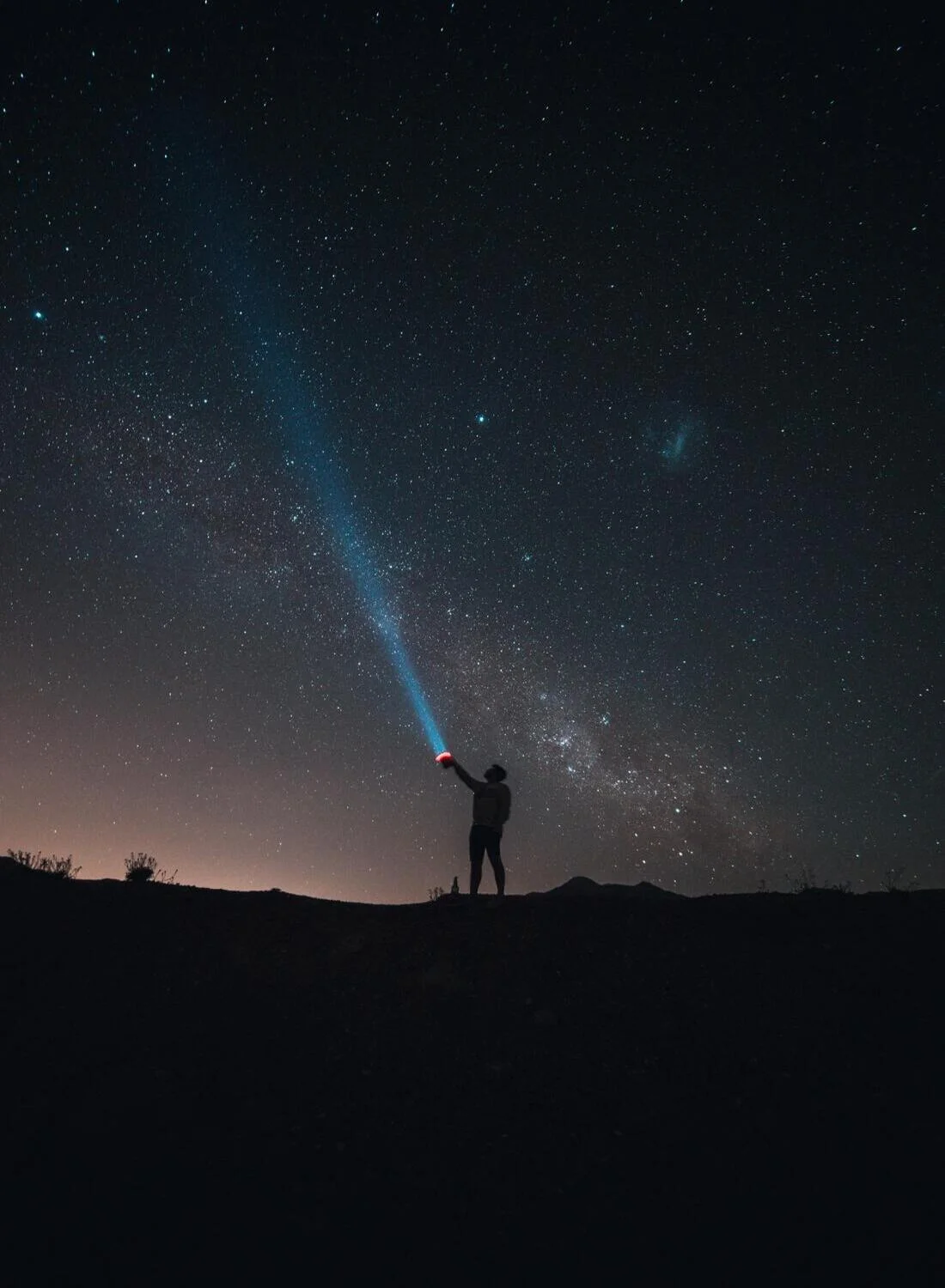
When the sky is clear, the stars are a gift. The North Star is the classic: draw a line through the two rear stars of the Big Dipper - where they „point“ is the North Star. It roughly marks the north.
Orion is also helpful. Its belt points in a line to the east and west. If you develop an eye for it, you can use it to find your bearings even on moonless nights.
Moonlight
The moon is less reliable than the stars, but useful. A waxing moon rises in the evening in the east, a waning moon in the morning in the east. When the moon is full, the direction is more difficult to judge, but the landscape is brighter - an advantage if you want to avoid obstacles.
Use sounds
Sounds are more noticeable at night. Rivers, roads or villages give themselves away through rustling, dogs barking or bells. If you stop and listen, you often get more clues than you think.
Navigation in the fog
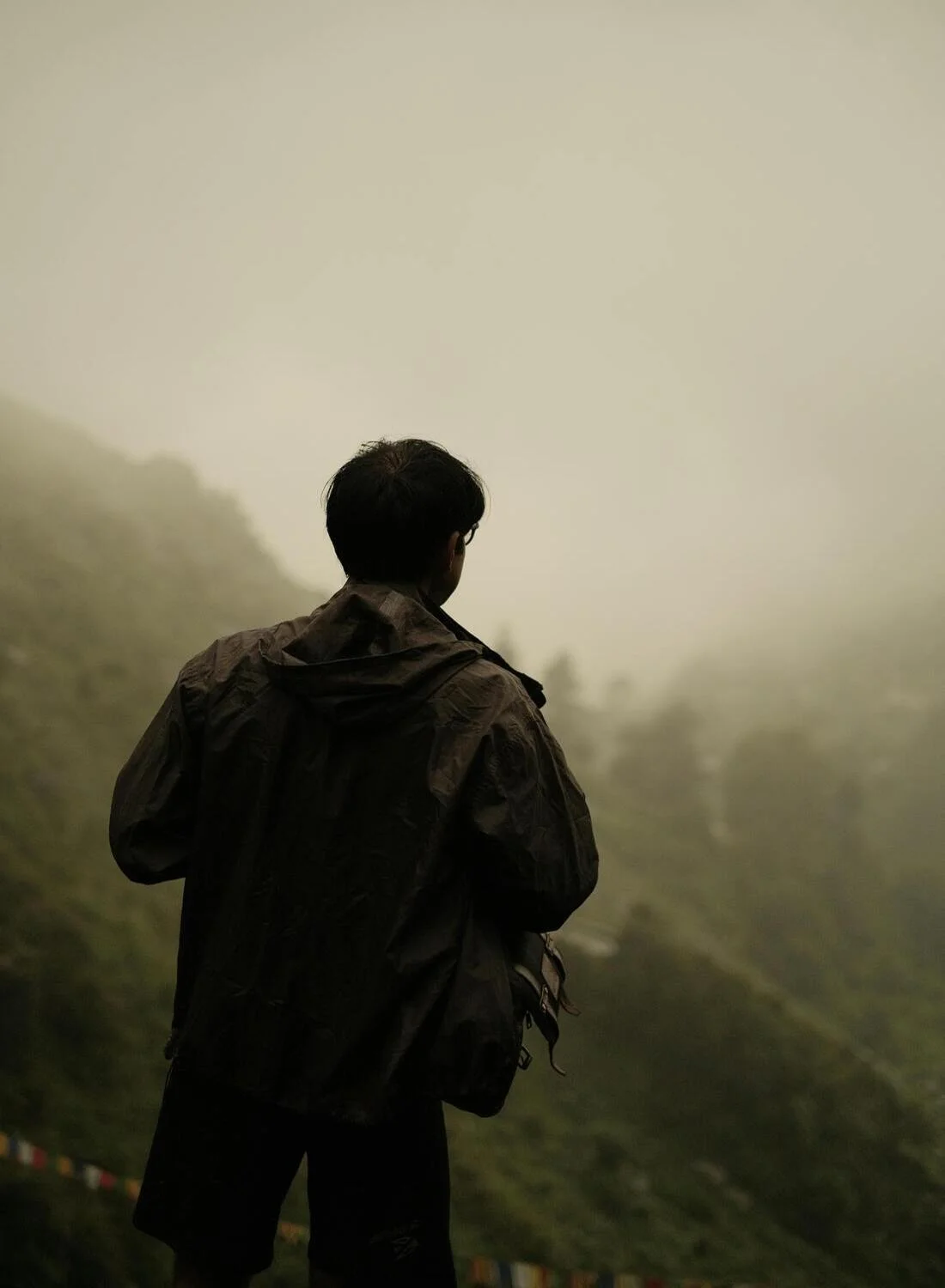
Fog is more treacherous than darkness. You can see, but everything is blurred.
Set fixed points
As soon as the fog rolls in: Immediately note a prominent point - a tree, a rock, a hut. From there, continue in small stages and keep looking back. This avoids „walking in circles“.
Read terrain
Even if the view is poor: the ground tells a lot. Water flows downhill, valleys guide you, paths are often recognizable. Those who use their feet and ears are more likely to stay on course.
Improvise tools
A simple trick: ram one stick into the ground and place a second one in a straight line. This allows you to maintain a line, at least for short distances.
Aids - if you have something with you
Even without high-tech, there are simple things that help at night and in fog:
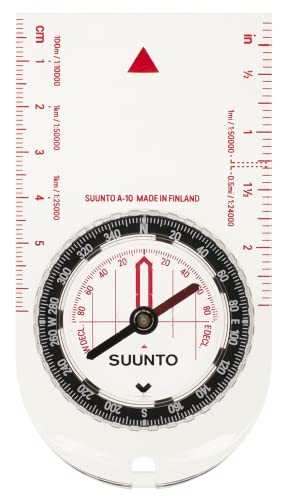
- Compass: The most reliable tool.
- Map: Only useful if you know where you are. Synchronize regularly.
- Headlamp: Better with red light so as not to destroy night vision.
- Cord or ribbon: Helps to stay together in a group.
Comparison: Night vs. fog
| Factor | Night | Fog |
| Visibility | Very low, depending on the moon | Short, diffuse outlines |
| Orientation guide | Stars, moon, sounds | Terrain, fixed points, noises |
| Main danger | Overlooking obstacles | Running in circles, deception |
| Tactics | Slowly, use constellations | Small stages, looking back |
Practical tips - step by step
Here is a small list that can be implemented immediately:
- Preparation: Know where you are and where you want to go even in daylight.
- Pause for thought: As soon as visibility disappears, stop and get your bearings.
- Note direction: Select tree, hill or star.
- Go in stages: Short distances, then check again.
- Pay attention to noise: Rivers, roads, animals.
- Emergency solution: It's better to wait until visibility improves instead of walking blind.
Scenarios from practice
1. the night in the forest
You leave a forest path at nightfall. You can hardly see anything without a lamp. With a little patience, you find the North Star and determine the direction. Step by step, you get back on the path.
2. fog in the mountains
Sun in the morning, thick fog an hour later. Visibility barely ten meters. You stop, mark a stone and continue in small stages. Without this method, you would probably have gone in circles.
3. sounds to the rescue
You are in a flat landscape at night without any stars. Suddenly you hear the sound of a river in the distance. You follow it - and actually find water that leads you back down into the valley.
The role of the psyche
The biggest problem at night and in fog is often not the surroundings - but your own thinking. Fear narrows the view. If you get hectic, you overlook clues. Therefore: stop, breathe, observe. Every small step brings clarity.
There is an old saying: „The road is shorter if you walk it slowly.“ This is especially true in difficult situations.
Personal note
I remember a hike in the fall. In the afternoon, fog suddenly rolled into the valley. Within minutes, visibility was gone. The forest, which had just been full of color, was now just gray. We stopped, listened to the sound of a stream and slowly followed it. At the end, it led us back to the main path. Without this pause, we would probably have walked deeper into the forest - and would have had to spend the night outside.
Conclusion: The compass in your head
Stars, sounds, terrain - everything becomes a signpost if you look and listen.
The most important lesson? It's not the darkness or the fog that are the biggest enemies. It's our own impatience. Those who are prepared to slow down, who take signs seriously, will find their way - even if the world around them becomes blurred.
 Deutsch
 English