

When soldiers are sent into an unknown area, they cannot afford to make mistakes. Every step, every action, every piece of equipment has to be right. The military thrives on preparation, discipline and the ability to remain capable of acting even in chaos. Sound familiar? Exactly - it's basically the same for preppers. We also think about „what if?“ and try not to lose our heads in exceptional situations.
But what can we learn from military structures without having to walk around the city in camouflage? Where is it worth looking at methods and principles, and where is it overdone for everyday life?
Military principles - and why they are valuable for preppers
Over the centuries, the military has developed systems that have proven their worth in crises. It is less about weapons and battles and more about clear structures, mental strength and practicable procedures.
A few examples:
- Planning and logistics: Soldiers learn how to organize supplies - food, water, ammunition, transport.
- Discipline and routine: Even when everything seems to be falling apart, there are fixed routines that provide stability.
- Improvisation: No mission goes exactly according to plan. In an emergency, this also applies to everyday life as a prepper.
- Team spirit: Survival is often not an individual achievement, but is based on cooperation.
What preppers can do - the basics
1. preparation is everything
The military plans missions down to the last detail. For preppers, this means running through scenarios, organizing supplies and testing equipment. If you are only prepared on paper, you have already lost.
2. train what you need in an emergency
Soldiers repeat actions until they are right. Not because it's fun, but because the stress leaves no time for reflection. You can do that: Practicing first aid measures, operating the stove blindfolded, actually walking the escape route once.
3. less is sometimes more
Military equipment is robust, but often also heavy. Soldiers learn to only take what is really necessary. For preppers, this means: no overloading the bug-out bag, but clear prioritization.
The art of logistics - in military terms
Logistics sounds dry, but at its core is the question: How do I keep myself and others going?
For preppers, it is worth taking a look at the soldiers„ so-called “3-principle":
- Three days of food and water for each soldier.
- Three sets of clothing (ready for use, spare, emergency).
- Three levels of supply (rucksack, vehicle, supply store).
Of course, you can't transfer this one-to-one, but the idea is clear: several levels create security.


Lists: Military lessons for preppers
A. Transferable principles
- Plan and run through scenarios
- Organize supplies in shifts
- Develop a resilient routine
- Clear communication within the team
- Train hand grips regularly
B. Concrete skills
- Map reading and orientation without GPS
- Basic first aid (pressure bandage, stable lateral position, shock control)
- Camouflage and inconspicuous behavior
- Water treatment
- Building improvised shelters
The psychological dimension
An often underestimated point: mental strength. Soldiers learn to deal with stress, fear and uncertainty. They function even when they are tired, hungry or overwhelmed.
For preppers, this means practicing not only how to use equipment, but also your inner attitude. This can mean: consciously dealing with cold or hunger, doing small „stress exercises“, sometimes getting by without comfort.
I remember a night in the forest that I deliberately spent without a sleeping bag. It was uncomfortable, cold and long. But the next day I knew that I could withstand more than I thought. This knowledge can be crucial in an emergency.
Differences: Where preppers don't have to be military
Of course, there are also limits. Preppers are not soldiers, and they don't have to be.
- Combat training: For most preppers, close combat or weapons training is not the central issue.
- Hierarchies: Strict military command structures rarely fit into the private sphere.
- Permanent load: A prepper's everyday life must be suitable for everyday use, not military-style.
Table: Comparison of military lessons for preppers
| Range | Military practice | Transmission for preppers |
| Planning | Detailed deployment planning | Scenario checklists and route plans |
| Equipment | Standardized packing lists | Customized backpack |
| Training | Daily exercises, drill | Regular repetition of important skills |
| Logistics | Supply in levels (rucksack, depot, supplies) | Supplies at home + emergency bag in the car |
| Psychology | Stress resistance through training | Consciously enduring minor stresses
|
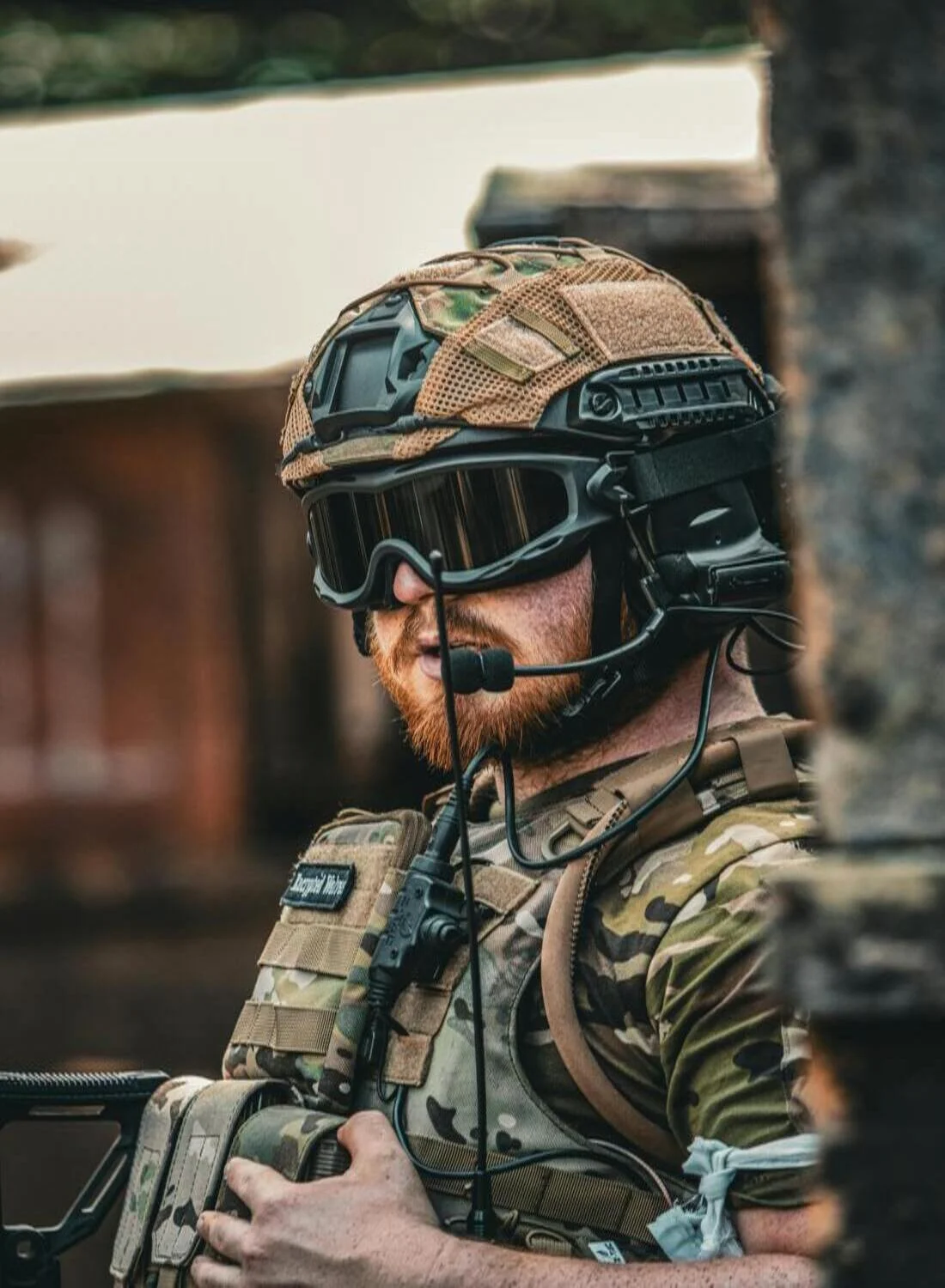
Practical example: Power failure in the city
Let's assume a large-scale power outage paralyzes a city. Soldiers would immediately try to establish order and communication. As a prepper, you can use similar principles:
- Initial assessment of the situation: Where am I? What still works?
- Prioritization: Water, light, communication.
- Organization: Ration supplies, involve family or roommates.
- Routine: Create fixed procedures (e.g. check messages regularly, even if there is no network).
In this way, you adopt a basic military principle - creating structure in chaos - and adapt it to your everyday life.
A humorous sideways glance
Sometimes a wink helps: soldiers are notorious for their „field expedients“, improvised solutions made from almost nothing. A rope, a tarpaulin, a stone - and you have a functioning structure. Preppers can learn from this, but you shouldn't copy everything. Nobody has to set up their kitchen like a battlefield. But the attitude „Make the best of what's there“ is universal.

Conclusion - discipline meets everyday life
What preppers can learn from the military can be summarized in one sentence: Structure creates security. Planning, routine, logistics and mental strength - these are all areas that are also valuable beyond the barracks.
We don't have to march, salute or shout orders. But we can be inspired by people who have learned to remain functional under the most adverse circumstances.
In the end, it's like a map: it doesn't show the way itself, but it provides orientation. Military principles are just that - a kind of map that helps preppers not to get lost in the chaos.
 Deutsch
 English