

There are disasters that you feel immediately: the shaking of the ground, the howling of a storm, the bright flash of a power cut. Cold, on the other hand, is quieter. It creeps up on you. At first your fingers tingle, then your movements become stiffer, your breath forms little clouds and at some point you feel your strength fade.
This is precisely why Insulation so important for preppers. You can go for weeks without fresh food, a few days without water - but if you don't protect yourself from the cold, you risk serious problems within hours. And that doesn't just apply outside in a snowstorm, but also inside when the heating breaks down in winter.
Why protection from the cold is so important
Cold is draining. It saps energy, concentration and ultimately morale. A hungry person lasts longer than a freezing one. Hypothermia is not a distant scenario from polar expeditions, but a real danger when electricity and heating fail.
The consequences:
- Drop in performanceEven a slight chill reduces muscle strength.
- DiseasesColds, pneumonia, skin problems.
- Mental stressFreezing makes you irritable, robs you of sleep and motivation.
Warmth is therefore not a minor issue, but a fundamental prerequisite for maintaining a clear head during a crisis.
The Basics of Insulation
Insulation means retaining heat, not necessarily generating heat. It's like a bucket of water with a hole in it: you can keep filling it up, or you can seal the hole.
Three basic principles:
- Preserve body heat - Shift system, dry clothing, headgear.
- Sealing Rooms - Block drafts, concentrate heat.
- Don't forget the carpet underlay - Insulation against cold from the ground is just as important as insulation against cold from the air.

![EXPLORER® GREENLAND sleeping bag -23°C to -5°C [350 GSM] 3-4 season winter mummy sleeping bag for adults [1900 g] 230 x 82 x 55 cm, left-side zipper, black—ideal for outdoor activities, camping, trekking, and travel](https://m.media-amazon.com/images/I/51evxop4RrL._SL500_.jpg)
Clothing—the first line of defense
Humans are essentially tropical creatures. Without clothing, we are at the mercy of the cold. That is why wearing the right clothing is crucial in a crisis.
The onion principle:
- Base layerBreathable materials that wick away sweat. Cotton is a risky choice here because it retains moisture.
- Middle classFleece, wool or down - the actual thermal padding.
- Outer layerProtection from wind and rain; breathable; durable.
Details that are often forgotten:
- HeadOver 30 % of body heat escapes through uncovered surfaces. Hat = required.
- FeetDry socks are worth their weight in gold. It's best to have several pairs to hand.
- HandsWarm mittens are better than gloves.
Indoor protection—keeping warmth where there is no heating
Not everyone can provide a emergency stove or a kerosene heater. But even with simple means, a room can be transformed into an oasis of warmth.
Measures for the home
- Select a roomCombine all forces. Close the doors, seal the cracks, cover the windows.
- Concentrated heat sourcesCandles, body heat, small emergency heaters.
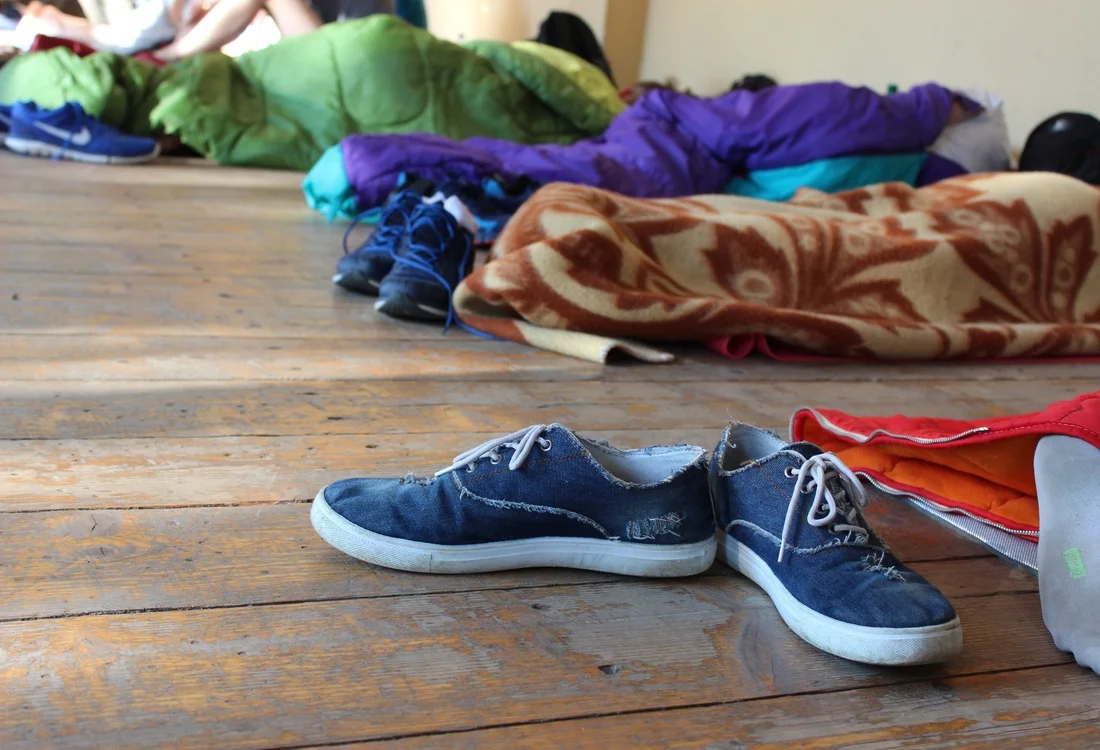
- Sleeping mats & blanketsEven in the living room, an improvised „camp“ on the floor with mats and sleeping bags can work wonders.
- Curtains & blanketsHanging over doors or windows, they keep the cold at bay.
It sounds banal, but a small tent in the living room, set up and lined with sleeping bags, stores body heat more effectively than the entire room.
Lists for emergencies
Immediate measures in case of cold in the house
- Select the warmest room.
- Seal windows with blankets or aluminum foil.
- Place underlays on the floor (mats, carpets, cardboard boxes).
- Layer your clothes and put on your hat.
- Take exercise breaks—light exercise generates heat.
Long-term provision
- Sleeping bags (comfort range down to -10 °C).
- Rescue blankets and bivouac sacks.
- Insulation mats with a high insulation value (R-value).
- Curtains, blankets, and foam sheets as materials for improvisation.
- Candles, tea lights, small emergency heaters (with a CO detector!).
A small table: Clothing materials in comparison
| Material | Advantages | Disadvantages |
| Cotton | convenient, affordable | Retains moisture, dries slowly |
| Wool | stays warm even when damp, durable | heavier, can scratch |
| Fleece | lightweight, quick-drying | less durable, melts in case of fire |
| Down | very warm, light | reduced effectiveness in wet conditions |
| Synthetic | sturdy, easy to clean | less effective at retaining heat |
Improvisation - Heat Sources Without Heating
Sometimes it's the little tricks that make all the difference:
- Candle stoveSeveral tea lights placed under an upturned clay pot. It’s no miracle, but it does provide some noticeable extra warmth.
- Hot water bottlesPET bottles filled with hot water also work.
- Group heatSeveral people wrapped in blankets or sleeping bags are huddling together to stay warm.
Realistic scenario
A power cut in January. Outside -5 °C, inside it gets uncomfortably cold after a few hours. The radiator stays cold. You decide to seal off the bedroom: Windows with aluminum foil and adhesive tape, door covered with a blanket. There is a sleeping mat on the floor with sleeping bags on top. A candle stove in the middle.
After an hour, you notice the difference: while the living room is freezing cold, the temperature in the small room is bearable. You lie in your sleeping bag, hear the soft flickering of the candles and the cold loses its terror.
Psychological effect—warmth is hope
Cold makes you feel lonely. It forces you to stay still and takes away your desire to talk and act. Warmth, on the other hand, creates a sense of community. A room full of people sitting close together, a warm sleeping bag, or the flickering of a candle—all these things act as an antidote to isolation.
An elderly neighbor once told me about the power outages in the 1970s: „We all slept in the kitchen—three children, two adults—in sleeping bags on mattresses. It was cold, but somehow it was also nice. We told stories together. And we learned that warmth is more than just temperature.“
Common Mistakes in Cold-Weather Protection
- Keep wet clothing onSweat and rain are major heat-draining factors.
- The dress is too thickIf you sweat, you lose more heat through evaporation.
- Using too many roomsEnergy is dispersed, better to concentrate on one room.
- Ventilation forgottenVentilation is also necessary in the cold, otherwise there is a risk of damp and mold.
Conclusion - outwitting the cold before it outwits us
Insulation and protection from the cold are not side issues for preppers. They are a core component of preparedness. After all, warmth means survival - in the forest as well as within your own four walls when the heating is off.
No need for luxury: a few blankets, a sleeping bag, tight windows, warm clothes. With preparation and a little improvisation, you can turn a frosty night into a bearable one.
And perhaps even more: a feeling of security. Because in the cold, just a little bit of warmth can make all the difference - not just for the body, but also for the mind.
 Deutsch
 English